

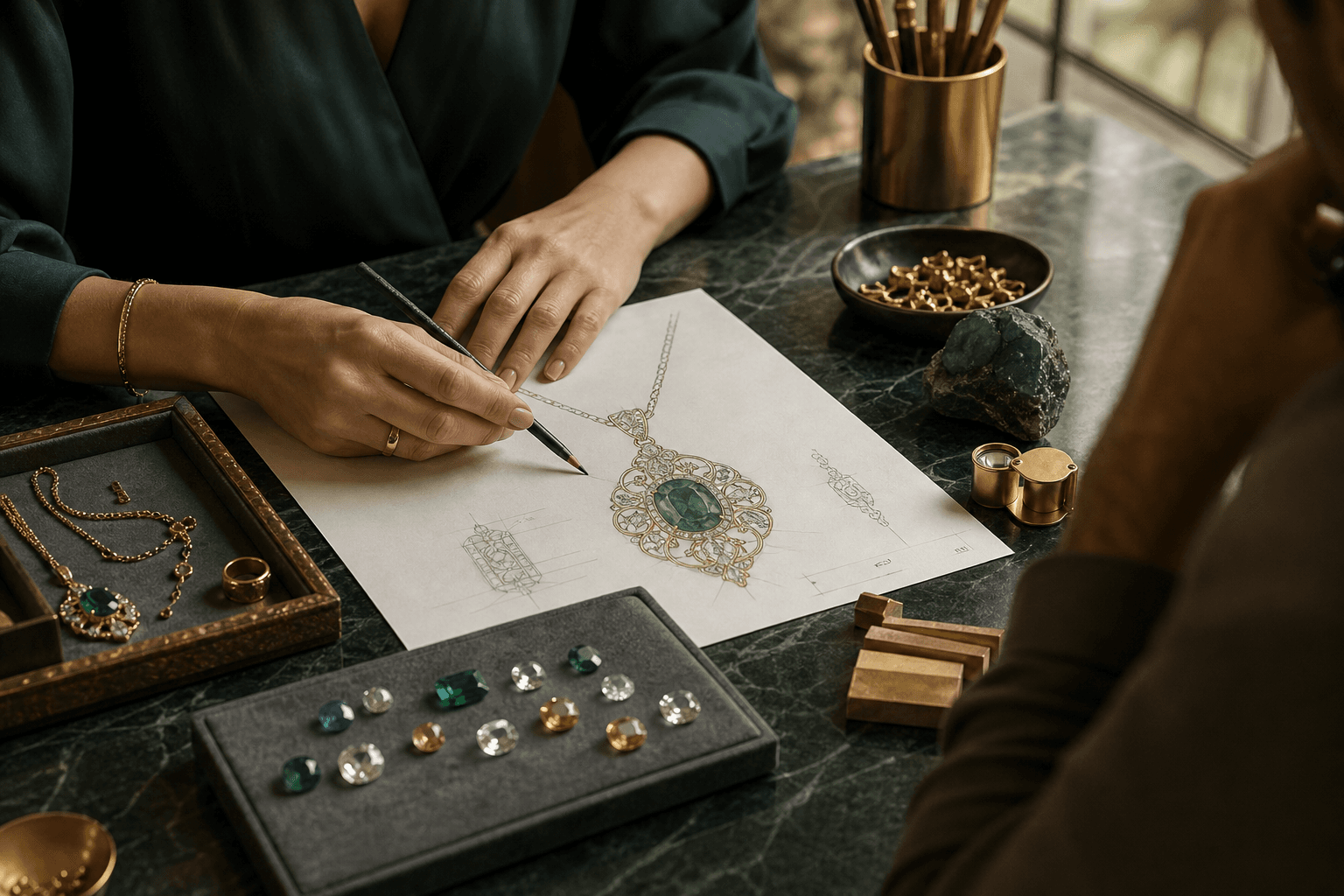
Custom luxury jewelry is priced by project, not by a universal menu. The final quote depends on the category, materials, stones, design complexity, and production requirements. A clear brief, written terms, and design approval help you move from an idea to a finished piece with fewer surprises.
For Canadian buyers, “custom luxury jewelry” describes a premium, personalized commission rather than a regulated category. The right buying route depends on how much control, originality, guidance, and planning your design requires.
Choose the right level of customization
Choose the simplest route that gives you enough control over the design, materials, timing, and meaning.
| Route | What changes | Best fit | Trade-off |
|---|---|---|---|
| Ready-made | You select an existing design, size, material, and variant. | You want a straightforward purchase. | Little control over the original form. |
| Personalized or engraved | A name, date, message, initial, or small detail is added. | You want sentimental meaning without redesigning the piece. | The base shape and material choices remain limited. |
| Made-to-order | An existing style is produced to requested specifications. | You like a known design but need a particular size or material. | Less freedom to change its structure. |
| Fully bespoke | The concept, dimensions, materials, details, and finish are developed for your project. | You have a distinctive idea or heirloom concept. | More communication, approvals, and planning. |
If you want a message on a familiar design, personalized jewelry may be enough. If you want to combine a specific stone, silhouette, metal, and proportion, made-to-order work may suit you. Choose fully bespoke design when the shape itself matters and you are willing to review a concept before production.
If you are still choosing between a collection and a commission, compare the practical differences in this ready-made versus custom buying guide.
What custom luxury jewelry can include
A custom commission can involve the jewelry category, metal, stone identity, proportions, finish, and personal details. Intended use matters too: a ring worn daily needs different priorities from a statement necklace reserved for special occasions.
Advikosh presents custom work alongside sterling silver and pearl collections. Ask whether your requested material and category are available before committing to a design.
- Category: Confirm the desired ring, necklace, pendant, earrings, bracelet, or other format.
- Structure: Consider silhouette, width, length, height, stone placement, and how the piece sits on the body.
- Materials: Identify the metal and its quality, then distinguish stone identity from appearance.
- Finish: Compare polished, brushed, textured, engraved, or mixed surfaces.
- Meaning: Consider an engraving, birthstone, inherited stone, symbolic shape, or meaningful proportion.
How the Advikosh custom jewelry process works
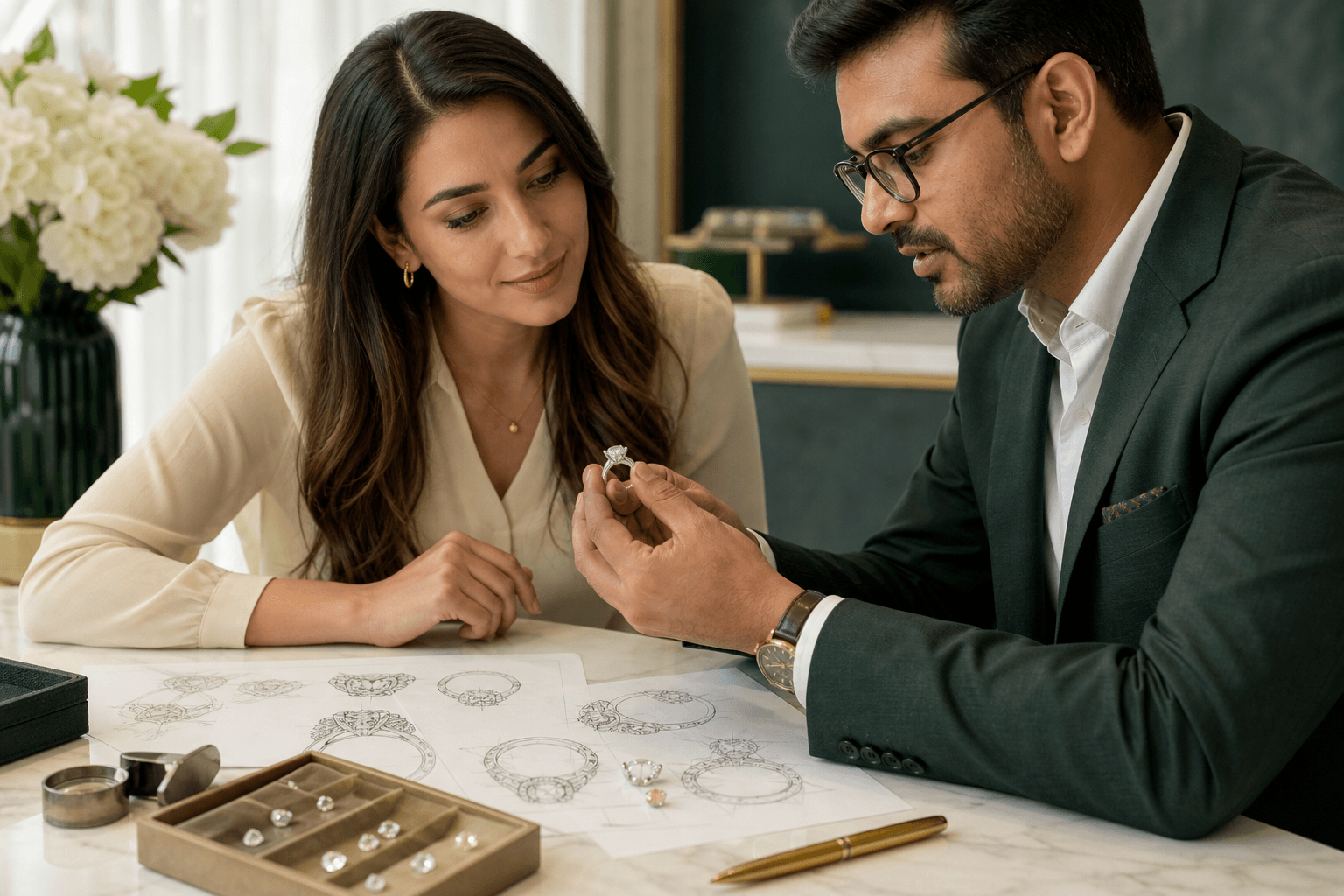
Advikosh’s FAQ confirms that customers can submit their own design, sketch, or photo and approve the design before production. Ask about the remaining stages, available materials, pricing, timing, delivery, and aftercare for your specific project.
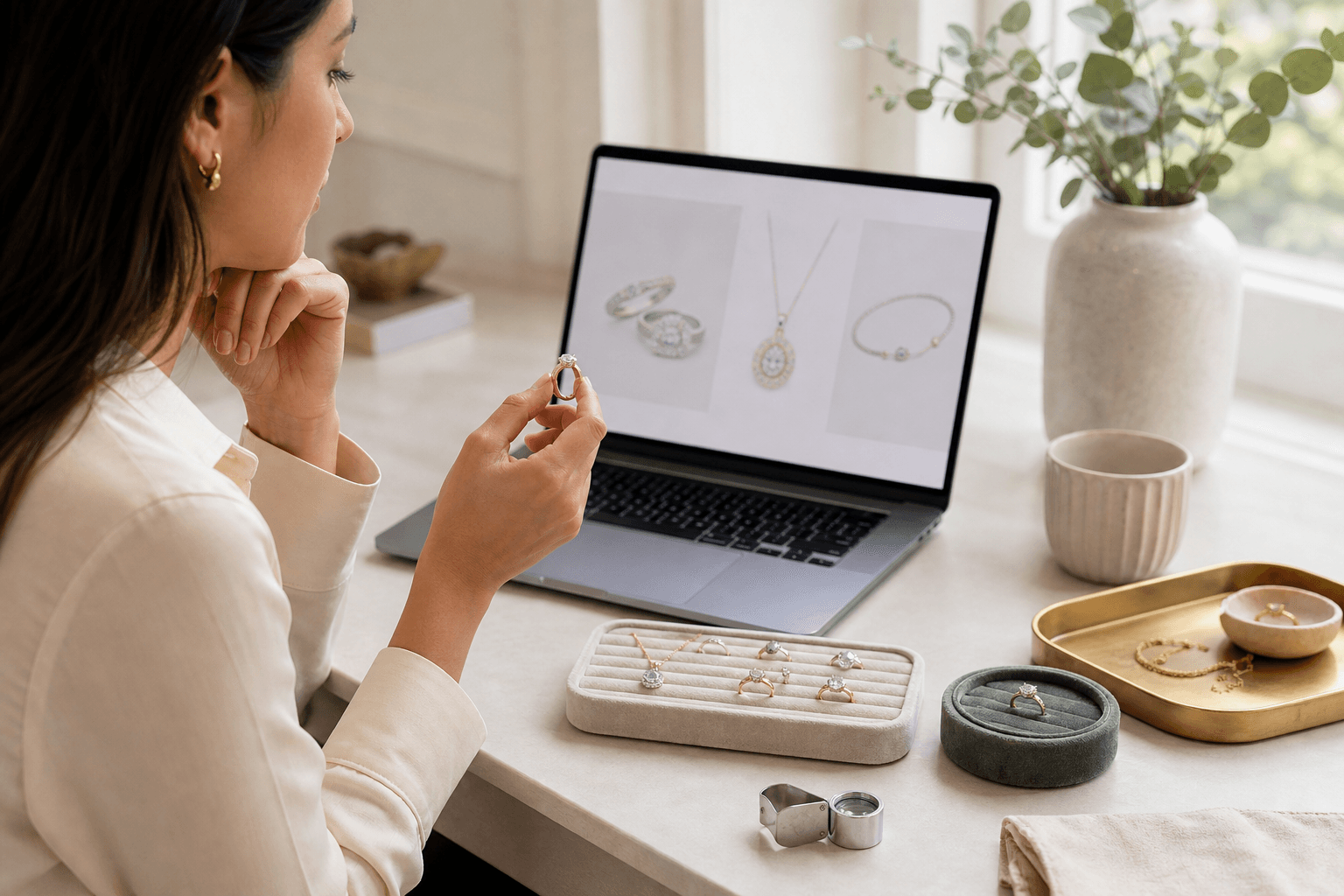
- Submit the idea: Share a sketch, photo, reference image, or description, explaining what you want adapted.
- Define the brief: Clarify the category, wearer, materials, stones, proportions, budget, and practical requirements.
- Ask for the project terms: Confirm what will be made, how it will be priced, what approvals are included, and what changes affect the scope.
- Review the proposed design: Check dimensions, stone placement, finish, engraving, metal, and the exact version being considered.
- Approve before production: Record your approval and ask what happens if you request changes afterward.
- Confirm delivery and aftercare: Ask about timing, shipping, inspection on arrival, resizing, repairs, returns, exchanges, and any finish service.
Review the custom design approval information before sending your idea.
Prepare a design brief
A short brief gives the project a useful starting point. Include the wearer, occasion, category, reference images, preferred metals and stones, dimensions, finish, daily-wear needs, deadline, budget range, and non-negotiables.
Bring three to five strong references instead of twenty loosely related ones. Label each image with the detail you want to borrow, such as setting height, pearl shape, surface texture, or chain length.
Make the main material and design choices
The right material must suit the design, wear pattern, appearance, documentation needs, and budget together.
| Decision | Ask | Why it matters |
|---|---|---|
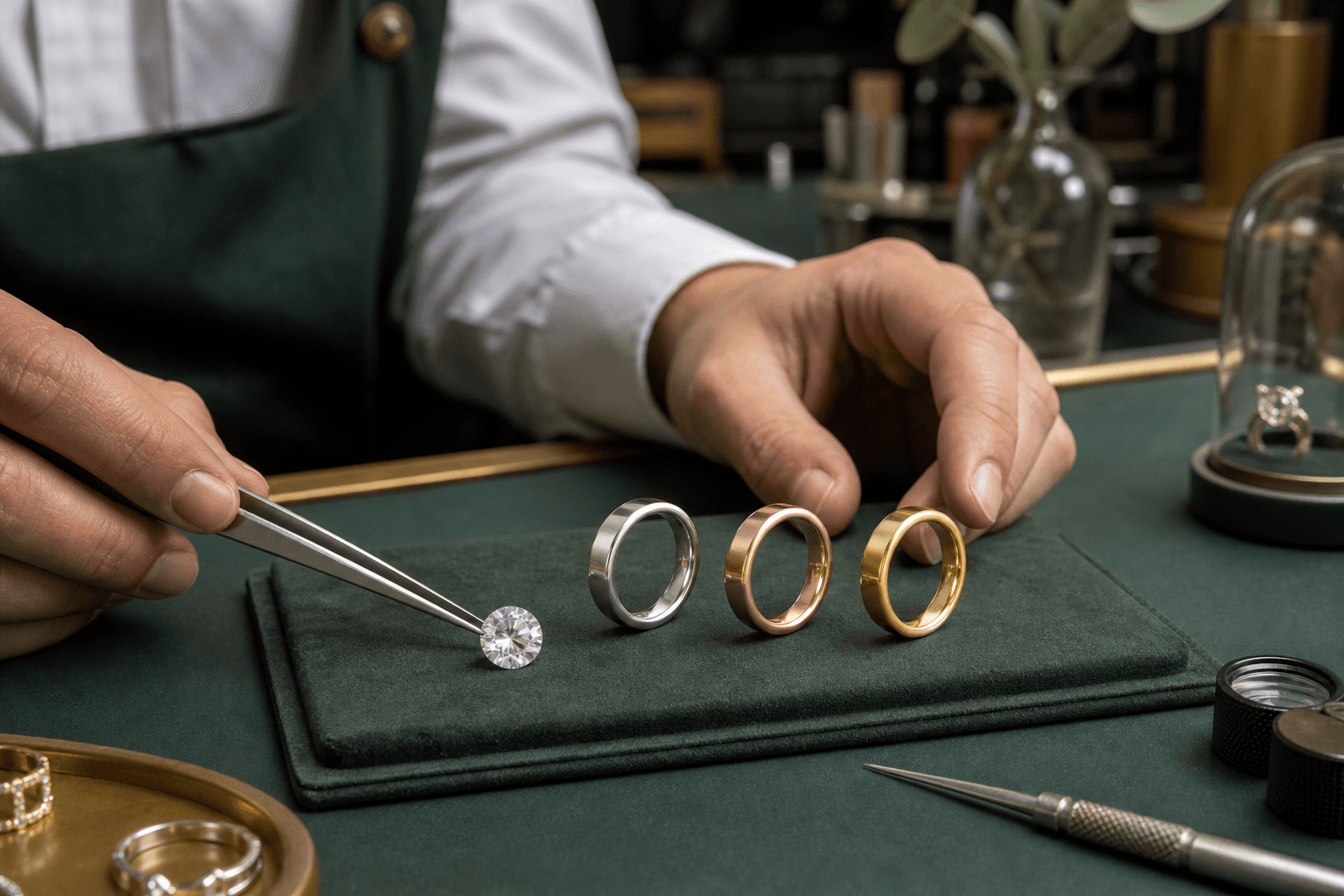
| Metal | What metal, quality, colour, and finish are proposed? | These affect appearance, weight, wear, care, and price. |
| Stone | Is it natural, lab-grown, synthetic, or moissanite? | Identity, documentation, durability, appearance, and cost differ. |
| Proportion | What are the width, height, length, thickness, and stone dimensions? | Proportion affects comfort, balance, weight, and layering. |
| Setting | How is the stone supported? | The structure must suit the stone and expected wear. |
| Finish | Will it be polished, brushed, textured, or engraved? | Finish changes reflection and how wear appears. |
For precious-metal jewelry in Canada, ask how quality is identified. The Competition Bureau states that legal quality-designation marks and minimum quality requirements apply to precious-metal articles, with gold quality marks ranging from 9K through 24K when a quality mark is used. Review the Canadian precious-metal marking requirements.
The Competition Bureau also explains that a quality-marked precious-metal article must bear a qualifying trade-mark applied for or registered in Canada. Ask what marks and documentation accompany your piece. The Canadian marking guide explains the relationship between these marks.
Understand what custom jewelry costs
Custom jewelry costs depend on category, materials, stone choice, design complexity, and production requirements. Ask Advikosh how your project will be priced.
Custom-made jewelry is not automatically more expensive than ready-made jewelry. A simple custom design in a modest material may cost less than an elaborate ready-made piece, while a bespoke design with a larger precious stone, more metal, complex structure, or extensive handwork can cost more.
- Category and scale: Larger or more complex pieces generally require more material and work.
- Metal: Type, quality, weight, and finish affect the total.
- Stone: Identity, size, quality, number, and setting requirements can change the quote.
- Complexity: Curves, layers, unusual proportions, engraving, and moving parts add decisions.
- Production: Construction methods, specialist work, and finishing can affect the project.
Hypothetical example: A small sterling silver pendant with a simple shape requires different inputs from the same concept made in heavier gold with an intricate surface. Adding a higher-cost stone or complex setting changes the quote again. This illustrates cost movement, not a predicted Advikosh price.
Ask whether design work, CAD, revisions, taxes, shipping, stone documentation, and production are included or listed separately.
Choose online customization or a consultation-led commission
Online customization suits a defined design with straightforward choices. A consultation-led commission is better when form, materials, proportions, or meaning need active development. Ready-made is often sensible when the deadline is tight or an available design already works.
| Consideration | Online or lightly personalized | Consultation-led bespoke |
|---|---|---|
| Complexity | Known shape with limited changes. | New form or construction requires development. |
| Communication | Decisions come from a listing or defined options. | You explain references, priorities, measurements, and trade-offs. |
| Approval | Focuses on the selected listing and specifications. | Covers a proposed design before production. |
| Timing | Easier to plan when an item is available. | Requires discussion, pricing, approval, production, and delivery. |
Review the quote and terms
Before paying a deposit or approving production, request the project details in writing. Focus on the decisions that change your financial or practical commitment.
- Category, dimensions, and intended fit
- Metal type, quality, colour, and finish
- Stone identity, quantity, dimensions, and documentation
- Included design work, revisions, taxes, shipping, and payment terms
- Estimated delivery timing and possible changes
- Alteration, resizing, repair, plating, and finish-service terms
- Return, exchange, cancellation, and custom-order restrictions
Ontario guidance says that where a written estimate is included in a contract, the final price generally cannot exceed it by more than 10% unless you agree to additional charges and sign a contract change. Read the Ontario guidance on written estimates and contract changes.
Ask what happens if you request a new stone, larger dimensions, or a different structure after quoting. Ontario identifies the Consumer Protection Act, 2002 and its regulations as the main consumer-rights framework. Ontario’s consumer-rights information provides further context.
Plan delivery, adjustments, and aftercare
Confirm delivery, tracking, inspection, returns or exchanges, resizing, repairs, and any plating or finish service before ordering. On arrival, compare the piece with the approved design and specifications. Retain the invoice, approval record, stone documents, and delivery information.
For a higher-value piece, ask your insurer what documentation and coverage terms apply. Receipts, photographs, appraisals, and stone or metal records may help an insurer assess the item, but coverage depends on the policy.
Personal value is not the same as resale value
Custom jewelry can have substantial personal and heirloom value, but resale value is not guaranteed. Buy a bespoke piece because it suits the wearer and carries meaning, not because it is expected to appreciate.
Resale interest may depend on metal, stone, documentation, condition, craftsmanship, recognisable design, and buyer demand. Personal engravings or unusual proportions may narrow the future audience.
Questions to ask before commissioning
- Can you produce this category and material combination?
- What metal quality, stone identity, dimensions, and finish appear in the quote?
- What design will I approve before production?
- Which revisions are included?
- What is the delivery window?
- Are taxes, shipping, documentation, and design work included?
- What are the cancellation, return, exchange, resizing, repair, and aftercare terms?
Frequently asked questions
Is custom-made jewelry more expensive than ready-made jewelry?
Not always. Compare the complete specifications, materials, included services, and production requirements instead of assuming one route is always cheaper.
Does custom jewelry have resale value?
It can, but no fixed resale amount or investment return is guaranteed. Material, documentation, condition, craftsmanship, design, and demand influence resale interest.
Can I start with a sketch or photo?
Yes. Advikosh’s FAQ addresses creating jewelry from a customer’s design, sketch, or photo. Bring notes about the wearer, dimensions, materials, deadline, and desired changes.
How many revisions should I expect?
There is no universal number. Ask what the quote includes, when a request changes the scope, and what approval formally starts production.
Can a custom order be returned or resized?
Eligibility depends on the order terms, design, production stage, and requested adjustment. Ask for the terms in writing before paying.
What should Canadian buyers confirm about metal markings?
Confirm the metal identity and quality designation, ask which marks appear on the piece, and request accompanying documentation. Canadian guidance sets requirements for legal quality marks and qualifying trade-marks.
Start a custom jewelry conversation with Advikosh
If you have a concept, sketch, or photo, review Advikosh’s custom jewelry service and ask about the process, availability, and project pricing.