



A pearl identification guide can help you ask better questions, but appearance alone cannot prove every detail about a pearl. A visual inspection may suggest whether a piece is natural, cultured, freshwater, saltwater, or imitation, while definitive conclusions about treatments or classification may require documentation or professional assessment.
The safest approach is to separate three decisions: what kind of pearl is being described, what visible qualities it has, and whether the seller’s claims are supported. That distinction matters when buying pearl jewellery online, evaluating an inherited piece, or planning a custom design.
What Pearl Identification Can and Cannot Tell You
In everyday shopping language, “real pearl” usually means a pearl produced by a mollusc rather than a glass, plastic, shell, or coated imitation bead. Both natural and cultured pearls are genuine pearls. The difference is how the pearl began forming.
A natural pearl forms without deliberate human cultivation. A cultured pearl forms after human intervention starts the process, but the mollusc still produces the pearl material. Imitation pearls are manufactured objects designed to look like pearls. A piece may also be treated, dyed, drilled, coated, or assembled into a composite design.
Identification is different from quality assessment. Strong reflections, an unusual shape, or a smooth surface may be visible without revealing whether the pearl is natural or cultured. A cultured pearl can be attractive and well made, while a natural pearl can still have surface marks.
Pearl Types at a Glance

| Category | What it describes | What to confirm |
|---|---|---|
| Natural | Formed without deliberate human cultivation. | Ask what evidence supports the claim, especially for a high-priced piece. |
| Cultured | A genuine pearl formed through a human-assisted cultivation process. | Confirm the specific type and treatment details. |
| Freshwater | Associated with freshwater cultivation. | Check the type, shape, dimensions, and treatment information. |
| Saltwater | Associated with marine cultivation. | Ask whether it is identified as Akoya, South Sea, Tahitian, or another category. |
| Akoya | A recognised saltwater pearl category often associated with a classic, refined appearance. | Do not rely on colour or roundness alone. |
| South Sea | A saltwater category commonly described with white, silver, or golden colour terms. | Confirm category, dimensions, colour, and documentation where relevant. |
| Tahitian | A saltwater category often presented in darker body colours and natural-looking variations. | Ask whether colour is natural, treated, or simply descriptive. |
These labels can overlap without meaning the same thing. “Cultured saltwater pearl” describes formation and environment, while “Akoya” identifies a more specific commercial category. Read the full description rather than treating one adjective as complete identification.
Freshwater Pearls
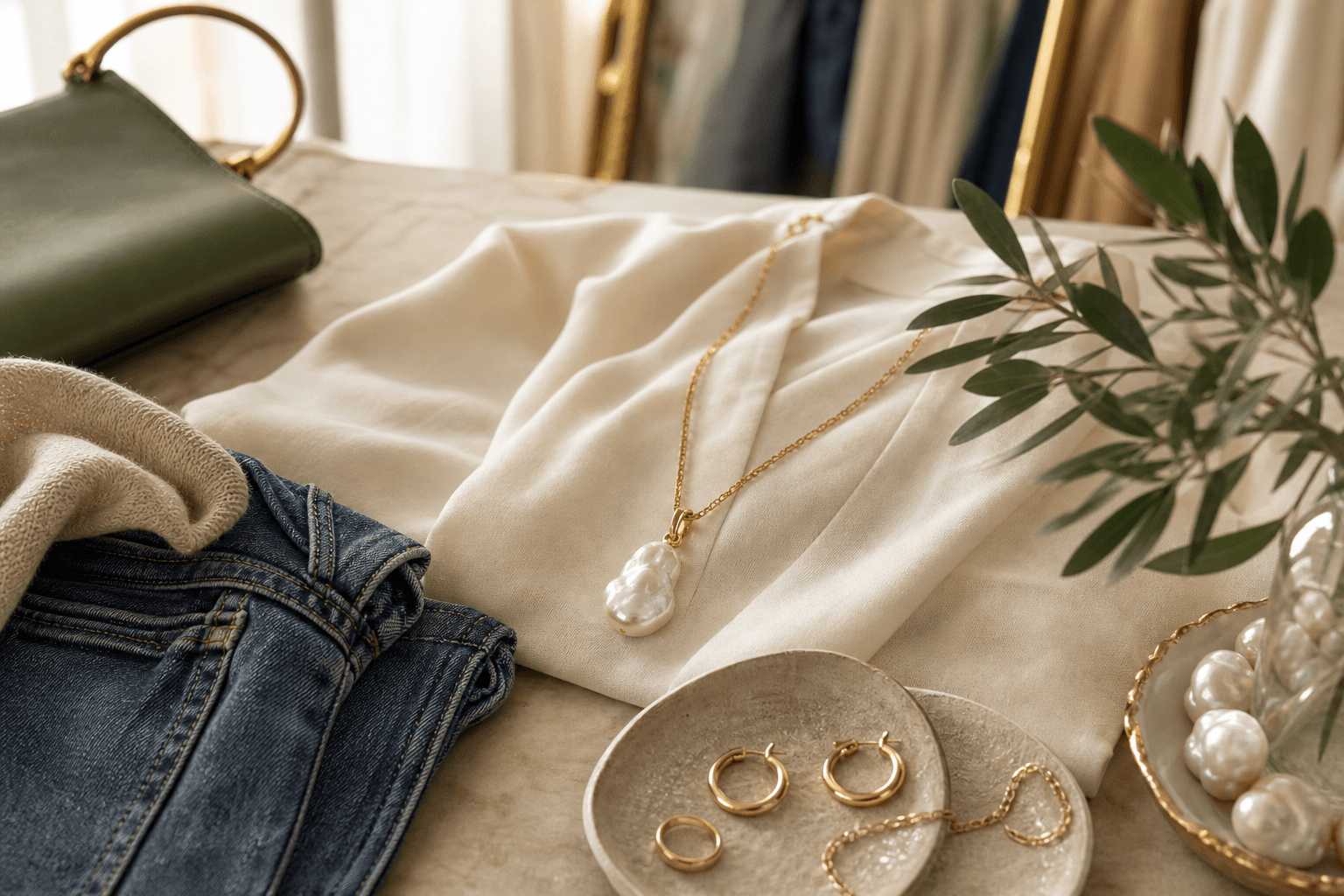
Freshwater pearls are popular with shoppers seeking organic shapes, soft colour variation, or an alternative to highly uniform round strands. Listings may refer to freshwater, baroque, beaded, or other shape categories. Baroque describes an irregular shape, not a separate formation method.
When comparing freshwater pearl jewellery, check the pearl type, measurements, shape, colour, and whether the item is a matched set. Necklace length, earring dimensions, metal details, and the number of pearls can affect both appearance and price.
Advikosh’s Canadian online jewellery assortment includes freshwater and baroque pearl pieces as well as beaded pearl necklaces. Read the description for the individual item rather than assuming every piece has the same shape, treatment, size, or classification.
Saltwater Pearls: Akoya, South Sea, and Tahitian
Akoya, South Sea, and Tahitian are buyer-facing terms for different saltwater pearl categories. They can narrow a search, but a photograph cannot establish the category. Colour, roundness, size, and luster may overlap, and screen lighting can change how a pearl appears.
Akoya pearls are often selected for a neat, classic look. South Sea and Tahitian descriptions may highlight larger dimensions or distinctive colour ranges. These are useful starting points, not proof. If the category affects the price, ask the seller to state it clearly and explain what documentation is available.
Terminology That Requires Extra Caution
“Freshwater akoya”: Treat this as a reason to request clarification. Ask whether the pearl is freshwater or Akoya, whether it is cultured, and whether the phrase only describes appearance. It is not an accepted equivalent of Akoya pearls.
“Oriental pearl”: This is obsolete terminology and should not be used as a current classification. Ask for a precise description such as natural or cultured, freshwater or saltwater, and the relevant category where determinable.
“Genuine” or “real”: These terms are incomplete without a pearl type and treatment disclosure. Ask whether the item is natural, cultured, imitation, or a combination of materials.
How to Assess Pearl Quality
- Luster: Look at the sharpness and depth of reflections. Bright, crisp reflections generally create a livelier appearance.
- Surface condition: Check for spots, pits, ridges, cracks, abrasions, or uneven areas.
- Shape: Round, near-round, oval, drop, button, and baroque shapes create different design effects.
- Size: Check measurements in millimetres instead of relying on product photos.
- Colour: Consider body colour and overtones separately. Ask whether a striking colour is natural or treated.
- Nacre: Nacre is the layered pearl material that creates the characteristic appearance of many pearls. Its condition and thickness may require technical examination.
- Matching: In earrings, strands, and sets, compare size, shape, colour, and luster.
A high-luster pearl is not automatically natural, and a marked pearl is not automatically imitation. Use these factors to judge whether the item suits your preferences and matches its description.
Safe At-Home Observations for a Preliminary Check
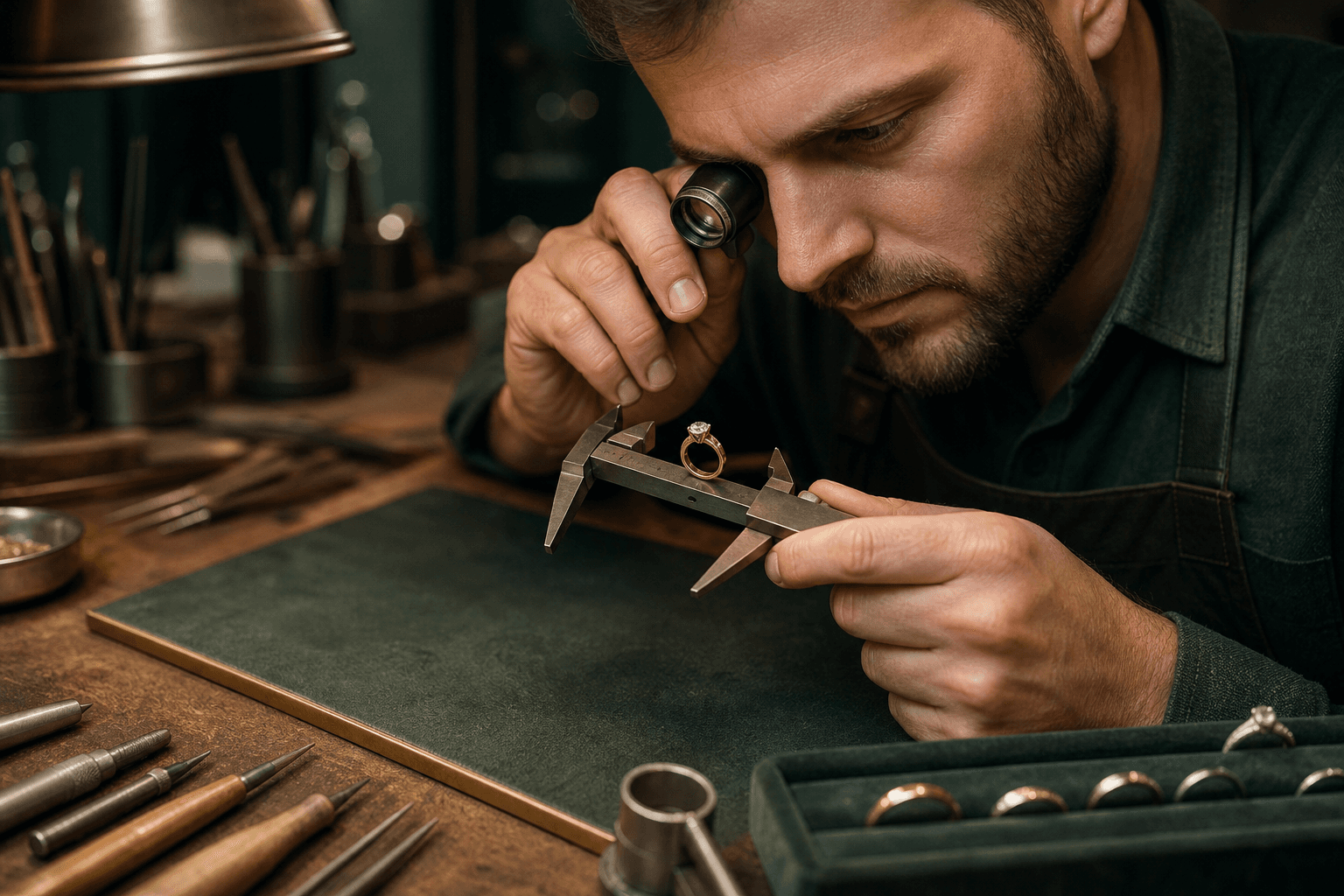
Start by reading the listing or paperwork and noting every claim: pearl type, formation method, treatment, dimensions, metal, and origin if stated. Examine reflections under neutral light, rotate the piece, and look for surface marks, drilled areas, and differences between matched pearls.
Compare the item with the seller’s photographs, but remember that photos can be edited, magnified, or taken under flattering lighting. Do not scrape, heat, scratch, cut, soak, or apply chemicals. These actions can damage the pearl, setting, or metal without producing reliable identification.
Is the Tooth Test Reliable?
No. Rubbing a pearl against a tooth may create a gritty sensation, but that sensation cannot establish whether the pearl is natural, cultured, treated, or imitation. The test is subjective and may scratch the pearl.
Use a visual review and documentation check instead. For an inherited strand, expensive purchase, or disputed description, preserve the item and ask a qualified professional how it should be examined.
Online Pearl Jewellery Buying Checklist
- Pearl identity: Does the listing state natural or cultured, freshwater or saltwater, and a specific category where relevant?
- Quality: Are dimensions, shape, colour, luster, surface condition, and matching described?
- Treatments: Are dyeing, coating, bleaching, drilling, or other relevant treatments disclosed?
- Metal: Is the metal clearly identified?
- Scale: Are measurements provided?
- Price: Is the price shown in CAD, with promotions and additional costs explained?
- Policies: Can you review shipping, returns, and exchanges before payment?
- Questions: Will the seller answer specific questions about the pearl category and materials?
Advikosh states that it offers free shipping on orders, 24-hour support, and one free return or exchange within seven days. Confirm the current terms for the particular order before purchasing.
When to Request a Pearl Report or Jeweller Assessment
Professional help is worth considering when classification affects a significant purchase, insurance, resale, inheritance, or family decision. It is also sensible when terminology is vague, paperwork conflicts with the listing, treatments are unclear, or the claimed type seems inconsistent with the price.
Ask what an assessment can and cannot establish. Depending on the question, you may need a qualified jeweller, gemmologist, or laboratory service. A report may address some characteristics without guaranteeing origin, value, or future resale price.
Advikosh’s FAQ indicates that customers can ask about custom jewellery from their own design, sketch, or photo and approve a custom design before production. This consultation can clarify design details, but it should not be treated as laboratory authentication.
What Pearl Identification Means for Custom Jewellery
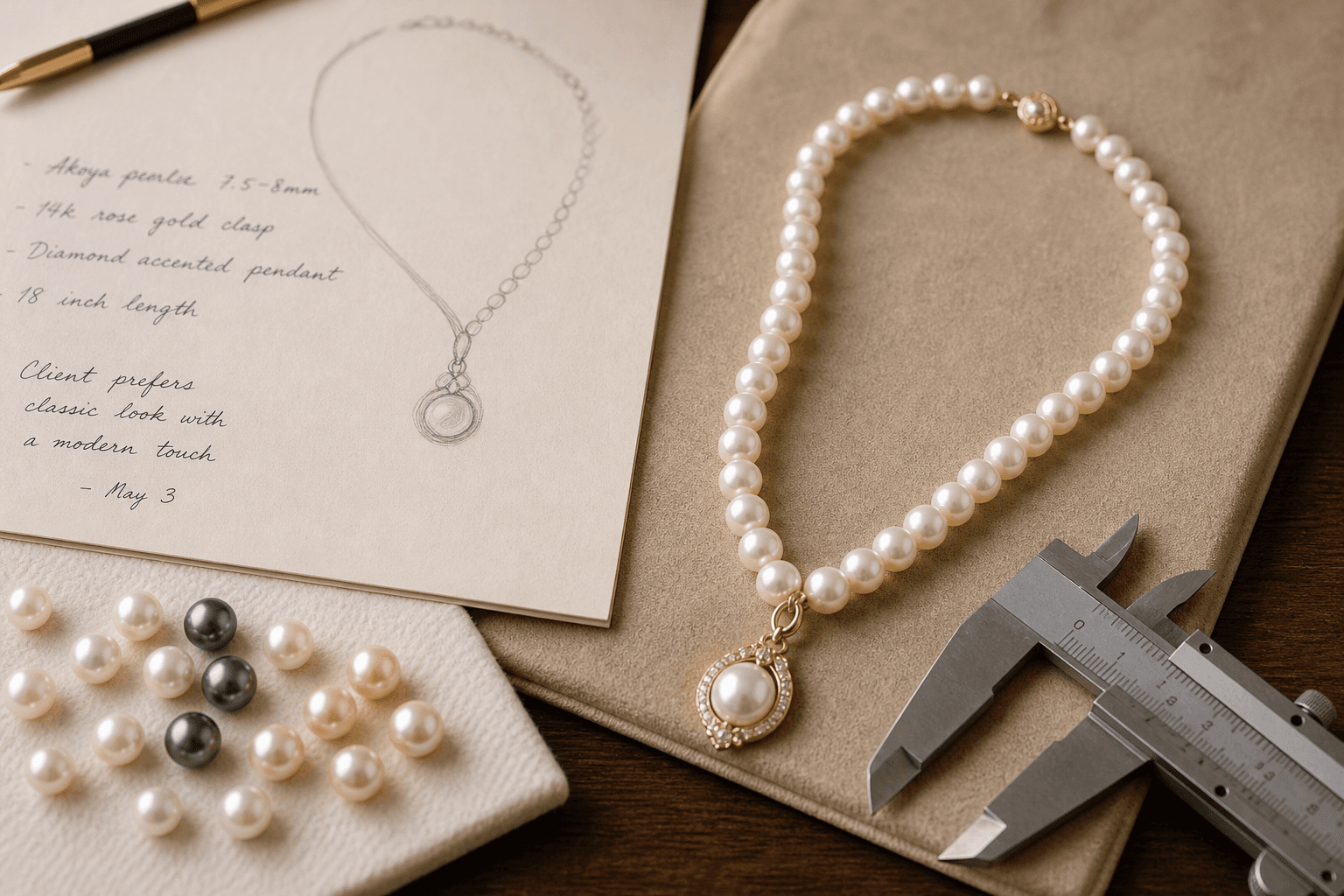
Before commissioning a piece, confirm the intended category, formation method, approximate size, shape, colour, matching requirements, treatment disclosure, setting, metal, and whether the finished design will use a particular pearl or a comparable substitute.
Ask how changes will be handled if the selected pearl is unavailable. Request written confirmation of the agreed materials and review the approval step carefully. A sketch or digital preview shows overall form, but it does not independently prove pearl identity.
Advikosh presents its custom jewellery service as “Your design, our craftsmanship,” with custom design and fabrication in gold, silver, platinum, and brass. Use the consultation to ask precise pearl questions before production begins.
Pearl Identification FAQ
Are cultured pearls real pearls?
Yes. Cultured pearls are genuine pearls formed by a mollusc after a human-assisted cultivation process.
Are freshwater pearls valuable?
Freshwater pearls can be desirable, but value is not determined by the freshwater label alone. Consider luster, surface condition, shape, size, colour, matching, workmanship, documentation, and design.
How can I identify Akoya pearls?
Check whether the seller clearly identifies the pearls as Akoya and provides supporting details. Appearance alone cannot conclusively establish the category.
Can I identify a pearl type from a photograph?
No. A photograph can show colour, shape, surface features, and apparent luster, but lighting and scale can mislead you.
When should I request a pearl report?
Consider one for a high-value purchase, inherited jewellery, insurance, a disputed description, unclear treatments, or unusually broad marketing claims.
Conclusion: Identify Carefully, Then Buy With Confidence
Separate observation from proof. You can compare luster, surface condition, shape, colour, size, nacre details, and matching at home, but these observations do not establish whether a pearl is natural, cultured, freshwater, saltwater, Akoya, South Sea, Tahitian, treated, or imitation.
Read terminology closely, question phrases such as “freshwater akoya,” disregard obsolete “oriental pearl” wording, and ask for clear details about the pearl, metal, measurements, treatments, price, shipping, and return policy. When the stakes are high, documentation or a qualified professional assessment is the sensible next step.
For pearl jewellery or a personalised piece, explore the collections and custom design options offered by Advikosh, then confirm the exact pearl description and current purchase terms before ordering.