


Safe pearl necklace care starts with identifying the piece before you clean, wear, or store it. Freshwater, baroque, Edison, and Akoya necklaces may differ in treatments, settings, metals, stones, and construction.
The main mistake is guesswork. Check the product information, inspect the clasp and stringing, follow the maker’s instructions, and seek jeweller guidance when the materials or condition are unclear.
Check the Necklace Before You Clean It
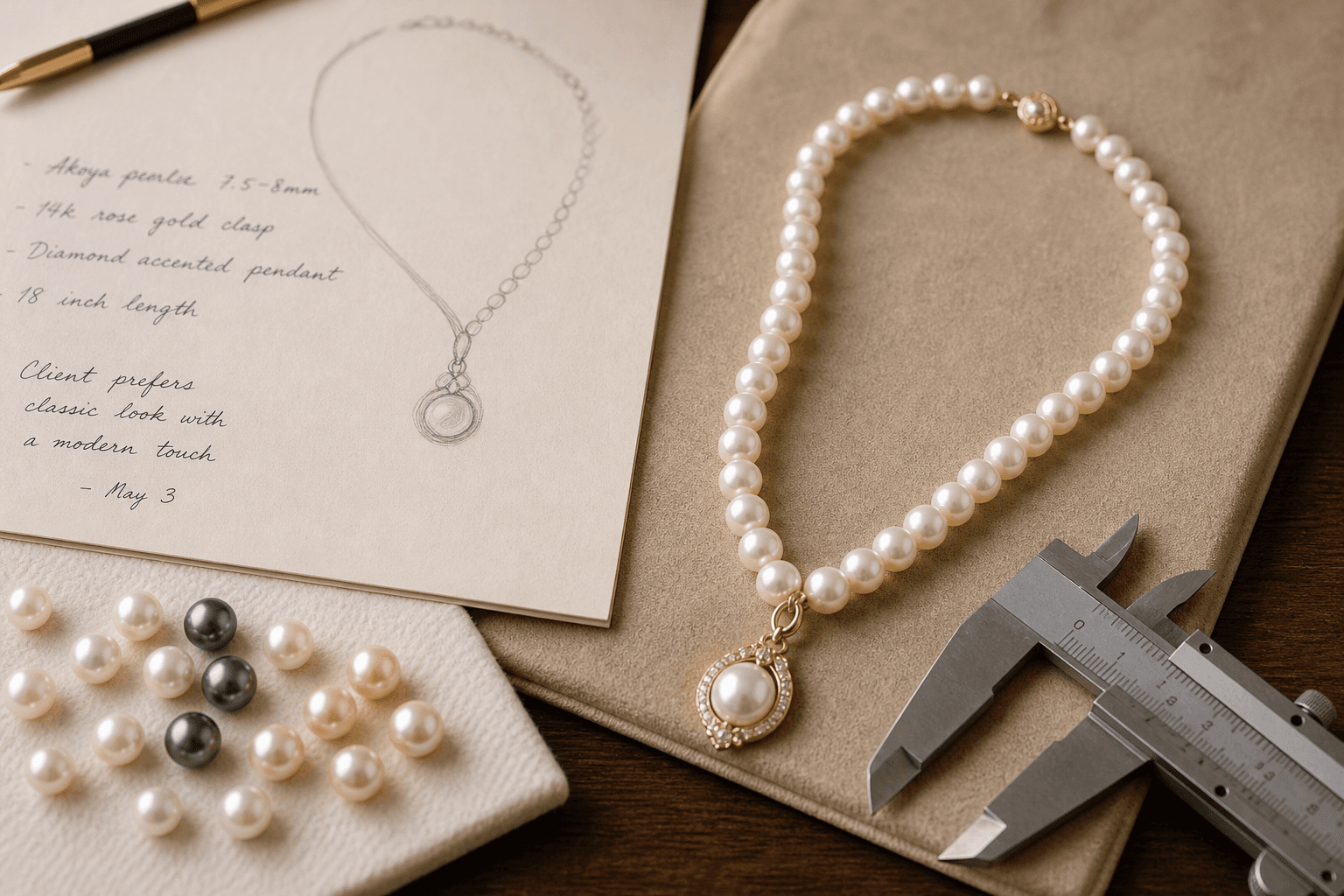
Begin with the necklace itself, not a cleaning method. Confirm whether it is described as freshwater, baroque, Edison, or Akoya, then note whether it includes gold, sterling silver, another metal, additional stones, plated details, or a particular stringing arrangement.
Construction matters because pearl surfaces are only one part of the item. A clasp, setting, chain, thread, wire, or mixed-material design may have its own care requirements. If you are comparing necklaces, review how 18K pearl necklaces differ in materials and construction before assuming every pearl necklace should be handled identically.
Also check the product page, care card, packaging, or instructions supplied by the maker. If the necklace has been treated, altered, repaired, or purchased without documentation, record that uncertainty instead of filling the gap with a generic online tip.
Do Not Choose a Cleaning Method by Guesswork

A common pearl necklace care mistake is selecting a household product or routine simply because it is often recommended for jewellery in general. That approach can overlook the pearl’s treatment, the stringing, and the other materials attached to the necklace.
Routine surface care and corrective cleaning are different decisions. A necklace with no visible problems and clear product instructions may be suitable for the maker’s stated routine. A necklace with unknown materials, visible residue, loose components, or signs of wear deserves more caution.
Do not improvise when you cannot verify that a method suits the entire necklace. The safer question is not “What works for pearls?” but “What does this specific necklace require?” When the answer is unclear, contact the seller or a qualified jeweller.
Consider What the Necklace Encounters During Wear
Pearl necklace care also involves deciding when to wear the piece. Review the maker’s guidance about moisture, heat, cosmetics, fragrance, cleaning products, and other substances rather than treating all exposure advice as universal.
This matters when the necklace combines pearls with another finish, metal, stone, or decorative element. The most suitable care decision may be determined by the least tolerant component, not by the pearl alone.
If the surface, colour, fastening, or stringing appears different after wear, stop using the same routine until you know what changed. A pause is safer than trying several products in succession.
Avoid Storage That Creates Scratching, Pressure, or Tangles
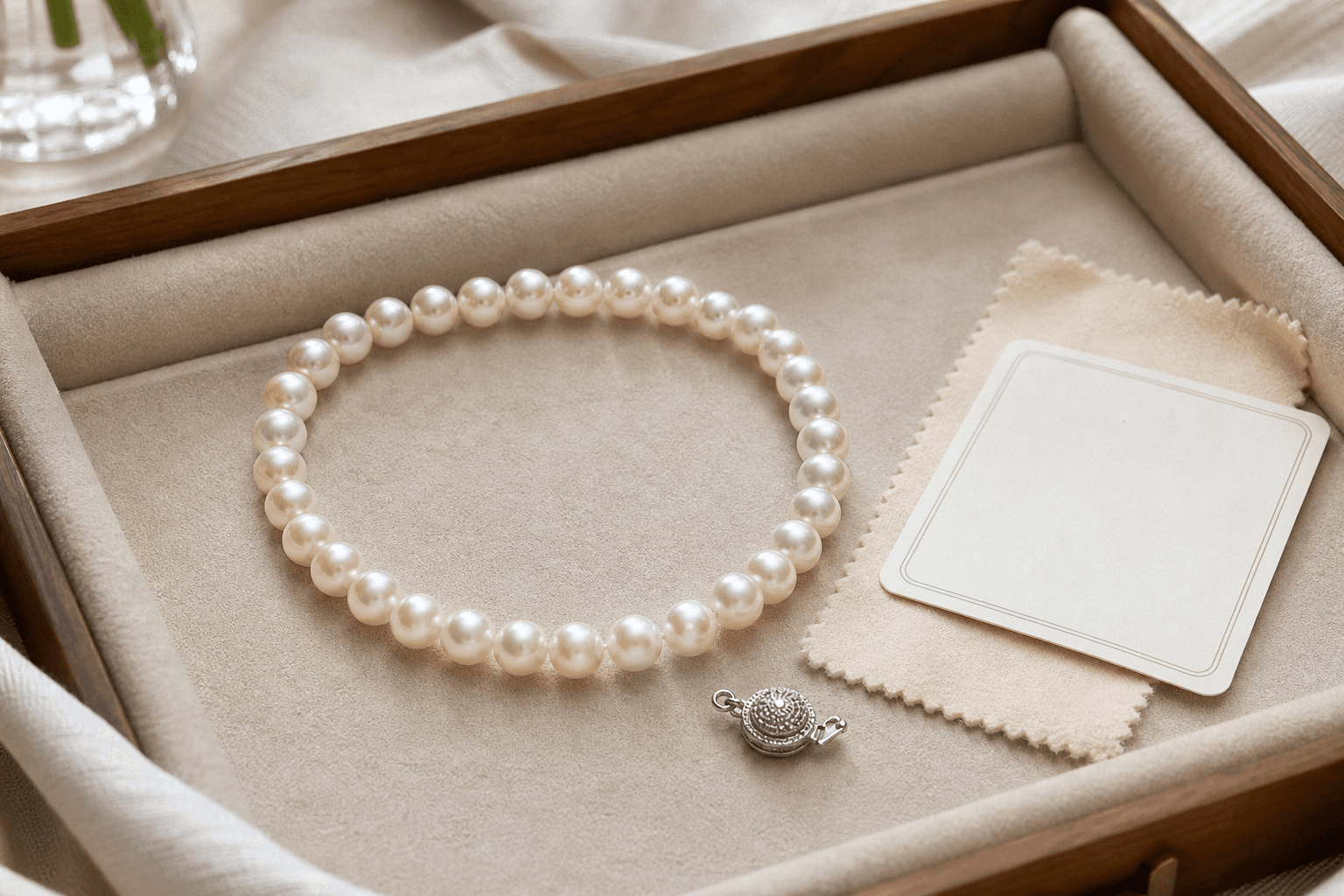
Storage should protect the whole necklace, not just keep it out of sight. Avoid placing it where it can rub against other jewellery, become tangled, be compressed, or pull repeatedly at the clasp and stringing.
Consider the necklace’s shape and design before selecting a storage solution. A beaded strand, pendant style, and complex clasp may not need exactly the same arrangement. This comparison of beaded pearl necklace styles and structures can help you assess how design affects handling and storage.
Follow any storage instructions supplied with the necklace. If none are available, prioritize separation from pieces that could contact or catch on it, and avoid leaving the necklace under pressure.
Do Not Overlook the Clasp or Stringing
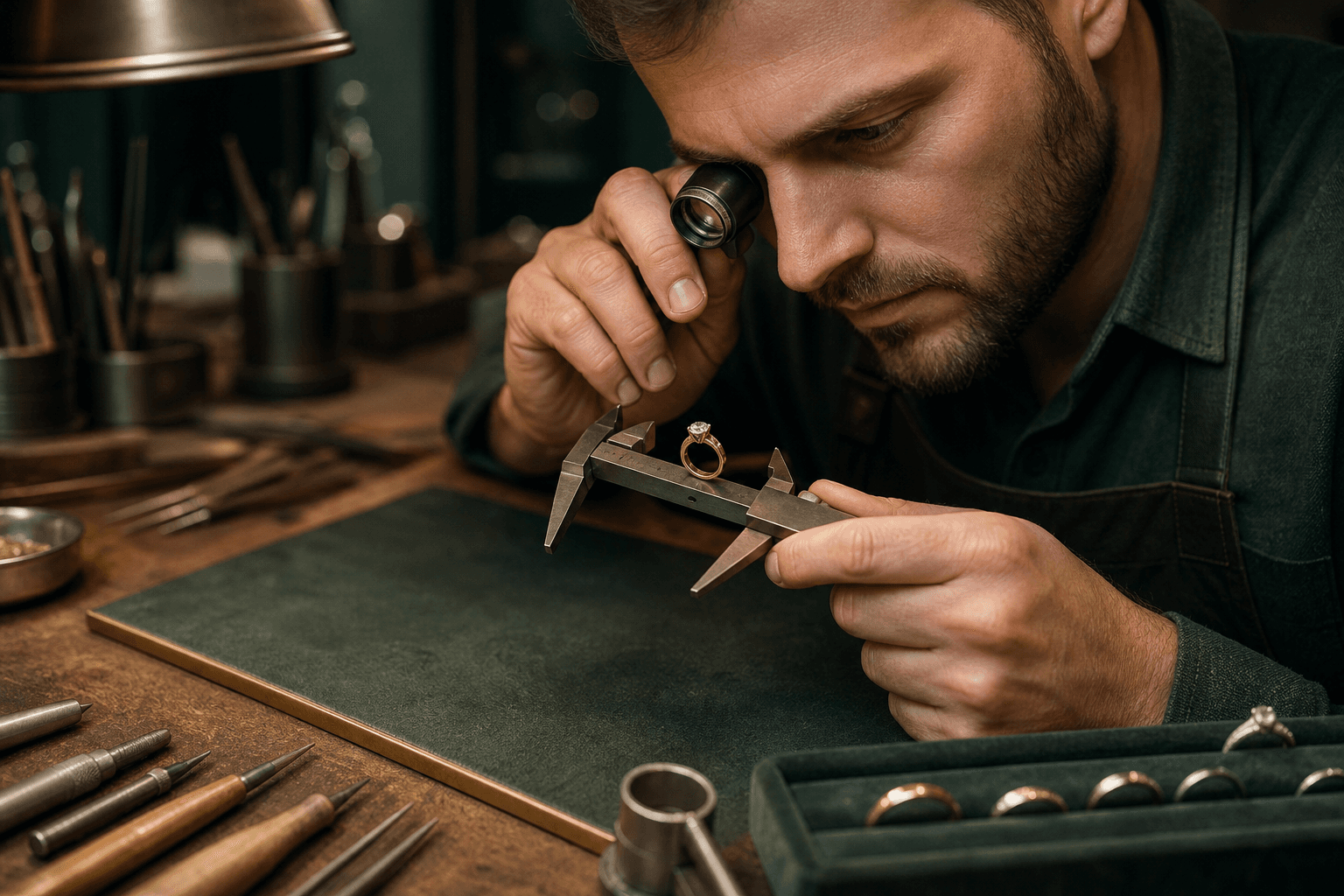
Looking only at pearl lustre can make you miss a more immediate risk. Before wearing or cleaning the necklace, examine the clasp, attachment points, and visible stringing for looseness, stretching, fraying, separation, or unusual movement.
A loose pearl or weakening fastening is not simply a surface-care issue. Continued wear may put additional strain on a component that needs assessment. Treat any visible construction concern as a reason to pause.
Keep notes or photographs of the concern if you need to ask the original seller for help. Describe what changed and whether the necklace has been cleaned, worn, stored, or altered since purchase.
Know When Home Care Is the Wrong Choice
Home care is not the right first step when the necklace has visible damage, loose components, worn stringing, an uncertain treatment history, mixed materials, or unclear instructions.
Pause before using a damaged necklace, particularly if a clasp does not close securely or the strand appears unstable. Ask the seller or a jeweller what assessment is appropriate, and confirm whether the requested service is available.
For an Advikosh item, do not assume that a general customer policy automatically covers pearl cleaning, restringing, accidental damage, or every repair. Review the applicable policy terms and ask a specific question about the piece.
How Pearl Type and Necklace Design Affect the Decision
Advikosh’s online pearl assortment includes freshwater and baroque pearl pieces, beaded pearl necklaces, Edison pearl jewelry, and 18K Akoya sea pearl necklaces. That range is useful context for shoppers, but it is also a reason not to treat every product as interchangeable.
When buying or maintaining pearl jewelry, compare the named pearl type with the full product description. Check the other materials, design details, and instructions supplied for that item. The category name alone may not explain how the complete necklace should be handled.
This check-first approach also applies to handcrafted jewelry. If a custom design includes pearls alongside gold, silver, platinum, brass, or other stones, ask for care guidance that accounts for the completed design.
A Pre-Care Checklist for Any Pearl Necklace
Use this sequence before cleaning, storing, or returning a necklace to regular wear:
- Identify the piece. Record the pearl type, design, metal, additional stones, and stated treatment or finish.
- Inspect the construction. Check the clasp, attachment points, stringing, settings, and visible surfaces.
- Find the instructions. Review the product page, care card, packaging, or maker’s guidance.
- Separate routine care from repair. Do not treat loose pearls, worn stringing, or a weak clasp as cleaning concerns.
- Choose only supported steps. If instructions do not clearly apply to the complete necklace, pause and ask for advice.
- Store thoughtfully. Reduce contact with other jewellery, tangling, compression, and unnecessary strain.
Pearl Necklace Care FAQs
Should you clean a pearl necklace at home?
Only decide after confirming the pearl type, construction, surrounding materials, and applicable instructions. Unknown treatments, visible damage, loose parts, or mixed materials warrant product-specific advice first.
How should you decide where to store a pearl necklace?
Choose an arrangement that reduces contact with other jewellery, tangling, compression, and strain on the clasp or stringing. Follow the maker’s instructions and consider the necklace’s actual design.
What should you do if the stringing or clasp looks worn?
Pause regular wear and avoid treating the issue as surface care. Record what you noticed and ask the seller or a jeweller whether the necklace should be assessed before further use.
Does care differ between freshwater, baroque, Edison, and Akoya necklaces?
Do not assume identical requirements. The appropriate decision depends on the product, treatments, settings, stringing, surrounding materials, and supplied instructions.
Make Pearl Necklace Care a Check-First Routine
The safest approach is deliberate rather than complicated: identify the piece, inspect its condition, review product-specific guidance, and avoid any method you cannot verify. Account for the clasp, stringing, metal, settings, and additional stones.
When a necklace is damaged, altered, made from mixed materials, or accompanied by unclear instructions, stop before attempting corrective care. A precise question is more useful than a generic routine.
If you have questions about an Advikosh piece, visit the official Advikosh website and use its stated 24/7 online support for product-specific assistance.