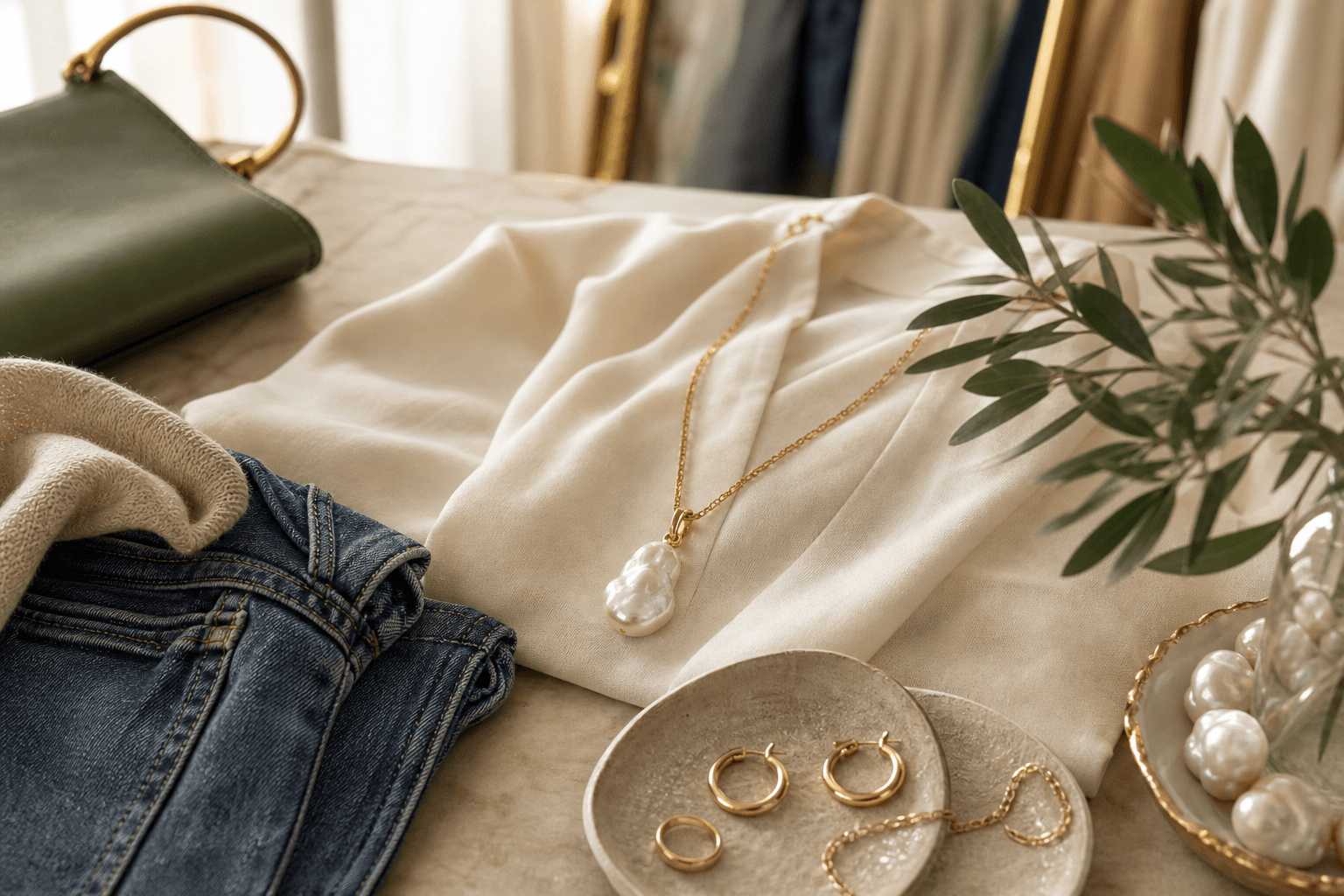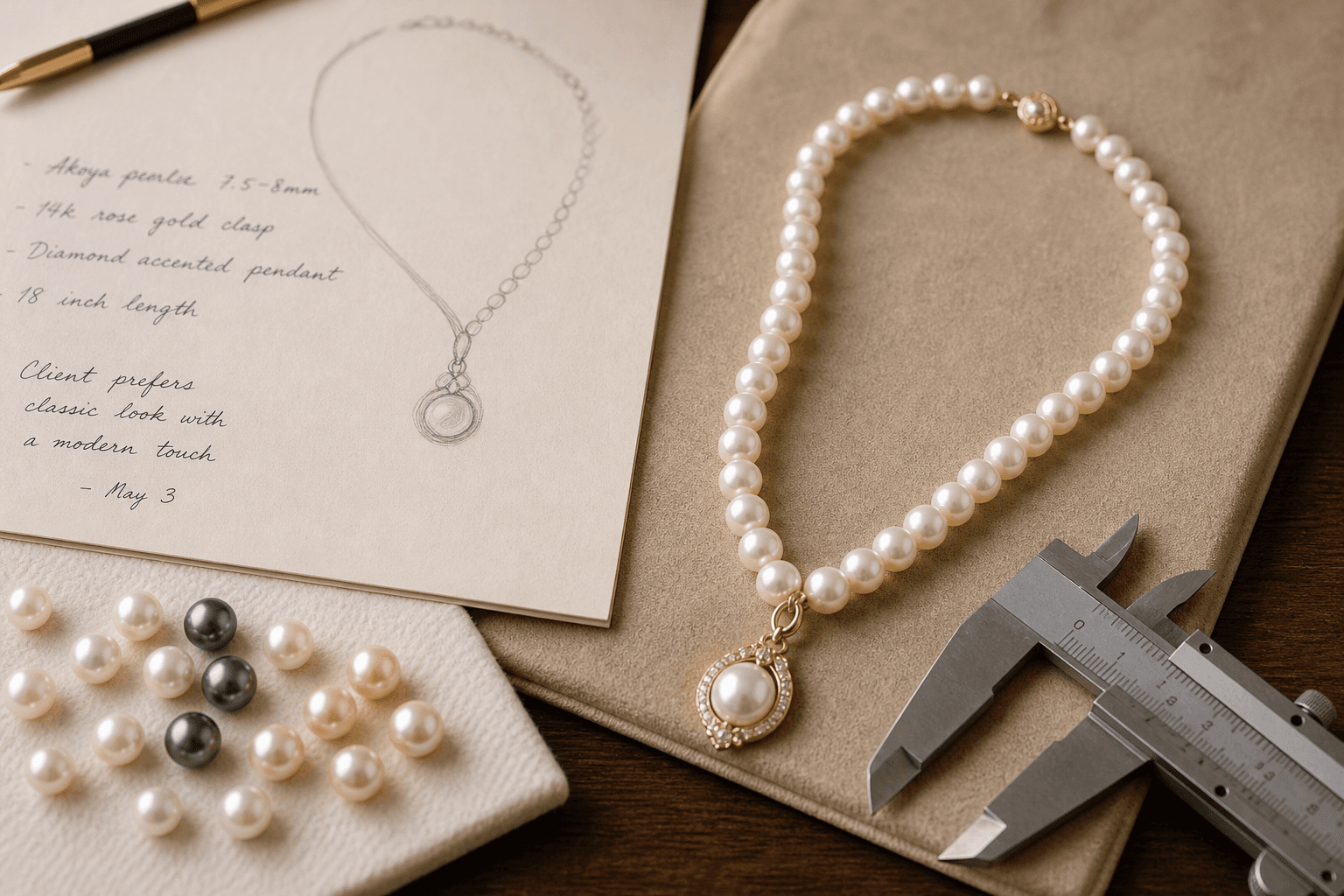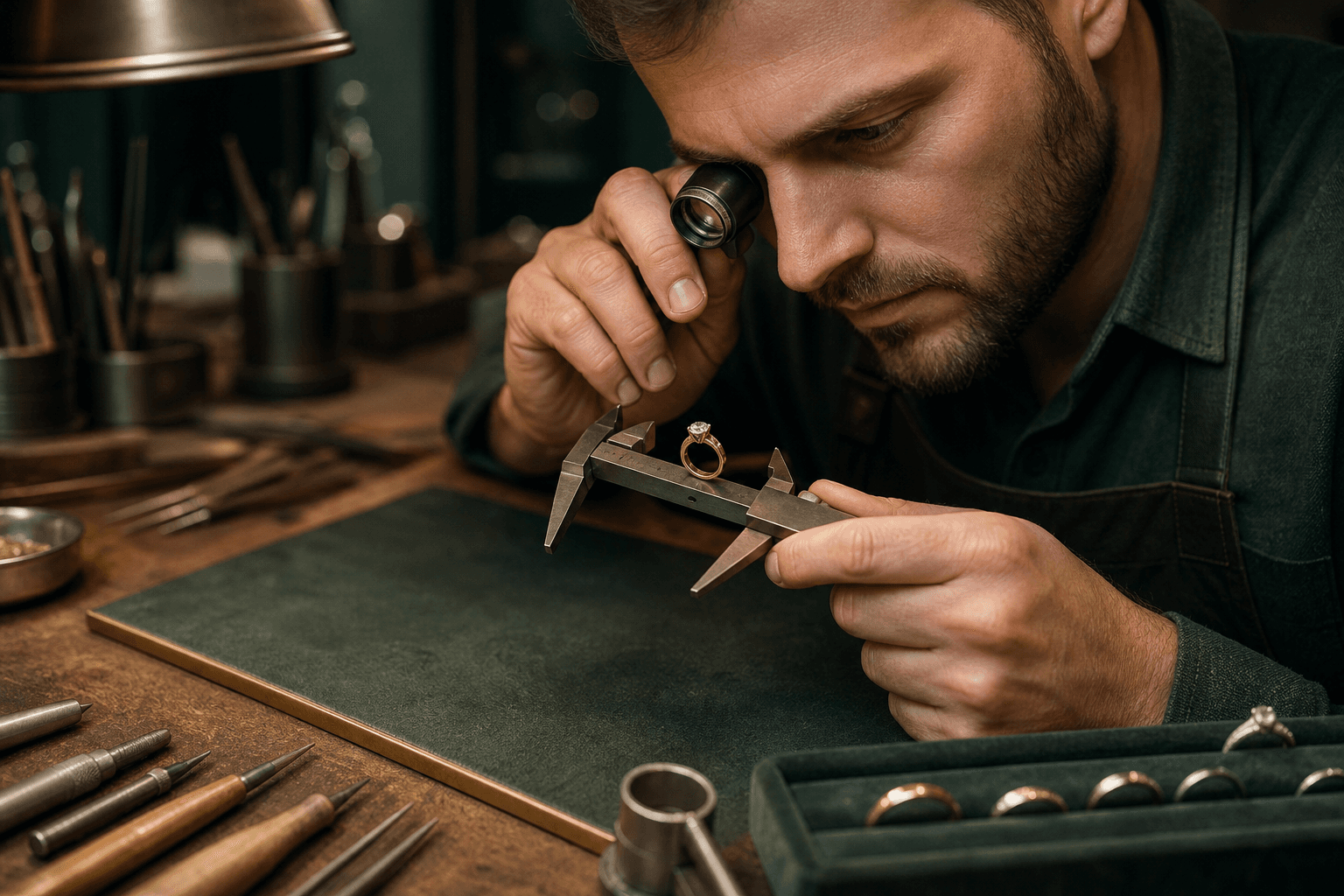



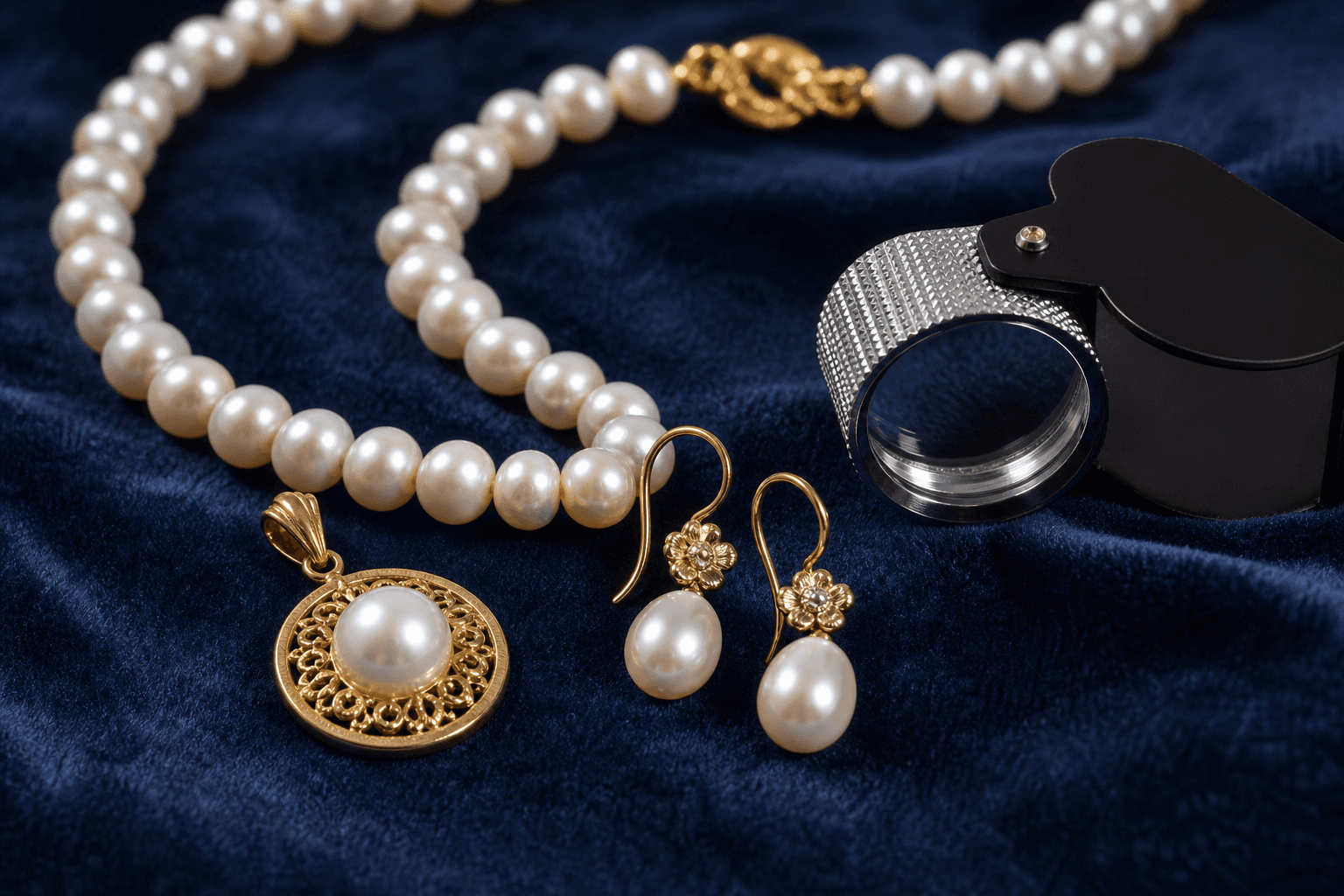
“Unique pearl treasures” is best understood as a style and buying brief, not a technical pearl category. A piece feels distinctive when its pearl type, shape, jewellery format, metal, design details, and personal meaning work together.
Before comparing designs, identify what the listing actually describes. Then decide whether a ready-to-shop piece gives you enough choice or whether custom jewellery would better express the occasion, recipient, or idea you have in mind.
What “unique pearl treasures” really means
The phrase is descriptive marketing language. It is not a recognised pearl type, quality grade, certification, or regulated jewellery category. The useful question is what specifically makes a piece individual.
Look for concrete details such as pearl classification, shape, approximate size, surface appearance where documented, setting, metal, colour, and overall design. A baroque pearl may feel distinctive because of its irregular form, while a simple round pearl stud may feel personal because of its scale, metal, or connection to a meaningful occasion.
Compare pearl types before comparing designs

Pearls are not interchangeable. Natural, cultured, and imitation pearls are different categories, so the terminology should be clear before you assess style or price.
Natural pearls
Natural pearls form in molluscs without deliberate human insertion. If a product is described as natural, the wording should be clear and specific. Do not assume that a product is natural simply because the listing uses the word “pearl.”
Natural status alone does not tell you the pearl’s shape, size, appearance, treatment, setting, or value. Those details still need to be confirmed separately.
Cultured freshwater and saltwater pearls
Cultured pearls are grown by molluscs with human intervention. They may be freshwater or saltwater, and a product description should identify the relevant category when that information is available. The terms “freshwater,” “saltwater,” and “Akoya” should not be treated as interchangeable.
Consumer guidance on pearl advertising says cultured pearls should be identified as cultured rather than described only as “pearls.” Pearl description guidance provides a useful terminology check, although the source is from the United States.
Imitation pearls
Imitation pearls are manufactured from materials such as glass, plastic, or other non-pearl substances. They can still be a valid style choice if the listing describes them accurately, but they should not be confused with natural or cultured pearls.
Choose the details that make a pearl piece feel personal
Uniqueness often comes from combining ordinary jewellery decisions. Start with the pearl’s shape. Round, near-round, oval, drop, and baroque forms create different visual effects, but the shape should be confirmed in the product description rather than assumed from an image.
Next, consider scale and format. Small pearl studs can create a restrained look, while a pendant, drop earring, or beaded necklace may make the pearl more visible. The right choice depends on the wearer’s existing jewellery, preferred level of detail, and whether the piece is intended for everyday use, gifting, or a particular milestone.
Metal changes the overall character of a design. Sterling silver can create a bright, versatile finish, while gold offers a warmer appearance. If a listing refers to gold-filled, plated, solid gold, platinum, brass, or mixed metals, confirm exactly what that wording means.
Match the jewellery format to the wearer and occasion
For a gift, begin with the recipient rather than the pearl. Look at the jewellery they already wear. Do they prefer earrings, necklaces, bracelets, or rings? Are their pieces minimal and understated, or do they favour visible shapes and layered details?
For earrings, consider whether studs, hoops, or drop styles align with their usual choices. For necklaces, compare a beaded design, pendant, or shorter style based on the recipient’s wardrobe and comfort. Check product dimensions before ordering.
The occasion can guide the amount of personalisation. A ready-made piece may be appropriate when you need a defined gift. A custom piece may be more meaningful when the jewellery needs to represent a person, relationship, date, symbol, or shared story.
Ready-to-shop or custom pearl jewellery?
| Choose ready-to-shop jewellery when | Consider custom jewellery when |
|---|---|
| You already know the preferred format. | You have a specific concept or meaningful detail in mind. |
| You want to compare available designs and CAD pricing. | You cannot find the desired combination in standard collections. |
| You need a straightforward gift decision. | The occasion calls for a more personal or coordinated piece. |
| You prefer to see the defined product before ordering. | You are comfortable discussing requirements before the final design is established. |
When a ready-to-shop piece is the better choice
Curated pearl jewellery works well when the design already matches your preferences. It lets you compare the listed pearl description, metal, format, dimensions, price, and photographs in one decision. This can be especially useful when buying a gift and avoiding an open-ended design process matters.
Advikosh offers pearl jewellery alongside sterling silver jewellery and other collections through its online store. Review each individual listing carefully, because an assortment may include different pearl types, metals, shapes, and construction details.
When custom design is worth considering
Custom design can make sense when the standard selection does not capture what you want. You may have a particular silhouette, pearl arrangement, metal preference, symbolic element, or occasion in mind.
Advikosh describes its custom service with the phrase “Your design, our craftsmanship.” The brand says it combines traditional handcrafting techniques with modern design technology and works with skilled artisans and manufacturing partners in Jaipur, India. Ask about proposed materials, design stages, dimensions, price, timeline, and changes before approving a custom order.
What to verify in the product description
- Pearl classification: Ask whether the pearls are natural, cultured freshwater, cultured saltwater, or imitation.
- Shape and appearance: Confirm whether the pearls are round, baroque, drop, oval, or another form.
- Size and dimensions: Look for pearl measurements, necklace length, earring drop, or pendant dimensions.
- Treatment information: Check whether treatments or enhancements are disclosed.
- Metal content: Confirm whether the piece uses sterling silver, gold, gold-filled material, plating, platinum, brass, or a combination.
- Custom status: Establish whether the item is ready to ship, made to order, or fully customised.
- Price and policies: Confirm the total price in CAD, shipping terms, support options, and return or exchange conditions.
Canadian precious-metal marketing must not be false or misleading about metal content. The Competition Bureau also provides guidance on mixed-metal articles. See the Canadian precious-metal marking glossary and guidance on marking mixed metals.
The same habit applies to any luxury purchase: read stated materials and inclusions before interpreting the visual promise of a product. A practical example is checking a luxury product description for specific claims instead of relying only on presentation.
A confident online purchase in Canada
Check that the price is shown in CAD, understand whether shipping is included, and save the product description and order details. Ask unanswered questions about pearl classification, dimensions, metal content, care, or customisation before ordering.
Advikosh states that dedicated support is available 24 hours a day. It also states that customers receive one free return or exchange per order within seven days, so review the full terms and confirm that they apply to the item you plan to buy.
How to choose unique pearl jewellery as a gift
Use a four-part framework: the recipient’s style, the occasion, the jewellery format, and the level of personalisation. If you know the recipient’s preferred metal and jewellery type, a ready-made piece may offer a confident choice. If you know the story but not the exact design, custom jewellery may give you more room to express it.
A more elaborate piece is not automatically more meaningful. A well-chosen pearl shape, wearable format, or carefully considered metal can communicate more than an unclear claim of exclusivity.
Pre-purchase checklist for unique pearl treasures
- Have I confirmed the pearl category?
- Do I know the pearl shape, approximate size, and jewellery dimensions?
- Are treatments or enhancements disclosed where relevant?
- Is the metal content clear?
- Is the item ready-to-shop, made to order, or custom-designed?
- For a custom piece, have I confirmed the concept, materials, dimensions, price, timeline, and revision expectations?
- Have I checked the total CAD price and shipping terms?
- Do I understand the support and return or exchange policy?
FAQ about unique pearl treasures
Is “unique pearl treasures” a specific type of pearl?
No. It is a descriptive phrase for distinctive pearl jewellery, not a pearl classification, quality grade, or certification.
How can I tell whether pearls are natural, cultured, or imitation?
Look for an explicit classification in the product description. Natural pearls form without deliberate human insertion, cultured pearls grow with human intervention, and imitation pearls are manufactured materials.
What should a Canadian pearl jewellery listing disclose?
It should clearly describe the pearl category, dimensions, metal content, and important treatments or construction details. Precious-metal claims must not be false or misleading.
Is custom pearl jewellery better than a ready-to-shop piece?
Neither is automatically better. Ready-to-shop jewellery is simpler when you like an available design. Custom jewellery is worth considering when a specific concept, symbol, material combination, or personal meaning matters more.
What should I ask before ordering a custom pearl jewellery design?
Ask what pearl type and metal will be used, what dimensions are proposed, how the design will be confirmed, what the price includes, how long the process may take, and what changes are possible.
What purchase policies should I check when buying pearl jewellery online in Canada?
Review currency, shipping, support, return or exchange periods, exclusions, and conditions for customised or made-to-order items. Keep a copy of the listing and order confirmation.
Turn the idea into a clearly described piece
The strongest route to unique pearl treasures is to replace vague language with clear choices. Identify the pearl category, compare shape and format, confirm the metal, and decide whether a ready-made design or custom process better fits the occasion.
For Canadian shoppers, accurate descriptions and understandable policies matter as much as appearance. Advikosh offers pearl jewellery and custom jewellery, with 24-hour support and one free return or exchange per order within seven days. Explore the collections or discuss a personalised concept with Advikosh.