
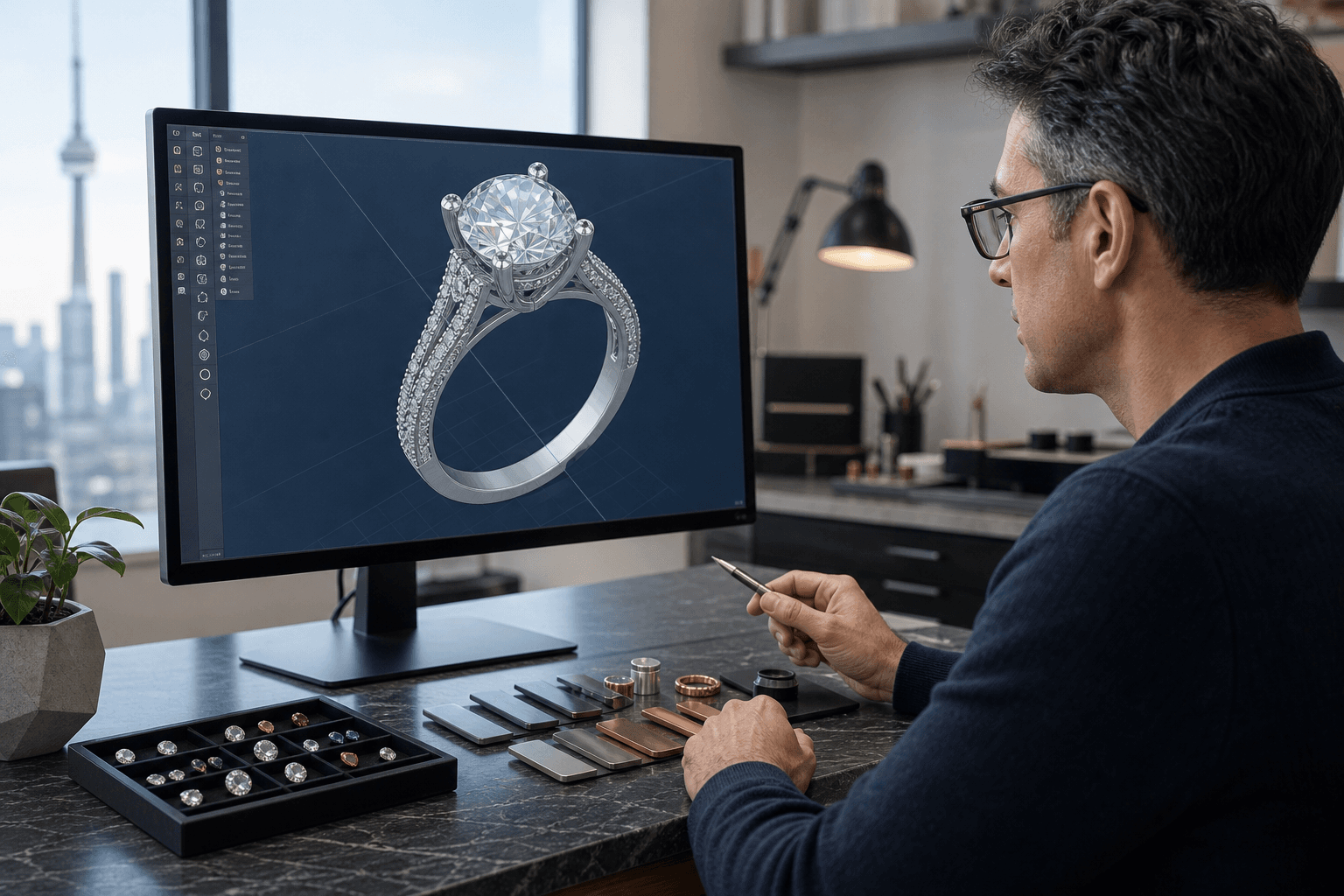
CAD jewelry design can make a custom idea easier to discuss before fabrication. A digital model may show proportions, stone placement, settings, and personal details more clearly than a verbal description, but it is not automatically the finished piece. Before ordering, confirm what previews, revisions, prototypes, materials, approvals, and final deliverables your jeweller actually includes.
That distinction matters for Canadian shoppers considering a bespoke ring, pendant, earrings, necklace, or another personalized piece. Advikosh offers custom jewelry design under the message “Your design, our craftsmanship,” but the supplied information does not confirm that it uses CAD modelling, provides 3D previews, or supplies production files. Treat the workflow below as a practical guide to questions, not a description of Advikosh’s unverified technical process.
Ready-made jewelry or custom design: Which route fits?
A ready-made piece is usually the simpler choice when you already like the design, want a clearer view of what you are buying, and prefer to avoid an extended approval process. You can assess the listed materials, dimensions, appearance, and price before placing the order, although you should still check sizing, care instructions, shipping, and return terms.
Custom design is more suitable when available options do not capture a personal story, unusual proportion, meaningful engraving, specific stone, or coordinated set. It gives you more input, but also more decisions. You may need to provide measurements, compare materials, approve design changes, and accept that the final price or timeline can change when specifications change.
| Consideration | Ready-made piece | Custom piece |
|---|---|---|
| Design certainty | You can evaluate an existing design before ordering. | The design develops through communication and approval. |
| Personalization | Usually limited to available sizes or selections. | May accommodate personal details, proportions, materials, or stones. |
| Decision effort | Lower, because fewer specifications require agreement. | Higher, because measurements, details, revisions, and policies matter. |
| CAD relevance | Usually unnecessary unless the item is modified. | Potentially useful for reviewing a concept before fabrication. |
What CAD jewelry design means in practical terms

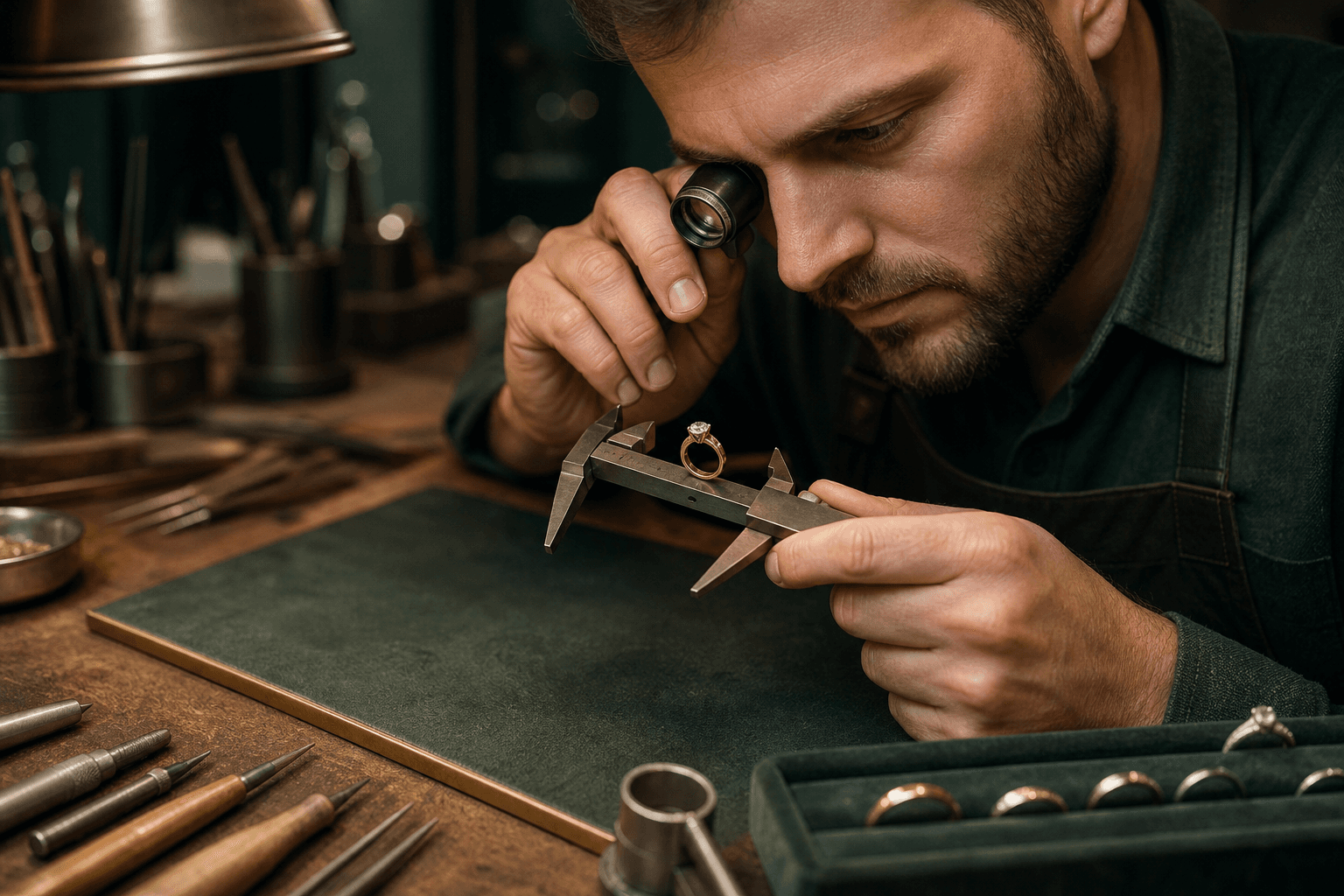
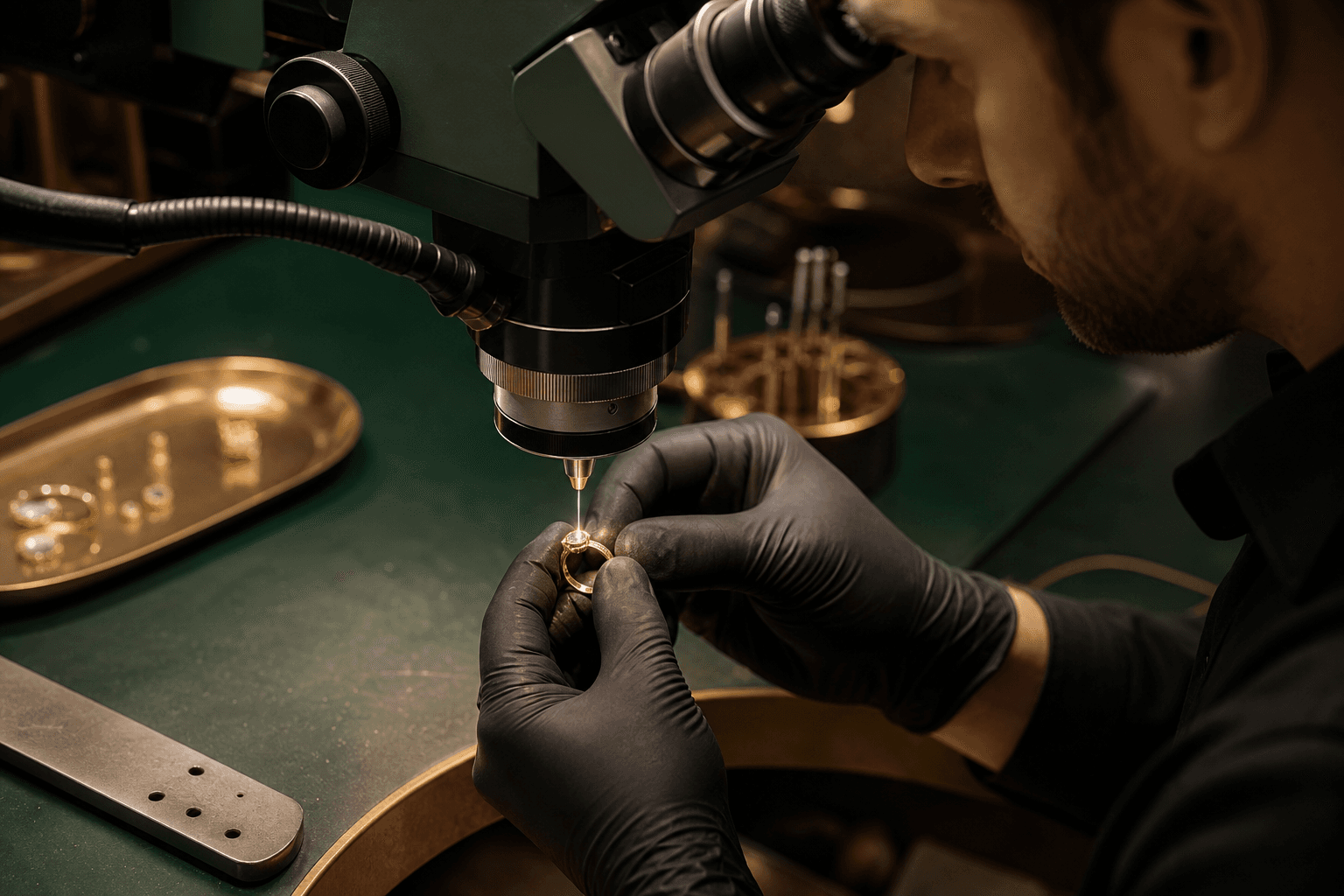
CAD stands for computer-aided design. In jewellery, it generally refers to creating a detailed digital model of a proposed piece. Depending on the provider, the model may be used to create still images, multiple viewing angles, measurements, a physical wax or resin model, a 3D-printed pattern, or information used during casting and production.
For a buyer, the main benefit is communication. A digital model can help you discuss the relationship between a centre stone and its setting, the thickness of a band, the scale of a pendant, the spacing of a necklace feature, or the placement of an engraving. It may also make it easier to identify an unwanted detail before fabrication begins.
A preview is not proof of the final result in every respect. Screen images may not show the exact surface finish, metal colour, stone appearance, final weight, comfort, or fit. Ask which measurements are fixed, which details are illustrative, and whether the jeweller will check the design for wearability and structural requirements before production.
The typical CAD jewelry design workflow
The following sequence is common in CAD-assisted custom jewellery, but individual providers use different processes. Ask the jeweller to explain its own stages in writing before you pay a deposit or approve a design.
1. Share the concept and specifications
Start with the purpose of the piece. Explain whether it is for daily wear, a wedding, an anniversary, a gift, or a special occasion. Inspiration photographs can communicate a general style, but identify which features you actually want to retain and which are only references.
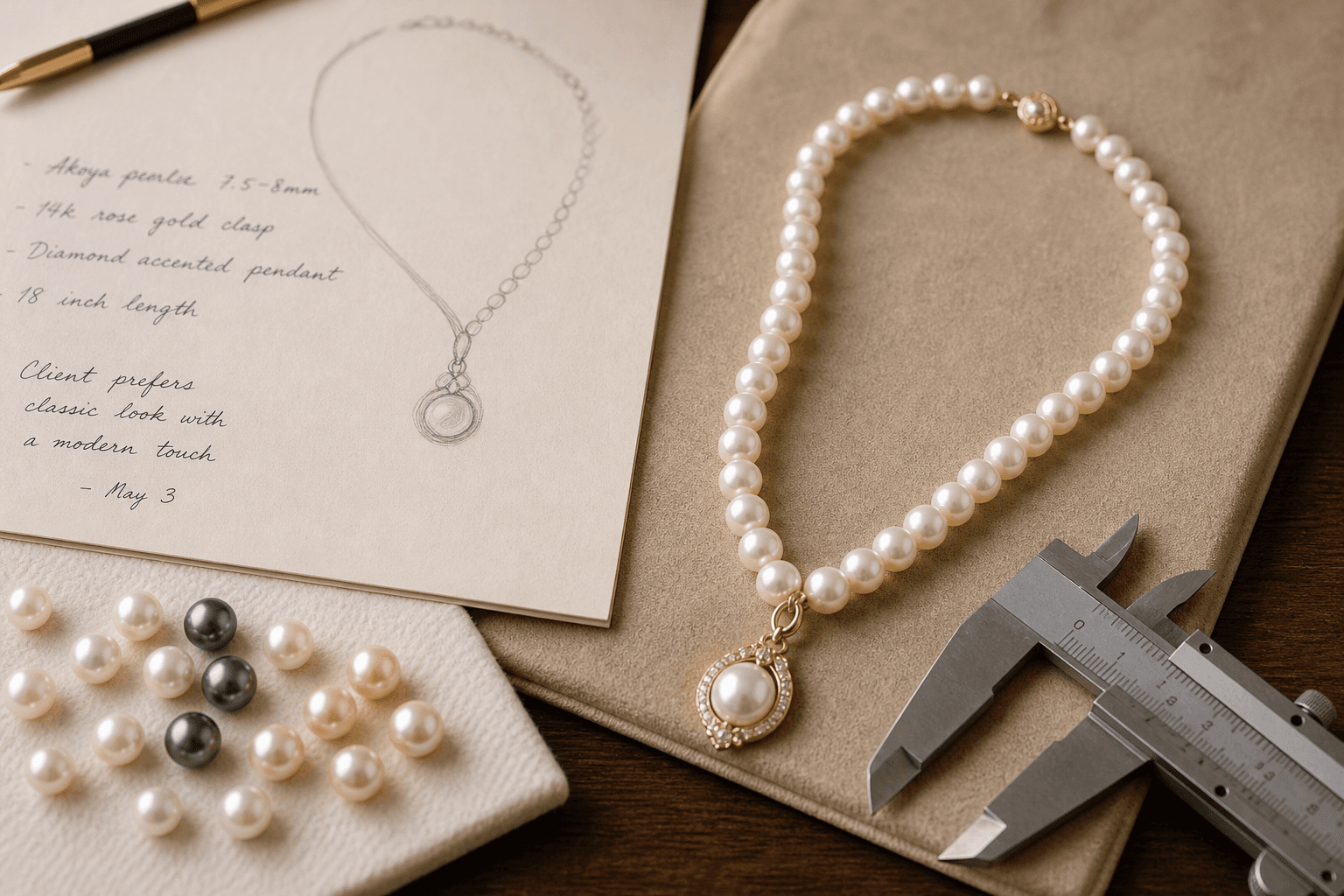
Prepare information that affects the design: ring size, chain length, preferred dimensions, metal type, stone identity and size, setting style, engraving, finish, budget, and required date. If you are unsure about a measurement, say so rather than guessing.
2. Review the digital design
If the provider supplies a render or model for review, inspect more than the overall appearance. Look at the piece from several angles and ask about scale, thickness, symmetry, stone position, setting security, negative space, edges, clasps, closures, and the way it should sit on the body.
3. Confirm revisions and approve the design
Ask how many revision rounds are included and what counts as a revision. A small proportion change may be treated differently from a new concept, different stone, or change in metal. Ask whether revisions affect price or production dates, and keep copies of the approved specifications, quotation, and final images.
4. Move from the approved model to fabrication
Possible industry routes include producing a wax or resin prototype, using 3D printing, creating a casting pattern, or moving directly into another production method. These are options to confirm, not services that should be assumed from the phrase “CAD jewelry design.” Ask what happens if a technical problem is identified after approval.
What to confirm before ordering custom jewelry with CAD
Design previews, revisions, and deliverables
Clarify exactly what you will see and receive. A provider might offer a single render, several views, technical measurements, a physical prototype, or a final photograph. None automatically means you receive an editable CAD file or files needed to manufacture the piece elsewhere.
- Will you see the design from more than one angle?
- Are dimensions and proportions included?
- How many revisions are included?
- Is a physical prototype available?
- What must you approve before fabrication?
- Will you receive a final record of the approved design?
Metals, stones, dimensions, and finish
Confirm the metal type and purity or composition, stone identity and size, setting style, finish, plating arrangement if applicable, expected dimensions, and estimated weight. Material choices can change appearance, durability, maintenance needs, and cost. Advikosh’s online collections include pearl, sterling silver, moissanite, and gold jewellery, but suitability for your proposed design should be confirmed for that specific piece.
Price, timeline, and changes
Request a quotation that identifies design fees, materials, stones, labour, prototype work, revisions, taxes, and shipping where applicable. Ask whether a deposit is refundable, when the balance is due, and what happens if you cancel after design work begins. Get an expected production timeline and ask what could extend it.
Shipping, returns, repairs, and support
Ask whether a personalized piece can be returned or exchanged and what happens if it differs from the approved specifications, arrives damaged, or needs adjustment. Advikosh’s supplied business information states that it provides free shipping, 24/7 online support, and one free return or exchange within seven days. Confirm how these policies apply to custom work, including exclusions and the start of the return period.
Design ownership and Canadian industrial-design protection
“Owning the design” can mean different things. You might own the physical jewellery while the provider retains an editable model, production file, method, or right to reuse elements. Ask who owns the digital files, whether you can receive a copy, whether the jeweller may reproduce the design, and whether your concept can appear in marketing.
In Canada, an industrial-design registration can protect the distinctive appearance of a jewellery design for up to 15 years, subject to applicable requirements. The Canadian Intellectual Property Office explains this principle in its industrial designs guide. This is general information, not advice about whether a particular design qualifies. Seek professional advice for a specific protection question.
A short question list to take to your jeweller
- What is included in the quoted price?
- Will I receive renders, measurements, a prototype, or another preview?
- How many revisions are included?
- Which metal, stones, dimensions, finish, and estimated weight are confirmed?
- Who checks fit, wearability, and structural requirements?
- When does approval become binding?
- Who owns the concept, model, editable file, and reproduction rights?
- What happens if the finished piece differs from the approved specifications?
- How do shipping, returns, exchanges, repairs, and support apply?
- What is the expected timeline?
How Advikosh fits into the decision
Advikosh is presented as a Canadian online jewellery brand with pricing in CAD and a custom service built around “Your design, our craftsmanship.” It also offers ready-to-shop pearl, sterling silver, moissanite, and gold jewellery, giving shoppers a choice between selecting an existing piece and discussing a more personal design.
The available business information confirms the custom jewellery offering, but does not confirm specific CAD software, 3D previews, physical prototypes, file delivery, revision limits, or CAD-related pricing. Confirm the current design process, materials, approval stages, timing, and policies before ordering.
Choose the process you can verify
Ready-made jewellery suits shoppers who want to evaluate a known design and place a straightforward order. Custom jewellery is worth considering when personal meaning, unusual specifications, or a one-of-a-kind result matter more than simplicity. CAD may make a concept easier to review, but its value depends on clear previews, accurate specifications, and a reliable approval process.
To ask about current custom-design options, materials, policies, and process, visit Advikosh.