


Edison pearl jewelry should go on after cosmetics and perfume, come off before washing, exercise or sleep, and be gently wiped with a soft, clean cloth after wear. Keep it away from harsh chemicals, abrasion, steam, soaking and ultrasonic cleaners. For an unknown spill, visible damage, loose setting or weakened stringing, stop wearing it and seek professional advice.
What “Edison Pearl” Means for Care
“Edison” is a trade name for near-round to round freshwater bead-cultured pearls, not a separate biological pearl category. Freshwater cultured pearls can have naturally formed or treatment-modified colour, so the name alone does not establish treatment history, durability or value. GIA’s discussion of Edison pearls and colour treatment explains this distinction.
Care depends on the pearl, its surface, string or adhesive, clasp, setting, metal finish and any other gemstones. For terminology and preliminary identification questions, see this pearl identification guide.
The After-Wear Routine That Prevents Most Problems
Apply skincare, makeup, hairspray and perfume first. Let them dry, then put pearl jewelry on last. Remove it first before washing, bathing, swimming, exercising or sleeping.
- Handle the piece by its metal parts where practical.
- Check the pearl, clasp, bail, earring back and setting for residue.
- Wipe gently with a clean, soft cloth. Do not polish aggressively.
- Let the piece air-dry away from heat and direct sunlight.
- Store it separately so harder jewelry cannot rub against the pearls.
Repeated exposure to perspiration, cosmetics, moisture and friction can gradually affect a pearl piece or its surrounding materials. The practical differences between pearl formats, metals and settings are covered in this guide to luxury pearl jewelry.
What to Do After Perfume, Makeup, Sweat, Food or an Unknown Spill
Respond promptly but gently. Blot or lightly wipe the affected area instead of rubbing the substance across the surface.
| Exposure | Immediate response | Escalate when |
|---|---|---|
| Perspiration | Wipe each pearl with a clean, soft, dry cloth. | The surface looks dull, sticky or changed. |
| Makeup or skincare | Blot residue and use light cloth strokes. | A coating remains or colour or lustre changes. |
| Perfume or hairspray | Remove the jewelry and gently wipe it. | You see staining, tackiness, a film or a finish change. |
| Food residue | Lift it with a soft cloth. Do not scrape. | It has hardened in a setting, clasp or narrow gap. |
| Unknown chemical | Stop wearing the piece, blot without rubbing and separate it. | Always seek an assessment before further cleaning. |
Record what happened, including the product involved if known, and photograph the piece before attempting anything more.
How to Clean Edison Pearl Jewelry Safely
For light, known surface residue on an otherwise sound piece, begin with a clean, soft cloth and the least moisture possible. The complete construction matters: a pearl mounted beside sterling silver, plated metal, glue, another gemstone or string may not tolerate the same treatment as the pearl alone.
A cautious home-cleaning method
- Work over a clean, dry towel so the piece cannot strike a hard surface.
- Inspect the pearls, clasp, settings and stringing. Stop if anything is loose, cracked, frayed or lifting.
- Use a dry cloth first. If light residue remains and minimal moisture suits the complete piece, slightly dampen the cloth, not the jewelry.
- Wipe one small area at a time with gentle strokes. Do not twist a strand or pull on a pearl.
- Remove surface moisture with a second soft cloth.
- Leave the piece flat or supported in a cool, dry place until fully air-dry.
Do not soak Edison pearls or leave a necklace submerged. Avoid harsh chemicals, household cleaners, silver dips, abrasive products, steam, ultrasonic cleaners, heat and forceful brushing. These can affect the pearl, finish, adhesive, stringing, plating or other stones. For metal pieces that also contain pearls, use the precautions in this safe sterling silver cleaning guide only where they fit the complete construction.
Storage That Protects Pearls and Stringing
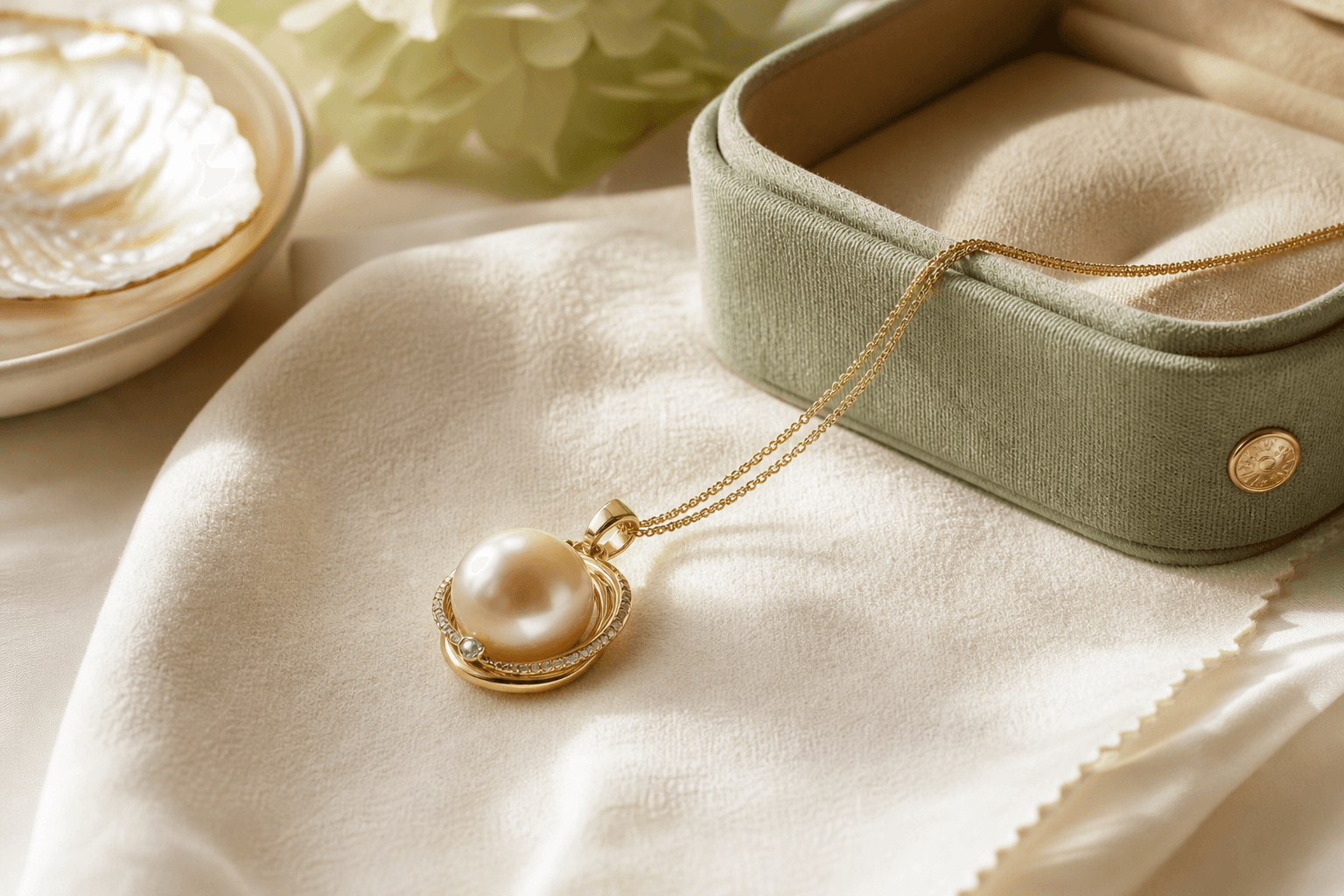
Store Edison pearl jewelry separately in a soft, lined compartment or breathable fabric pouch. The aim is to prevent contact with harder jewelry while avoiding pressure, heat, dampness and tangling.
- Keep strands flat where practical, especially when stringing shows slack.
- Close the clasp before storage so it cannot catch the string or scrape another pearl.
- Use a soft divider between pieces. Keep diamonds, chains, metal edges and clasps away from pearls.
- Choose a cool, dry drawer instead of a humid bathroom or spot beside a heater.
- Do not leave jewelry tangled in a sealed plastic bag for long-term storage.
- Keep earrings paired, with hard or textured backs away from the pearl surface.
Do not hang a strand for an extended period if its stringing is loose or stretched. Hanging adds pull to an existing weakness.
Care Changes by Jewelry Format and Material
The same Edison pearl needs different attention depending on how it is mounted. Rings receive more impact and hand-product exposure, while earrings and pendants have different attachment points to inspect.
| Format | What to watch | Safer habit |
|---|---|---|
| Necklaces and bracelets | Perspiration, cosmetics, clasp wear, stretched string and fraying. | Wipe after wear, store flat where appropriate and inspect the full strand. |
| Earrings | Skin oils, hairspray, backs and looseness around the mounting. | Wipe the pearl and inspect the post, back, glue area or setting. |
| Rings | Handwashing, lotions, impact and household products. | Remove before water, cleaning, exercise and manual work. |
| Pendants | Friction at the bail and movement against the chain or clothing. | Check the bail and attachment point, then store the pendant separately. |
| Mixed-material or custom pieces | The pearl, plating, adhesive, string or another gemstone may be the limiting component. | Use the least aggressive method suitable for every component. |
Hypothetical example: a custom Edison pearl pendant with a plated metal bail and a second gemstone cannot be treated like a plain metal chain. The pearl, plating, attachment and gemstone must be considered together, with the most delicate component setting the limit.
Inspection, Restringing and Repair
Inspect pearl jewelry under good light every few wears, and after an impact, spill or long period in storage. There is no universal restringing interval because construction, knotting, string material, wear and handling vary.
| What you notice | Next step |
|---|---|
| Dullness or a new surface mark | Stop polishing and seek an assessment. |
| A loose pearl or moving setting | Stop wearing the piece until the attachment is checked. |
| Slack, stretched or frayed string | Do not pull it tight. Ask about restringing or repair. |
| Discolouration or a visible coating | Record any known exposure and avoid home treatment. |
| Damaged clasp, bail, post or back | Keep the piece separate and request inspection. |
For strands, examine the areas beside the clasp and between frequently worn pearls. For earrings and pendants, inspect the setting, bail, post and adhesive area. Once structural weakness is visible, the issue is a repair decision rather than a cleaning decision.
Are Edison Pearls Valuable or Authentic?
Edison pearls can have value, but the name does not establish a fixed price. Relevant factors include documented identity, size, shape, colour, lustre, surface quality, matching, treatment history, setting, condition and provenance.
A 50-year-old pearl necklace cannot be valued from age alone. The complete piece, its documentation, condition and market demand matter. Care history may help preserve condition, but it does not replace identification or qualified evaluation.
Appearance and home tests cannot prove that an Edison pearl has natural colour, has never been treated or is genuine. GIA notes that freshwater cultured pearl colours may be naturally formed or artificially modified. The same principle applies to mother-of-pearl: home inspection may raise questions but cannot establish authenticity with certainty.
When to Ask for Professional Help
Seek an assessment for an unknown chemical exposure, severe discolouration, a new surface mark, loose setting, weakened or frayed stringing, damaged clasp, lifting component or unclear construction. Do not try several household remedies in succession.
Prepare these details:
- Clear photos of the front, back, clasp, setting, bail and affected area.
- The format, approximate measurements and number of pearls, if known.
- Stated pearl, metal, plating, gemstone and stringing details.
- What happened, when it happened and any care already attempted.
- Symptoms such as dullness, staining, slack string or movement.
- Original order details, sketches or reference photos, if available.
- Your desired outcome, such as cleaning advice, repair, resizing, redesign or a new piece.
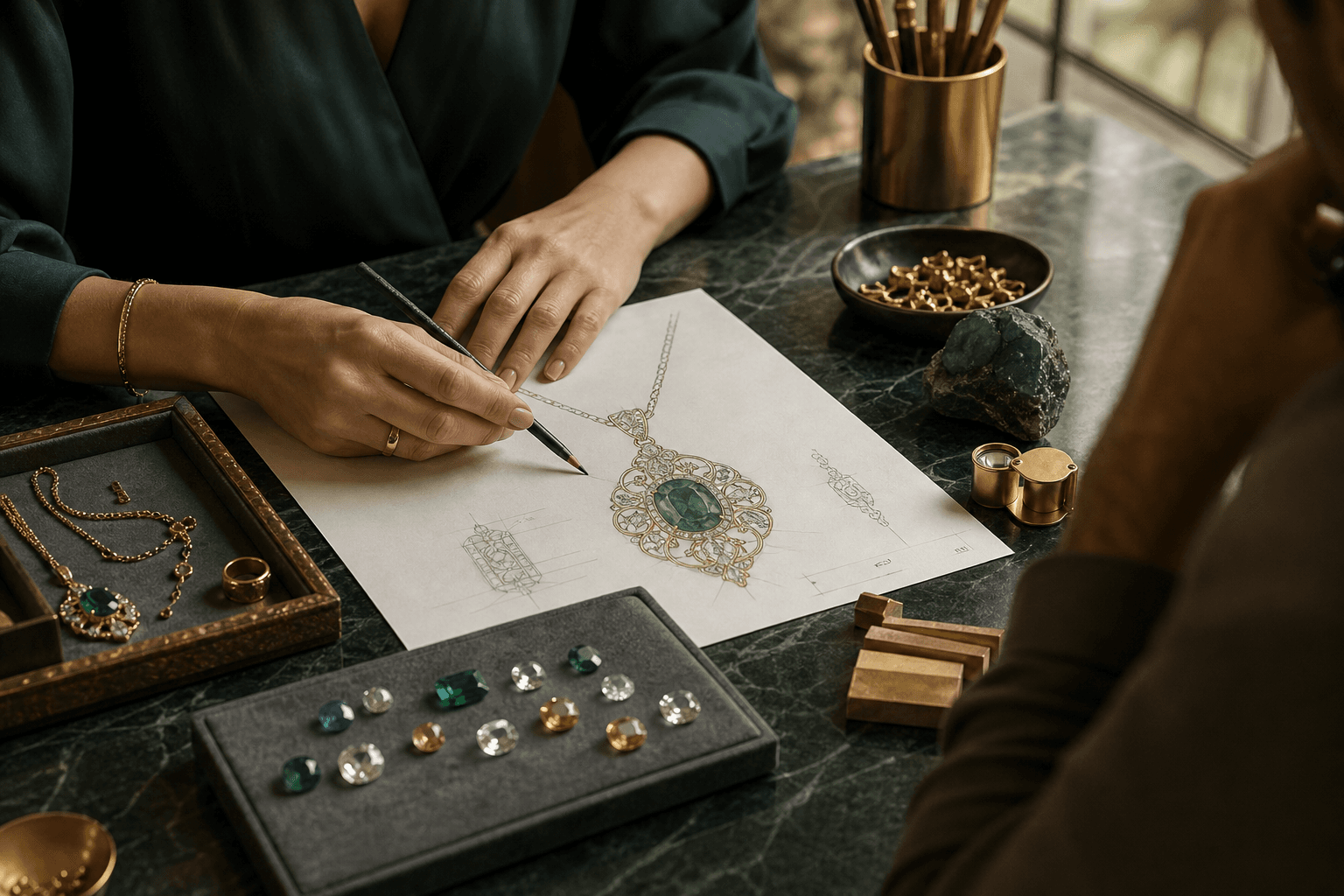
Advikosh presents pearl jewelry and custom jewelry. Its FAQ says customers can discuss designs from their own sketches or photos and approve a custom design before production. For a new pearl design or custom direction, review these points for preparing for custom jewelry design.
Edison Pearl Jewelry Care Questions
Can I use soap or jewelry cleaner on Edison pearls?
Do not use household soap, commercial jewelry cleaner, silver dip or multipurpose cleaner unless a qualified professional confirms it suits the complete piece. For light residue, use a soft cloth and minimal moisture only when all components can tolerate it.
Are Edison pearls valuable?
Some are valuable, but value varies with identity, dimensions, shape, colour, lustre, surface quality, treatment history, matching, setting and condition. “Edison” is not a value grade.
How can I tell whether an Edison pearl’s colour is natural or treated?
Appearance alone is not enough. Request reliable documentation or a qualified assessment when treatment history affects buying, insurance or valuation.
How often should an Edison pearl necklace be restrung?
Timing depends on construction, knotting, string material, wear and condition. Arrange an assessment when the string becomes slack, stretched, frayed or discoloured, or when the clasp or pearls move unexpectedly.
Can I clean a custom Edison pearl piece at home?
Only light, known residue on a sound piece should be considered for cautious home wiping. A piece with plating, other gemstones, adhesive, delicate settings or uncertain construction should be assessed first.
Good Edison pearl jewelry care is deliberate: limit exposure, wipe gently, store separately, inspect regularly and stop before cleaning becomes a repair problem. For a custom pearl design or a piece whose construction needs discussion, Advikosh offers custom jewelry design.