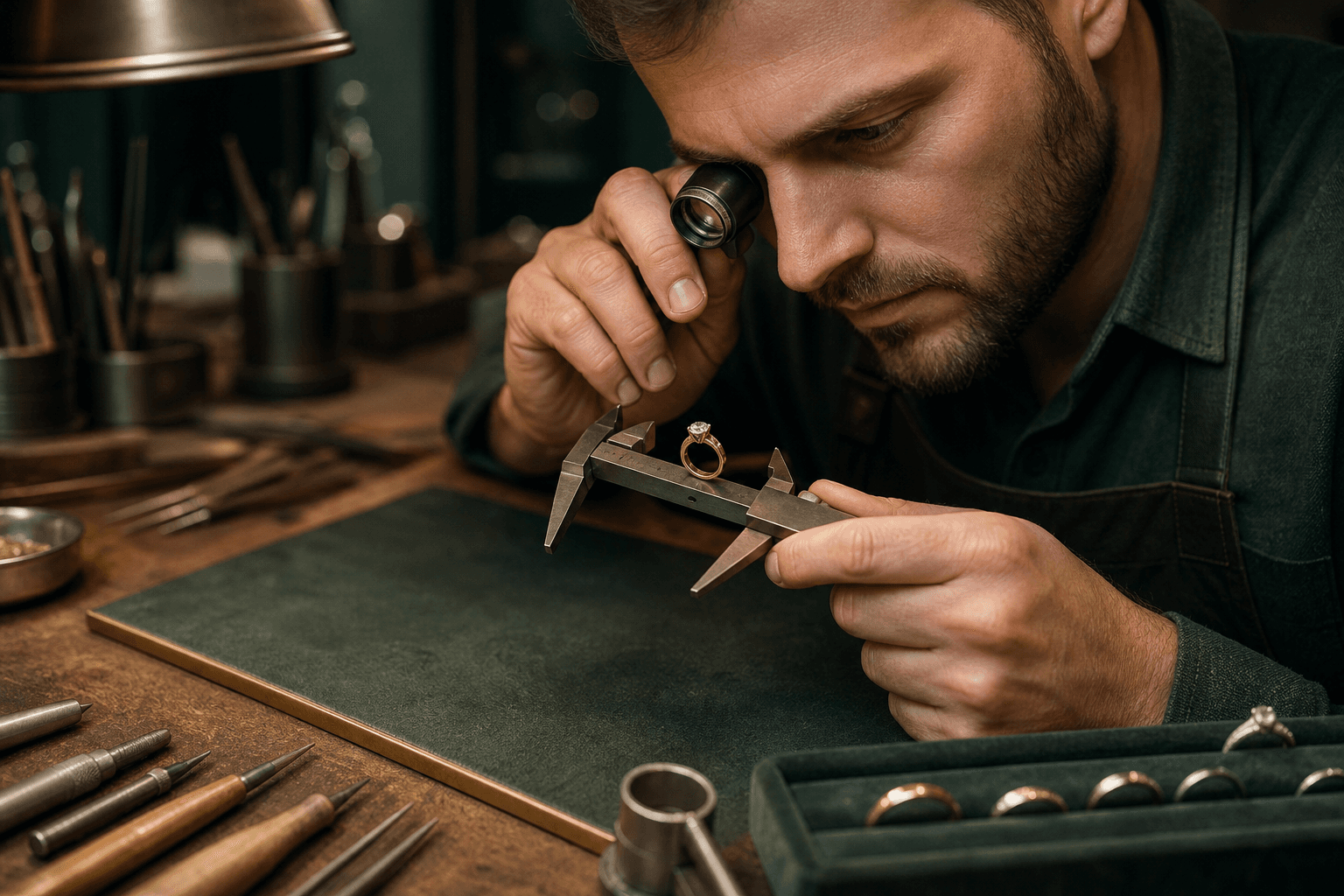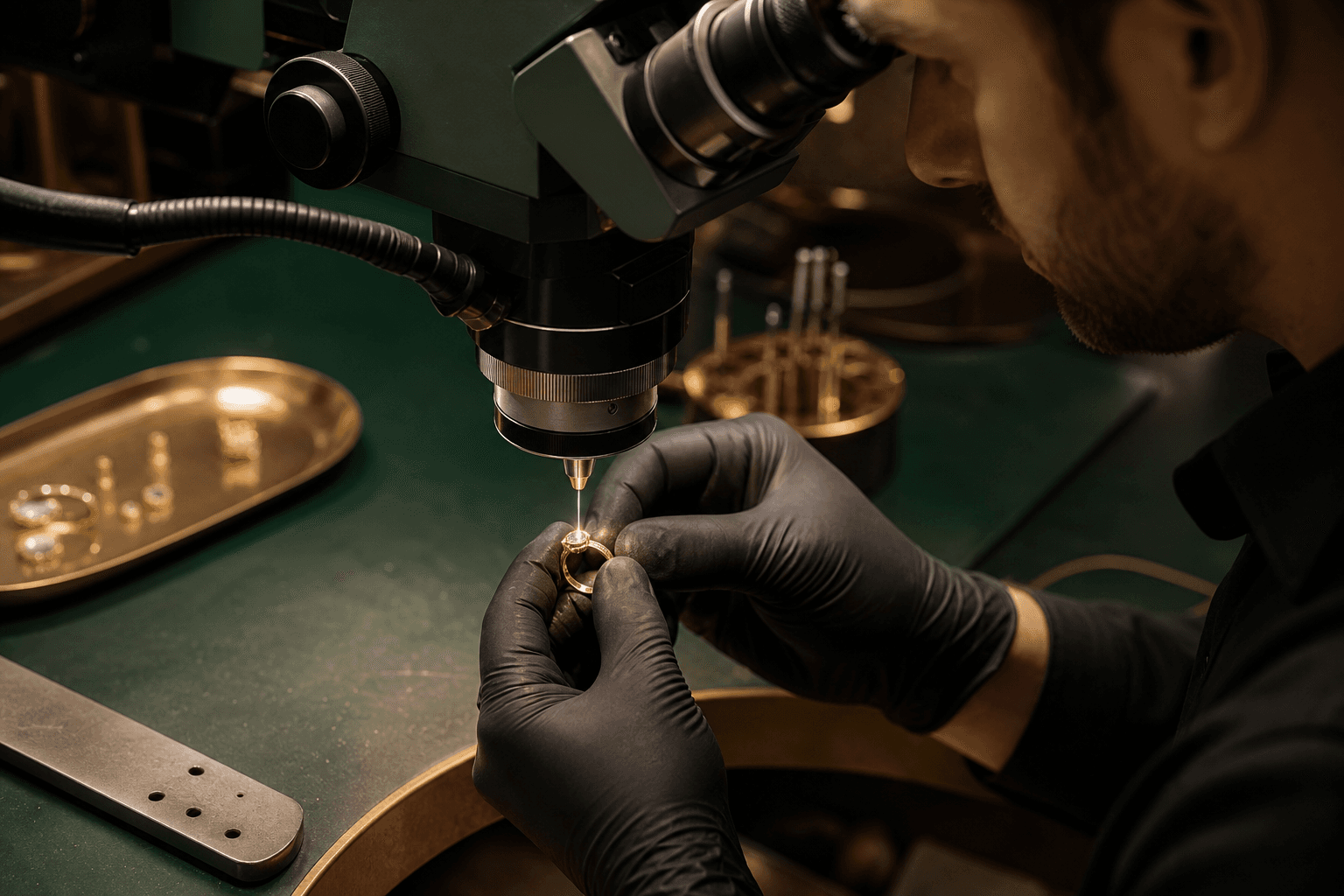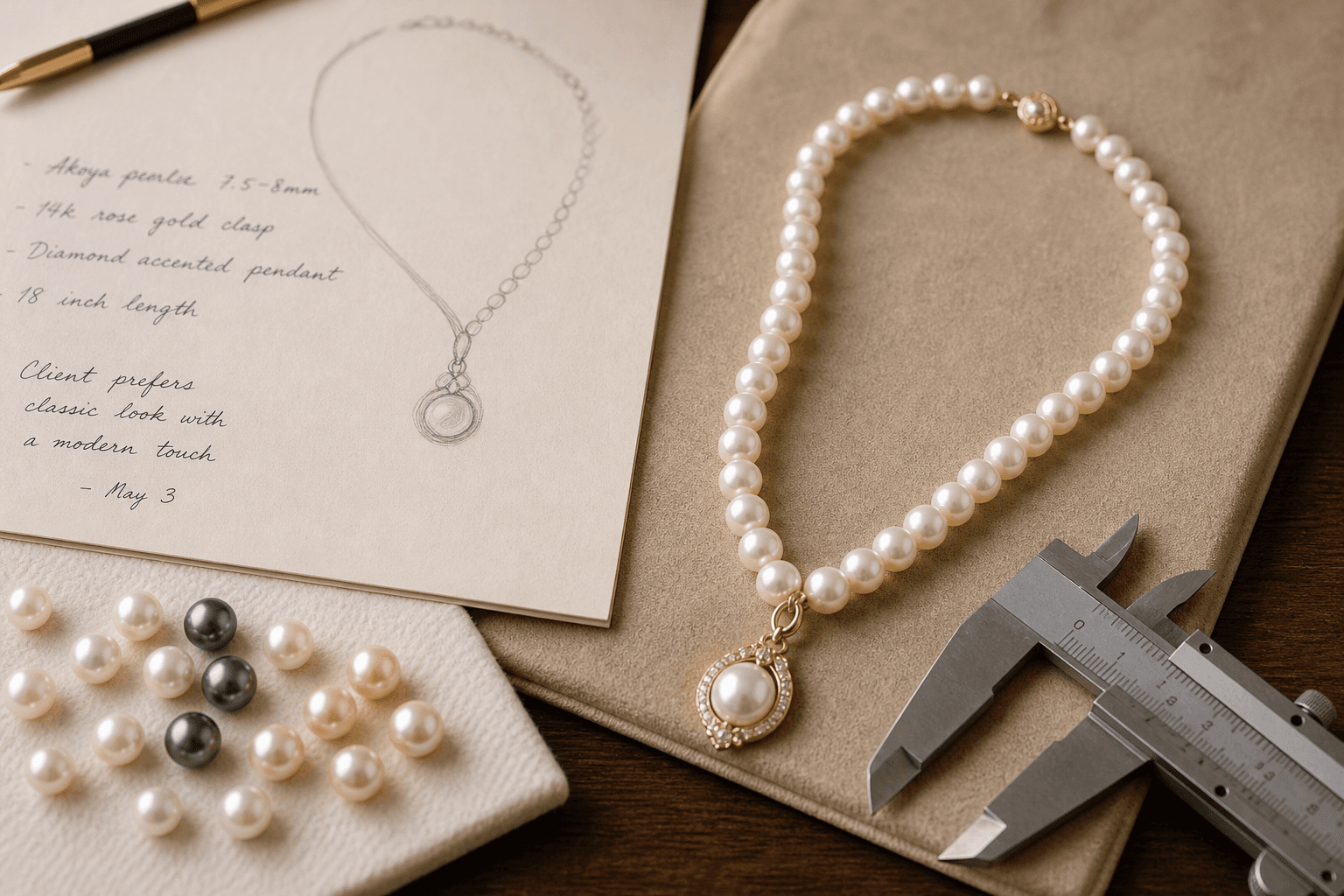


There is no single standard price for custom jewelry design in Canada. The final quote depends on the design work, metal, gemstone type and size, setting complexity, production requirements, and any separate CAD, revision, shipping, tax, or aftercare charges. Compare the complete written quote, not one headline number.
This guide explains how to build a realistic project budget, why two quotes for a similar piece can differ, and what to confirm before production. It does not assign an unsupported Canadian average or publish an Advikosh-specific fee.
Custom jewelry or ready-made jewelry: which route fits your budget?
Custom jewelry is not automatically cheaper or more expensive than a ready-made piece. It costs more when the design requires additional development, unusual dimensions, heavier materials, multiple gemstones, or detailed hand-finishing, but a simple custom design can sometimes avoid paying for features you do not want.
Ready-made jewelry usually offers a defined design, visible product price, faster selection, and the economies of producing an existing style more than once. Custom work gives you control over proportions, symbolism, materials, stone choices, and fit. You are paying for decisions and work created for your piece, not only for the metal and stones.
For an engagement ring, custom design may suit you if the wearer needs a particular setting, has a strong preference about stone identity, or wants a meaningful detail that is not available in a collection. A ready-made ring may be the better financial choice if you already like an available design and do not need changes.
There is no income-based rule that determines what you should spend on an engagement ring. Set a budget that fits your finances, then decide which features matter most within it. A useful comparison of custom work and existing designs should consider the full cost, design control, timing, service terms, and emotional value together. Advikosh describes its focus as custom jewelry, natural gemstones, diamonds, lab-grown diamonds, moissanite, and handcrafted fine jewelry, which gives shoppers several directions to discuss when building a design.
What a custom jewelry quote should include

A complete quote should identify the finished piece, the assumptions behind its price, and every charge needed to complete the order. If an item is not included, the quote should say so instead of leaving you to infer it from a single total.
Separate project costs from optional design work
Some jewellers include early design work in the project price. Others separate a consultation fee, design fee, CAD design fee, or rendering charge. A design fee may cover interpreting your idea, preparing drawings or renderings, and developing the form, while the finished jewelry cost covers materials and fabrication.
Ask whether the fee is refundable, credited toward production, or payable even if you do not proceed. Confirm how many concepts or previews are included and whether changes after approval cost extra. A quote that looks lower because design work is excluded is not directly comparable with one that includes it.
Metal, gemstones, and construction
The material portion should identify the metal, purity where relevant, approximate weight or weight basis, colour, finish, and construction details. A ring made with a heavier profile requires more metal and often more fabrication than a thin band with the same diameter.
For each stone, the quote should state its identity, whether it is natural, lab-grown, or another material, its approximate dimensions or carat weight where applicable, colour, clarity or quality description, and whether documentation is included. It should also explain whether the price is based on a selected stone or an allowance that can change.
Stone setting is separate work. Prongs, bezels, pavé, channel settings, halos, and multi-stone layouts require different preparation and finishing. Matching several stones by size, colour, or shape can add selection and setting work even when the individual stones are modest.
Fabrication, finishing, and order charges
Fabrication turns the approved design into a wearable object. The quote should indicate whether it includes casting, hand fabrication, stone setting, polishing, quality checks, and final finishing. Detailed relief, hand engraving, mixed textures, and tight tolerances generally require more labour than a plain profile.
Request a clear statement about shipping, applicable taxes, insurance, and any other order charges. A quote can be accurate for the jewelry itself while still failing to show the total amount you will pay.
Aftercare and changes
Aftercare belongs in the financial comparison. Ask whether the order includes documentation, a certificate of authenticity where applicable, minor repairs, plating service, resizing, or inspection, and what conditions apply. These services should not be treated as unlimited unless the written terms say that they are.
Ask what happens if a production issue requires a technical change. The answer should explain whether you will be contacted before a material or design change is made.
The choices that move the final cost
The fastest way to make a quote more useful is to decide which features are fixed and where you have flexibility. Material selection can change the final price significantly, so discussing natural gemstones, lab-grown diamonds, moissanite, and metal options with custom jewelry specialists can help you compare a design without changing its central idea.
Metal purity, weight, and finish
If you choose gold, a higher-purity option and a heavier design generally require more valuable material than a lighter or lower-purity alternative. The colour and alloy also affect the appearance and finishing requirements. Ask for the purity and expected weight basis instead of relying on a colour description such as yellow, white, or rose gold.
Silver can offer a different material direction for a design, but the quote should still identify the grade, weight, finish, and any plating. Platinum brings its own material and fabrication considerations. Brass may suit a fashion-focused or highly experimental piece, but it should not be compared with precious-metal jewelry as though the materials were equivalent.
Natural gemstones, lab-grown diamonds, and moissanite
A natural gemstone, lab-grown diamond, and moissanite are different choices, not interchangeable price labels. Their identity, specifications, documentation, appearance, and setting requirements should be stated separately in the quote.
If your budget is fixed, ask what changes if the stone becomes smaller, fewer stones are used, or the design allows a broader range of colour and shape. Keeping the setting concept while changing the stone specification can alter the total without requiring a completely new design.
Stone size and number
A larger centre stone can change both the stone cost and the structure needed to hold it securely. Adding side stones, a halo, a second row, or matching earrings increases the number of components and setting operations.
For a necklace or earrings, length, drop, number of links, clasp style, and repeated elements can have the same effect. A simple pendant with one focal stone is a different fabrication project from a layered piece with articulated movement.
Setting complexity and personal details
A smooth band with one straightforward setting is usually less complex to fabricate than a ring with pavé, pierced details, sculpted shoulders, an unusual gallery, or an integrated accent. Engraving, hand texture, hidden symbols, milgrain, and asymmetrical forms add decisions and finishing work.
Decide which details carry the meaning of the piece. If the budget is constrained, preserve the feature that matters most and simplify secondary details, such as the number of accent stones or the amount of surface texture.
Worked scenarios: how one idea can change in cost
The following examples are hypothetical. They show the direction of cost changes only and are not Advikosh projects, Canadian averages, or price estimates.
Scenario 1: a simple custom ring
Imagine a plain band based on a sketch. A narrow profile, one metal, no stones, and a straightforward finish create a relatively focused fabrication brief. The same concept becomes more involved if you choose a heavier profile, two-tone construction, a sculpted interior, hand engraving, or a custom comfort-fit shape.
If the visual goal is a clean band, reducing decorative elements may preserve the character while limiting additional fabrication. If the wearer needs a specific width or fit, that practical requirement should remain fixed even if the finish changes.
Scenario 2: a custom engagement ring
Suppose the starting idea is a solitaire engagement ring. The quote can move upward when the centre stone is larger, the setting requires more metal, the shoulders include pavé, or the gallery has detailed openwork. A simpler band, fewer accent stones, or a different stone identity can reduce the number of decisions and operations.
Do not compare two engagement-ring quotes until the centre stone identity, dimensions, metal purity, band width, setting, accent stones, and documentation are aligned. A lower total may simply describe a smaller stone or a less substantial setting.
Scenario 3: a personalized necklace or earrings
A necklace with one pendant and a standard chain has a different cost structure from a fully custom strand with repeated links, multiple stones, or an unusual clasp. Earrings can change in cost when they move from simple studs to articulated drops, matched sculptural forms, or designs that require more hand-finishing.
For a pair, ask whether the quote covers matching the two pieces and what degree of natural variation is acceptable. If symmetry is essential, the selection and finishing brief should say so before production.
How to compare two custom jewelry quotes fairly

Compare like with like before choosing the lower headline figure. Put both quotes into the same order and check each line against the following list:
- Design: Are the consultation, sketches, previews, and revisions included?
- Metal: Do both quotes specify the same material, purity, colour, finish, and weight basis?
- Gemstones: Are identity, origin category, dimensions, quality, matching requirements, and documentation comparable?
- Construction: Do the pieces have the same dimensions, band or chain weight, setting style, clasp, engraving, and hidden details?
- Production: Are fabrication, casting, setting, polishing, inspection, and finishing included?
- Order terms: Are deposits, payment stages, design ownership, changes after approval, and cancellation terms stated?
- Delivery: Are shipping, tracking if offered, insurance, taxes, and any cross-border charges identified?
- Aftercare: Are repairs, plating, resizing, documentation, and service exclusions explained?
A quote that separates a design fee from production is not necessarily more expensive than an all-in quote. It may simply be more transparent. Conversely, an all-in number is not complete if it leaves out the stone allowance, tax, shipping, or change policy.
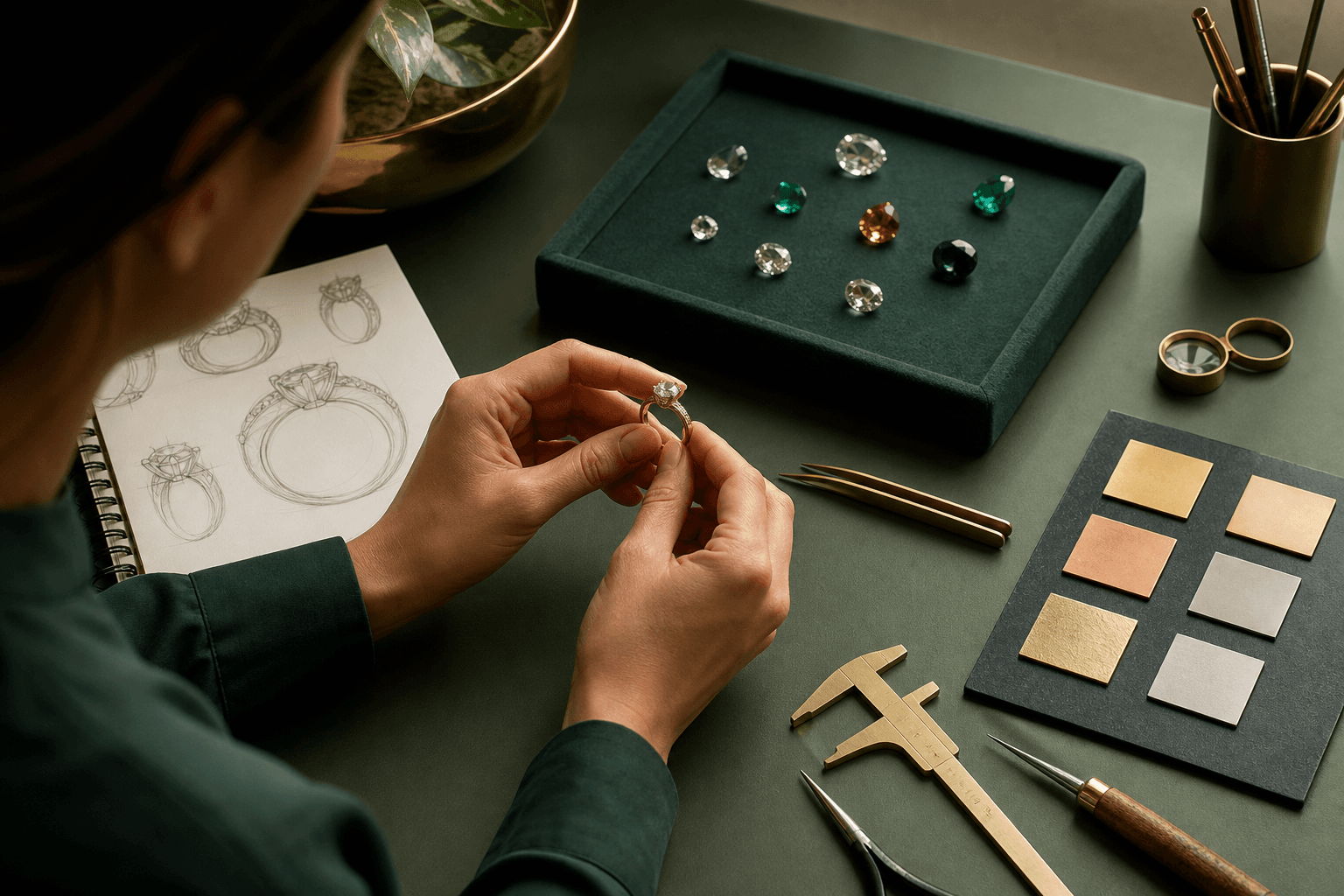
The design approval stage is also worth comparing. Advikosh states that customers can submit an idea, sketch, inspiration image, or design concept and review and approve a design or CAD render before production. Confirm the number of concepts, changes, payment stages, and delivery terms that apply to your own project.
Questions to ask before approving production
Copy these questions into your next quote request:
- Is there a separate consultation, design, CAD, or rendering fee?
- If there is a separate fee, is it credited toward the finished piece or payable whether I proceed or not?
- How many design concepts or previews are included?
- What happens if I request a change after approving the design?
- What are the exact metal, purity, colour, finish, dimensions, and expected weight?
- What are the identity, size, quality description, and documentation for each gemstone?
- Does the price include setting, engraving, polishing, plating, and final inspection?
- What deposit and payment schedule apply?
- Are taxes, shipping, insurance, and other delivery charges included?
- What are the terms for a custom-order return, cancellation, resizing, repair, or remake?
- What aftercare is offered, and what conditions or exclusions apply?
- Will I receive and approve the final design or CAD render before production begins?
For Advikosh, the published process supports submitting your own idea, sketch, photo, or design concept and approving the design before production. Those steps explain how a project can move from an idea to fabrication, but they do not establish one identical fee or timeline for every commission.
There is no objective answer to who makes the “best” one-of-a-kind jewelry in Brampton. The better choice is the jeweller whose materials, design-review process, quote detail, approval stage, and aftercare terms fit your piece and are clear before you pay.
Frequently asked questions about custom jewelry cost in Canada
Is custom jewelry cheaper than ready-made jewelry?
Custom jewelry is not universally cheaper than ready-made jewelry. Ready-made pieces may benefit from an existing design and established production, while custom work gives you control over details and can remove features you do not need. Compare the complete cost and the value of personalization, not only the starting price.
What should a custom jewelry quote include?
A custom jewelry quote should identify the design work, previews, change allowance, metal and purity, gemstones, dimensions, setting, fabrication, finishing, shipping, taxes, payment terms, returns, and aftercare. Any excluded item or change-related charge should be explicit.
Do jewellers charge separately for CAD design or revisions?
Some jewellers charge separately for CAD design or revisions, while others include that work in a broader project quote. Ask what the fee covers, how many changes are included, whether the fee is credited toward production, and what happens after approval.
How much does a custom gold or silver ring cost in Canada?
A custom gold or silver ring has no single Canadian price because the total depends on metal purity and weight, ring dimensions, setting, gemstones, engraving, design work, changes, fabrication, and order terms. Request those specifications in writing before comparing the quote with another ring.
Can I request custom jewelry from a sketch or photo?
Yes, a sketch or photo can be used as a starting point for a custom jewelry discussion, although it does not determine the final design or price by itself. Advikosh states that customers can submit an idea, sketch, inspiration image, or design concept for review before a design or CAD render is approved for production.
Turn your idea into a quote you can evaluate
Before requesting a quote, write down the piece type, intended use, preferred metal, stone direction, approximate dimensions, non-negotiable detail, flexible detail, and target budget. That brief gives a jeweller enough context to explain which choices drive the total instead of returning an unclear headline figure.
If you have an original concept, sketch, photo, or inspiration image, discuss your project with Advikosh through its custom jewelry service and ask for the materials, design approvals, inclusions, and order terms that apply to your piece.