



Buying handcrafted jewelry should feel deliberate, not risky. This guide gives a short, ordered checklist you can use online or in person. Follow three instant checks, a seven-step inspection you can message to a seller, material-specific questions for pearls, moissanite, sterling silver and gold, and guidance on when to buy ready-made or commission custom work. To compare a Canadian custom service and buyer policies, see Advikosh.
Three quick checks to spot handcrafted details
These three checks take under a minute and filter most mass-produced listings before you go deeper.
1. Look for organic variations and slight asymmetry
Handmade pieces often show subtle irregularities in shape, bead size or pattern. If every link, pearl or stone looks mechanically identical in closeup photos, the item may be machine-made. Authentic handcrafted work includes small, natural differences that reflect human shaping. For more on visual signs of handcrafted work, see advice on identifying truly handcrafted pieces at How to Identify Truly Handcrafted Jewelry Pieces.
2. Inspect joins, tool marks and finishing
Zoom into solder joints, clasps and the back of settings. Tiny filing lines, hammer marks or slightly uneven solder indicate hand finishing. Completely smooth, injection-moulded joins are more typical of factory production. If the listing hides these areas, ask the maker for macro photos.
3. Check setting style and weight
Hand-set stones and pearls sit differently than factory-set ones. Prongs may vary slightly in height or angle yet still hold the stone securely. Also consider weight. A dense, well balanced feel often suggests solid materials rather than thin plated layers over base metal.
Step-by-step inspection checklist you can use before you buy
Use these seven ordered steps each time you evaluate a specific piece. Copy them into messages to the seller when buying online.
Step 1: Examine finish and edges
Ask for close-up photos of rims, the underside of settings and the clasp. Look for filing lines, small tool marks and consistent finishing. If a listing hides bottoms or edges, request those images before you commit.
Step 2: Verify stone and setting details
Confirm the setting style, whether stones are bezel, prong or flush set, and whether settings are hand cut. Ask the seller to describe how stones were set and to provide magnified images. For gemstones and moissanite, the seller should be able to explain cut quality and secure setting practices.
Step 3: Compare weight and feel
Request the item weight in grams and the dimensions. Compare weights to similar pieces made from the declared material. Very light items claiming to be solid gold or heavy sterling silver may be plated or hollow.
Step 4: Check for hallmarks and maker marks
Ask where hallmarks are placed and request photos. Hallmarks indicate metal type and, in many jurisdictions, karatage for gold or sterling marks for silver. Maker marks, initials or a stamped logo provide provenance. If no mark is present, ask the maker to explain their marking practice.
Step 5: Request provenance and process details
Genuine artisans should describe their studio, the tools they use and the steps in the making process. Ask for a short provenance note stating who made the piece and whether it was formed, cast, soldered or hand forged. A transparent maker will explain materials and sourcing.
Step 6: Ask for progress or process photos
Request photos showing the piece at an intermediate stage, such as before polishing or during stone setting. Process images are strong proof of handcraft and build buyer confidence. If the seller refuses without reason, ask why these images are not available and consider that a signal to probe further.
Step 7: Confirm warranty, repair and return terms
Before you pay, confirm the seller’s policies for returns, repairs and plating. In Canada look for clear CAD pricing and contact routes. Practical logistics to compare include free shipping, responsive support and a returns or exchange window.
Material-specific considerations: pearls, moissanite, silver and gold

Different materials need specific checks. Use these targeted questions when you inspect a listing or speak with a maker.
Pearls
- Ask whether pearls are natural, cultured or imitation. Request close-ups of drill holes to inspect for reinforcement and to verify nacre thickness.
- Compare surface luster and matching. Hand strung pearls often show knotting between beads. Uneven surface texture or baroque shapes are common in handcrafted pearl jewellery and can be a desirable feature rather than a flaw.
Moissanite
- Request certification or a description of testing. A seller should explain cut quality, brilliance and whether stones are lab grown moissanite rather than diamond simulants.
- Ask how stones are set and whether any light performance tests are available.
Sterling silver
- Look for a sterling mark such as 925 and photos of the mark location. Ask whether pieces are solid sterling or silver plated over base metal.
- Confirm polishing and anti tarnish finishes and whether lifetime plating or minor repair policies exist.
Gold
- Ask for karat stamps such as 14K or 18K and verify whether items are solid gold, gold filled or gold plated. Request photos of the stamp location.
- If the listing claims hand forged or hand hammered work, ask what forging steps were used and for process images.
When to buy ready-made versus commission a custom piece
Decide based on how much control you want, your budget and how important provenance and uniqueness are.
Choose ready-made when
- You want a finished look immediately and prefer lower cost than a full commission.
- You value a tested design and predictable shipping times and returns.
Commission custom work when
- You need a unique design, want to repurpose heirloom stones or require exact sizing and personalisation.
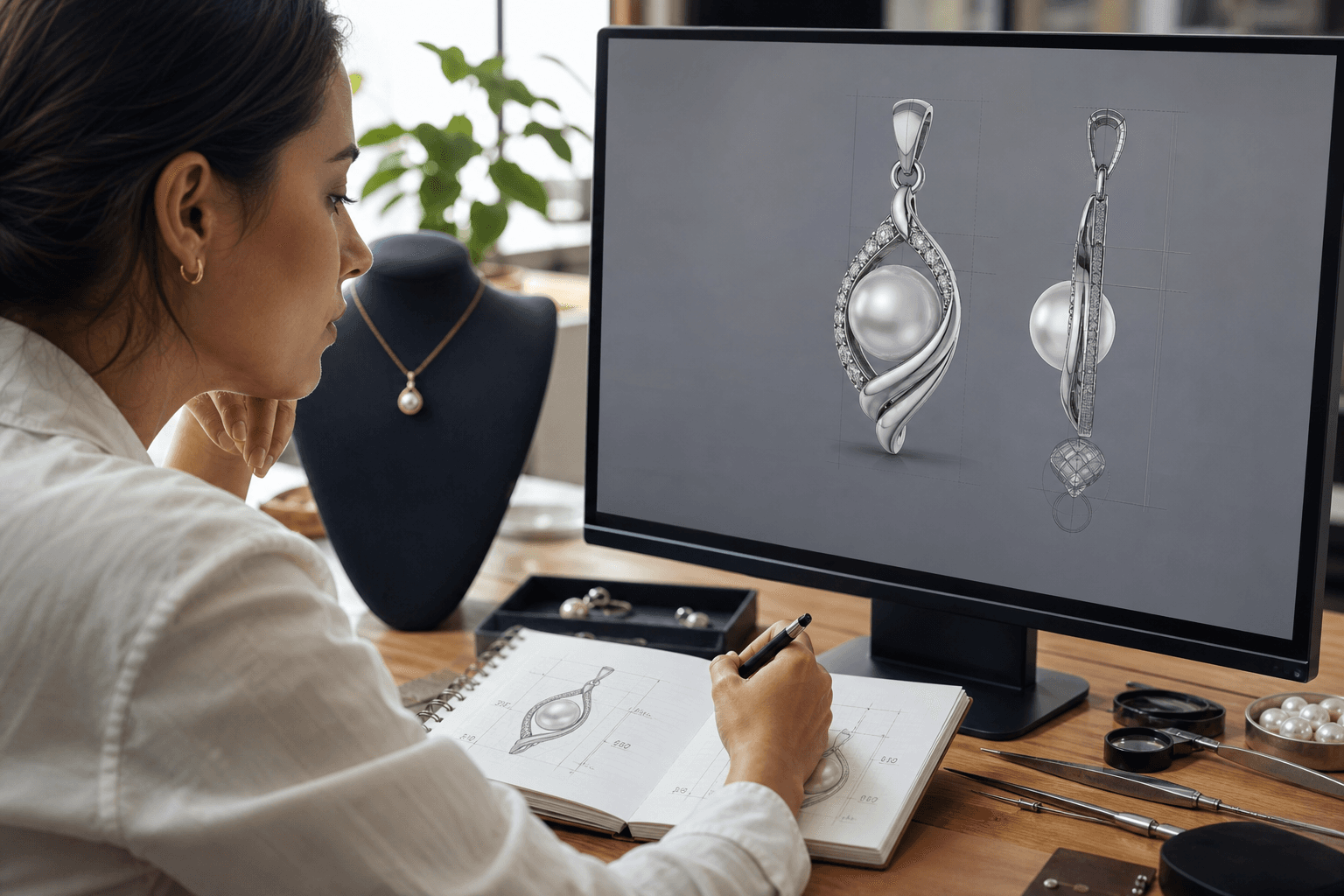
- You are comfortable with a conversational process, staged payments and a longer lead time while the maker develops sketches and mockups.
Questions to ask a custom jeweller
- What is your design and revision process and how many mockups are included?
- What are payment milestones and is there a deposit?
- Will you provide progress photos and a final appraisal or certificate?
- What is the estimated timeline and the policy for changes after work begins?
Trust signals and logistics when buying handmade online in Canada

Reduce risk by verifying these seller signals before you pay.
Transparent CAD pricing and visible policies
Look for clear pricing in Canadian dollars, visible promotions and a straightforward shipping and returns page. Businesses that state free shipping, responsive support and a returns window are easier to work with when issues arise. Compare seller pages for these buyer protections and contact methods.
Contactability and reviews
Confirm the seller provides at least one direct contact method and responsive support hours. Independent reviews and studio photos increase confidence. If reviews are absent ask for references or a portfolio of recent commissions.
Repair, plating and aftercare
Ask if the seller offers repairs, lifetime plating or complimentary minor repairs. A clear repair policy reduces long term ownership costs and signals commitment to craftsmanship.
Common mistakes and red flags to avoid
Here are frequent buyer errors and seller behaviours that should prompt caution, plus what to do instead.
Relying only on low resolution or stock images
Do not buy from listings that use only stylized stock photos. Remedy: request high resolution close-ups of the actual item and the maker’s hallmarks.
Accepting vague material claims
If a seller cannot explain material origin or provide photographs of hallmarks, ask for lab reports for gemstones or clear photographic proof of metal stamps.
Ignoring returns or repair policy
A missing returns policy increases risk. Do not proceed without written terms covering exchanges or repairs. If a seller lacks a policy, negotiate return terms in writing before payment.
Buying solely on price
A very low price for a claimed handcrafted piece often indicates mass production or low quality materials. Ask for the maker’s time estimate and a breakdown of materials and labour to justify the price.
Actionable checklist and next steps
Copy this compact checklist into a message to any seller or include it while comparing listings.
Three immediate checks
- Do photos show close-ups of joins, the underside of settings and hallmarks?
- Are there slight organic variations consistent with handmade work?
- Is pricing listed in CAD and are shipping and returns clearly stated?
Seven inspection steps to ask the seller
- Send photos of the maker mark, hallmarks and the clasp area.
- Ask for the item weight and dimensions in millimetres and grams.
- Request intermediate process photos showing the item during fabrication.
- Confirm metal karat or sterling details and whether pieces are solid or plated.
- Ask for moissanite or gemstone certification if applicable.
- Request a short provenance note naming the maker and the studio.
- Confirm written return, repair and warranty terms before paying.
Short contact script to request proof
"Hello, I am interested in this piece. Could you send close-up photos of the junctions, the maker mark and the underside, plus the item weight and any process photos? Also please confirm your return and repair terms. Thanks."
Frequently asked questions
How can I tell if a pearl necklace is handcrafted or mass produced?
Check for knotting between pearls, drill hole quality, nacre luster and slight size or shape variation. Hand strung necklaces will show consistent knotting and natural variation in baroque or freshwater pearls. Request close-up photos of drill holes and the clasp area to confirm hand finishing.
What questions should I ask a jeweller before commissioning a custom piece?
Ask about the design process and number of revisions, payment milestones and deposit, progress photo frequency, expected timelines and warranty or repair policies. Also request where materials come from and whether you will receive a provenance note.
Are moissanite pieces considered handcrafted and how do they compare to diamonds?
Moissanite can be set in handcrafted jewellery just like diamonds. Ask about cut quality and whether the stones are lab grown moissanite. Moissanite shows high brilliance and fire and is commonly used as an ethical and affordable alternative to diamonds in handmade work.
What should I expect for shipping, returns and repairs when buying handcrafted jewelry online in Canada?
Expect clear CAD pricing, stated shipping costs or free shipping and a written returns window. Many reputable Canadian sellers provide repair services or plating options. Verify these policies before purchase and request written confirmation if they are not visible on the listing.
How do hallmarks and maker marks help prove authenticity?
Hallmarks indicate metal type and karatage and confirm that the declared metal is present. Maker marks provide provenance by identifying the artisan or studio. Both are useful evidence when combined with process photos and seller statements.
If you are ready to compare custom options or browse handcrafted collections, visit Advikosh to review their custom jewellery service, CAD pricing and buyer policies.
Further reading: How to Identify Truly Handcrafted Jewelry Pieces and merchant pages such as Advikosh for examples of studio policies and custom offerings.