


A jewelry CAD preview is more than a polished digital image. It is a decision checkpoint that lets you examine the proposed shape, proportions, settings, and details before a custom piece moves into production. The important question is not whether the image looks attractive. It is whether you understand what you are approving and which details still need written confirmation.
What Does a Jewelry CAD Preview Show?
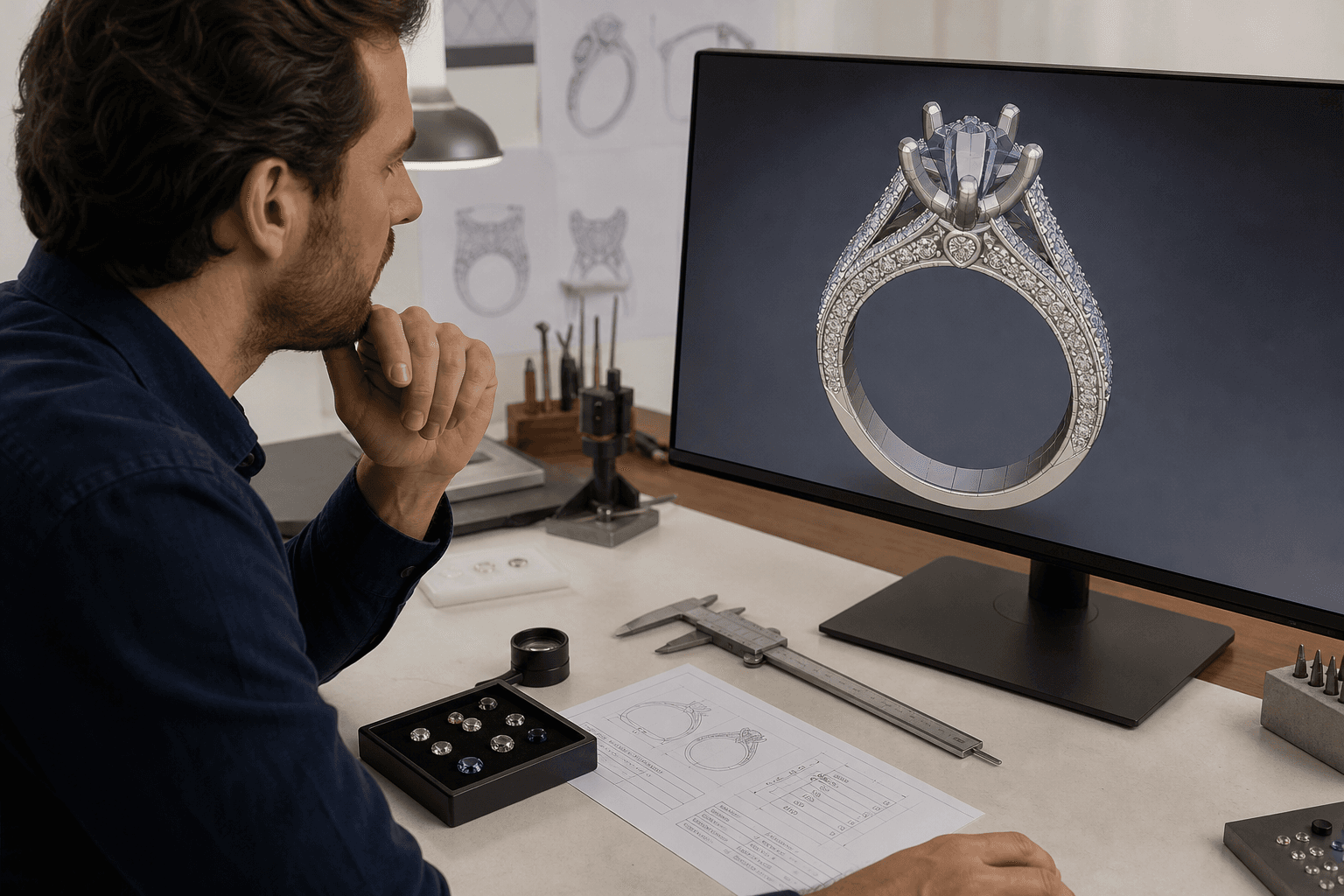
CAD stands for computer-aided design. In custom jewelry, a CAD review usually presents a three-dimensional digital model viewed from multiple angles. Buyers may also hear terms such as 3D jewelry rendering, digital design preview, or CAD approval.
A useful preview can help you examine the relationship between major design elements. Depending on the design and information supplied, you may review the overall silhouette, approximate scale, stone positions, setting layout, profile, decorative features, attachment points, and engraving placement.
For example, a preview may reveal that a pendant is more elongated than expected, that a ring’s centre stone sits higher than you prefer, or that a pearl arrangement needs more spacing. Finding these issues on screen is generally easier than identifying them after fabrication begins.
What a CAD Preview Cannot Confirm on Its Own

A digital model is not the finished jewelry. Screen size can distort your sense of scale, while lighting, monitor settings, and rendering style affect how metal and stones appear. A preview should support a decision, not replace a conversation about the physical result.
Ask for clarification about details a CAD image cannot reliably establish on its own, including:
- finished weight and balance;
- exact colour, reflectivity, plating appearance, or surface texture;
- how a stone will perform in real lighting;
- comfort, fit, movement, and clearance against the skin;
- structural strength, durability, and resistance to snagging;
- the tactile quality of engraving, edges, polish, or other finishing work.
Request measurements in millimetres rather than relying on the design’s appearance on your phone or laptop. If the piece must fit precisely, ask what information will establish the size and whether a physical fitting step is appropriate.
CAD Previews Compared With Other Design Review Options
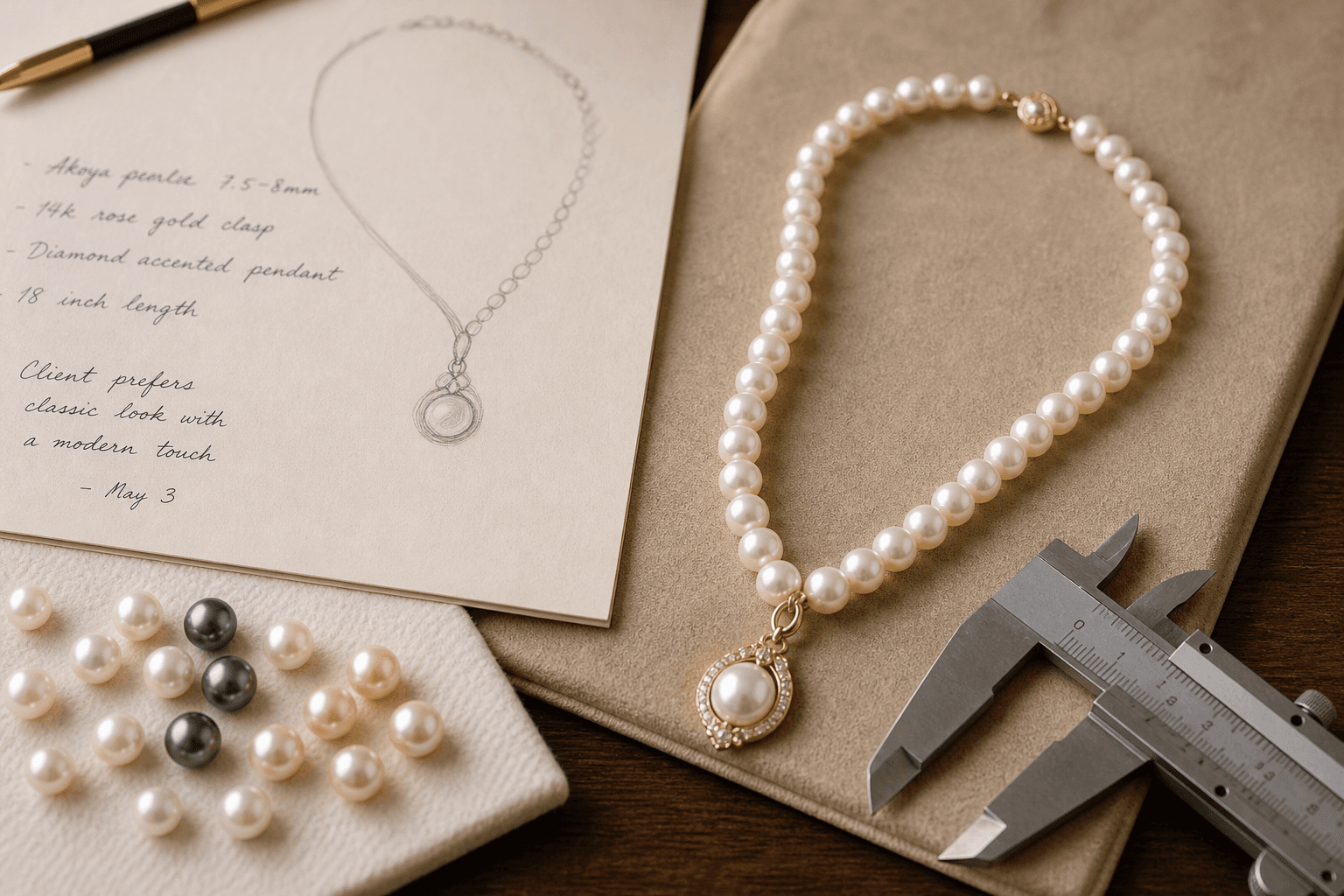
Different review methods answer different questions. A sketch communicates an idea quickly, while CAD is more useful for checking three-dimensional relationships. A physical prototype can reveal tactile and fit-related issues, but it may add time and cost. No single format confirms every aspect of a finished custom piece.
| Review option | What it helps you assess | Main limitation |
|---|---|---|
| Hand sketch | Concept, mood, silhouette, and broad decorative direction | Usually does not establish exact dimensions, depth, or setting construction |
| CAD preview | Three-dimensional form, proportions, views, stone layout, profile, and design details | Does not prove final weight, comfort, colour, strength, or finish |
| Rendered image | Approximate visual effect, metal colour, stone presentation, and styling | Can look realistic while hiding measurements and construction details |
| Physical prototype | Scale, handling, wearability, fit, and tactile impressions | May not use final materials or represent the finished surface exactly |
| Finished sample | Actual appearance, finish, weight, and construction | Changes are more difficult once production is complete |
When reviewing a digital design, it can help to ask for visuals that address scale, colour, and surface readiness separately. A practical mockup workflow for scale, colour, and surface readiness illustrates why one attractive image may not answer every approval question.
Prepare Before Reviewing a Custom Jewelry Design
A CAD review is more productive when the jeweller has a clear design brief. Start with reference images, but identify what you like in each one. You might be responding to the setting, stone proportions, band shape, level of detail, or the way the piece sits on the body.
- the type of piece, such as a ring, pendant, earrings, bracelet, or necklace;
- your ring size, wrist measurement, preferred chain length, or another relevant measurement;
- the preferred metal and colour, such as sterling silver, gold, platinum, or brass;
- preferred stones, including pearls, moissanite, precious stones, or semi-precious stones;
- whether the item is for daily wear, a formal occasion, a wedding, or gifting;
- your budget range and target delivery date;
- matching pieces, engraving, symbolism, or personal details.
Advikosh offers custom jewelry design and fabrication and presents the service with the positioning “Your design, our craftsmanship.” Its stated collections include pearl, sterling silver, moissanite, gold, and precious or semi-precious stone jewelry. Confirm the material, stone, and construction choices for your proposed piece directly.
Jewelry CAD Preview Approval Checklist
Check dimensions, proportions, and wearability
- What are the length, width, height, and thickness in millimetres?
- Does the scale suit the wearer and intended occasion?
- Is the profile too high, heavy, delicate, or likely to catch on clothing?
- Are clasps, posts, bails, links, and other attachment points positioned securely?
- Will the piece sit, move, or hang as expected?
- Does a ring have enough clearance for adjacent fingers and everyday movement?
Ask for side, top, bottom, and angled views when they reveal different issues. A front view may make a ring look balanced while hiding a tall setting or thin connection underneath.
Check stone placement, settings, and structural details
Confirm the number, size, shape, spacing, orientation, and visibility of every stone. For pearl jewelry, check each pearl’s position and intended size relationship. For moissanite jewelry, review the layout, setting style, and relationship between the stones and surrounding metal.
Ask whether prongs, bezels, channels, or other holding details are represented clearly enough for approval. Decorative details should be identified rather than assumed from shading.
Check metal, finish, engraving, and matching pieces
Make sure the order identifies the metal, not just a colour shown in the image. Confirm whether the piece uses sterling silver, gold, platinum, brass, or another material, and ask about purity, plating, treatment, and relevant construction details.
Review the intended finish, such as high polish, satin, brushed, textured, or oxidized. Check every letter and symbol in an engraving. If the design coordinates with another piece, compare proportions and metal colour rather than assuming they will match automatically.
Questions to Ask Before Approving Production
Before saying “approved,” ask the jeweller to answer these questions in writing:
- Which dimensions and materials are represented by this preview?
- How many design revisions are included?
- Will I receive additional views or measurements?
- What stones will be used, and what are their sizes and specifications?
- What is included in the quoted price, including finishing, engraving, shipping, and taxes?
- What deposit or payment schedule applies?
- What is the estimated production and delivery timeline?
- Who owns the design files or final design concept?
- What repair, warranty, care, return, or exchange terms apply?
- What happens if the finished piece differs materially from the approved specifications?
Do not assume that a general store policy answers every question about a custom order. Custom work may have different terms, so request the applicable conditions before paying a deposit or approving production.
Get the Important Terms in Writing
For an online purchase over $50 in Ontario, government guidance says the business must provide a contract in a format that allows you to keep a copy, including transaction details such as payment terms and delivery details. Read the Ontario guidance on shopping online or by phone and retain the agreement, receipt, preview, measurements, and related messages.
Ontario also notes that retailers are not generally required by law to provide returns or exchanges, so the seller’s written policy matters. Review the guidance on returns, exchanges, and warranties, then confirm how it applies to your specific custom piece.
For any online jewelry store in Canada, check the vendor’s physical location and contact information, terms of sale, shipping details, and return or exchange policy. Canada’s Office of Consumer Affairs provides this online shopping checklist as a useful verification step.
Questions to Ask Advikosh About a Custom Design
Advikosh is a Canadian online jewelry brand offering ready-to-shop collections alongside custom jewelry design and fabrication. Its stated customer policies include free shipping, 24/7 online support, and one free return or exchange within seven days. Confirm current terms directly, particularly before placing a custom order.
- Is a CAD review, 3D rendering, sketch, or another digital approval stage available?
- Which views and measurements would I receive before production?
- Can you confirm the proposed metal, stones, finish, dimensions, and price in writing?
- How are revisions handled, and when does approval become final?
- What delivery timing, repair terms, and return or exchange conditions apply?
Frequently Asked Questions
Can a jewelry CAD preview show the exact final size?
It can show stated dimensions when measurements are included, but the image itself is not a reliable scale reference. Ask for measurements in millimetres and confirm how fit will be established.
Should I approve a custom jewelry design without seeing a physical prototype?
Not necessarily. A CAD preview may suit a straightforward design, while a prototype could help with an unusual shape, close fit, complex setting, weight, or comfort. Ask what the preview confirms and what it does not.
What should be included in a written custom jewelry agreement?
Look for the approved design or identifying version, materials, stone specifications, dimensions, finish, engraving, price, taxes or additional charges, payment schedule, revision terms, production and delivery details, and applicable policies.
Are custom jewelry purchases covered by a standard return or exchange policy?
Do not assume they are. Terms can depend on the seller and order type. Review the written policy and ask specifically how it applies to a custom piece before approving production.
Conclusion: Approve the Decision, Not Just the Image
Jewelry CAD previews are most useful as a structured review stage. Use them to assess form, proportions, stone placement, profile, details, and likely wearability, then use the written order to confirm what a digital image cannot establish.
Before production begins, confirm the materials, measurements, price, payment terms, revision process, delivery expectations, and applicable policies. If you are considering a custom design from Advikosh, ask whether a CAD review or another digital approval stage is available and request the relevant details in writing. For custom jewelry design and fabrication inquiries, contact Advikosh directly.