


A jewelry trade-in program lets you transfer an existing piece to a supplier, who applies an agreed trade-in allowance toward new jewelry. The allowance is not automatically the price you originally paid, so compare the metal and stone evaluation, restrictions, fees, taxes, replacement-piece price, and return terms before accepting it.
What Is a Jewelry Trade-In Program?
A jewelry trade-in program is an arrangement in which a supplier accepts jewelry you own as all or part of the consideration for new jewelry. The value assigned to your existing piece is called the trade-in allowance, and it reduces the amount you pay for the replacement piece.
This is different from an appraisal, a refund, a cash sale, or a promise that your jewelry will retain its original retail price. Ontario’s Consumer Protection Act definitions describe a trade-in arrangement as the sale of your goods to the supplier, with those goods accepted as part of the payment for new goods or services.
The practical question is not simply, “How much is my ring worth?” It is, “What will this supplier allow for it, under what conditions, toward which replacement, and at what final cost?” Those answers are specific to the business and its written policy.
Choose the Path That Matches Your Goal

The best option depends on whether you want immediate cash, a new piece, the highest possible asking price, less effort, or preservation of sentimental materials.
| Option | What you receive | Best suited to | Main trade-off |
|---|---|---|---|
| Trade-in | Store credit or an allowance toward a replacement | You already want another piece from that supplier | Credit may be restricted, and a new purchase is usually required |
| Outright sale | Cash or another agreed payment | You want to leave without buying a replacement | You may have less control over the final resale price than with a private listing |
| Consignment | Payment after the item sells, less an agreed commission | You can wait and want someone else to manage the sale | There is no guaranteed sale date or final proceeds |
| Resale marketplace | Payment from a private buyer after you list the item | You want more control over the asking price | You handle photographs, messages, shipping, fraud precautions, and disputes |
| Custom redesign | A new piece made around selected existing or new elements | The material or sentiment matters more than a quick exit | The project is a new design service, not automatically a valuation or cash offer |
Apps and online marketplaces are resale channels, not automatically trade-in programs. A retailer buyback service can also be different because it may offer cash, store credit, or a quote without requiring a replacement. Read the specific terms instead of treating “buyback,” “trade-up,” “upgrade,” and “trade-in” as interchangeable.
How a Jewelry Trade-In Usually Works

A typical process follows several stages, but eligibility, documentation, timing, and payment rules vary by business. Ask for the terms in writing before you surrender the piece or pay a deposit.
- Define your goal. Decide whether you want cash, a larger or different stone, a more wearable setting, a new metal, a gift, or a design that preserves part of the original piece.
- Identify the item. Record the metal marks, approximate weight, stone details, dimensions, brand, condition, and alterations or repairs.
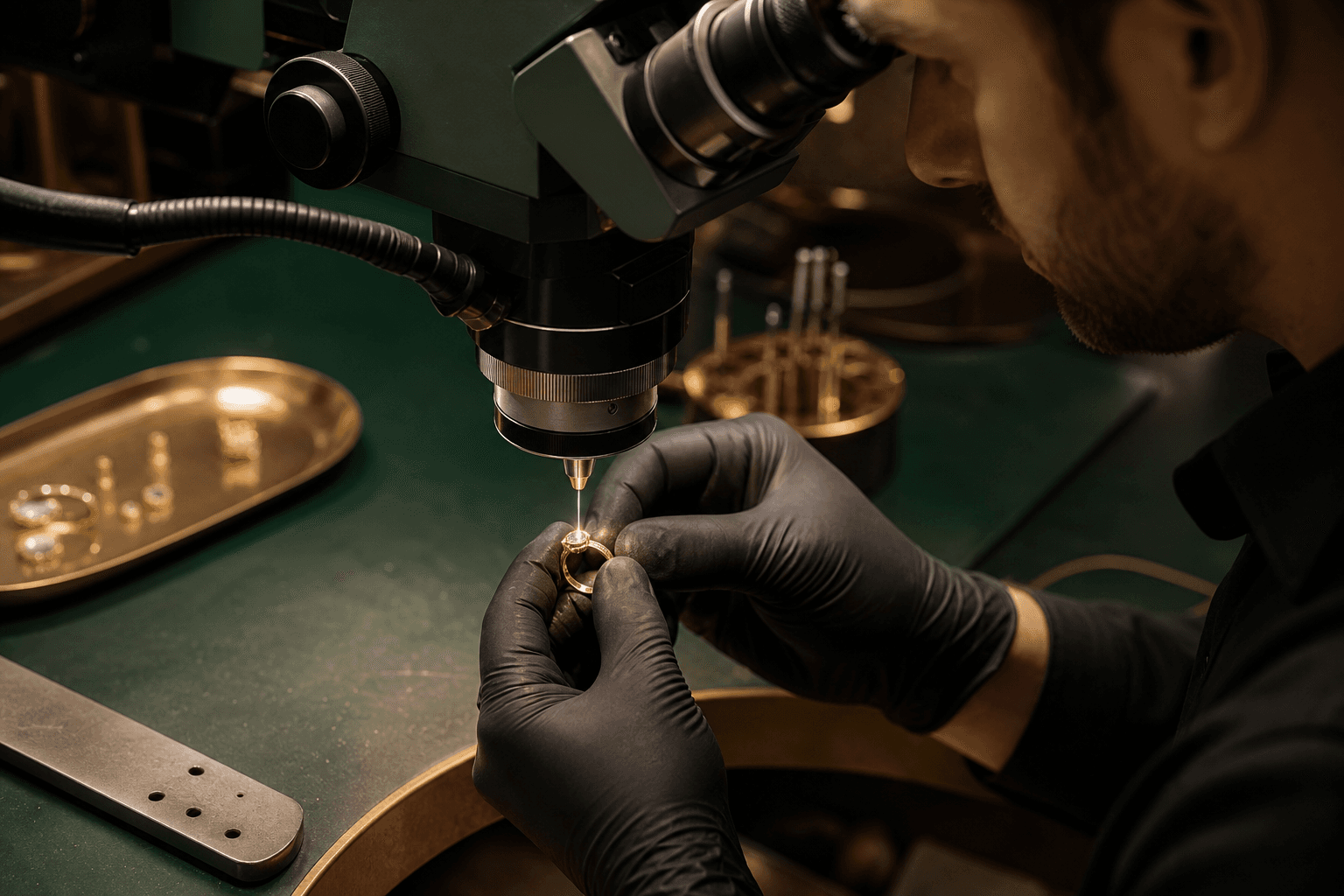
- Request an evaluation. Ask how the supplier examines the metal, stones, workmanship, condition, and documentation. An evaluation is not necessarily an independent appraisal.
- Review the proposed allowance. Confirm whether the figure is cash, store credit, or restricted credit.
- Check eligibility and restrictions. Some programs limit accepted brands, materials, stone types, purchase origins, condition, or replacement categories.
- Select the replacement. Compare the full price, including metal, stones, setting, labour, custom work, shipping, taxes, and separate services.
- Calculate the balance. Subtract the approved allowance from the replacement price and add applicable taxes or disclosed costs.
- Confirm ownership transfer. Ask when the original piece becomes the supplier’s property and whether the transaction can be reversed.
- Keep the documents. Retain the evaluation, allowance, purchase agreement, restrictions, payment record, and return or cancellation terms.
How Trade-In Credit Is Determined
Trade-in credit is generally based on the supplier’s assessment of the item and the program terms, not simply on your original receipt. Different businesses may make different offers because their costs, markets, inventory needs, and policies vary.
Metal type, purity, and weight
Gold karat, silver content, platinum content, plating, solder, gemstones, and non-metal components all affect assessment. A heavier item is not automatically worth more if much of its weight comes from stones, hollow construction, or excluded materials.
If a business buys gold or other precious metals by weight, Measurement Canada says it must use an approved and inspected scale. Ask whether the quoted weight is gross weight or the weight of eligible precious metal after excluding stones and other components.
Gemstone identity and documentation
A diamond, lab-grown diamond, moissanite, coloured gemstone, imitation stone, and synthetic material do not carry the same identity or market considerations. A grading report, receipt, purchase record, or treatment disclosure may help, but documentation does not guarantee a particular allowance.
Condition and construction
Loose stones, worn prongs, cracks, missing components, deep scratches, broken clasps, previous soldering, resizing, and heavy wear can change eligibility or repair costs. A damaged piece may still have metal or stone value, but deductions may apply.
Craftsmanship, brand, and current demand
Handwork, a recognised maker, unusual design, provenance, and current buyer demand can matter when the supplier intends to resell the piece. A one-of-a-kind design may have strong personal value without an equally strong resale market.
The replacement piece
A trade-in offer cannot be judged from the allowance alone. Compare the replacement’s total price, stone identity, metal purity, labour, service terms, taxes, and restrictions.
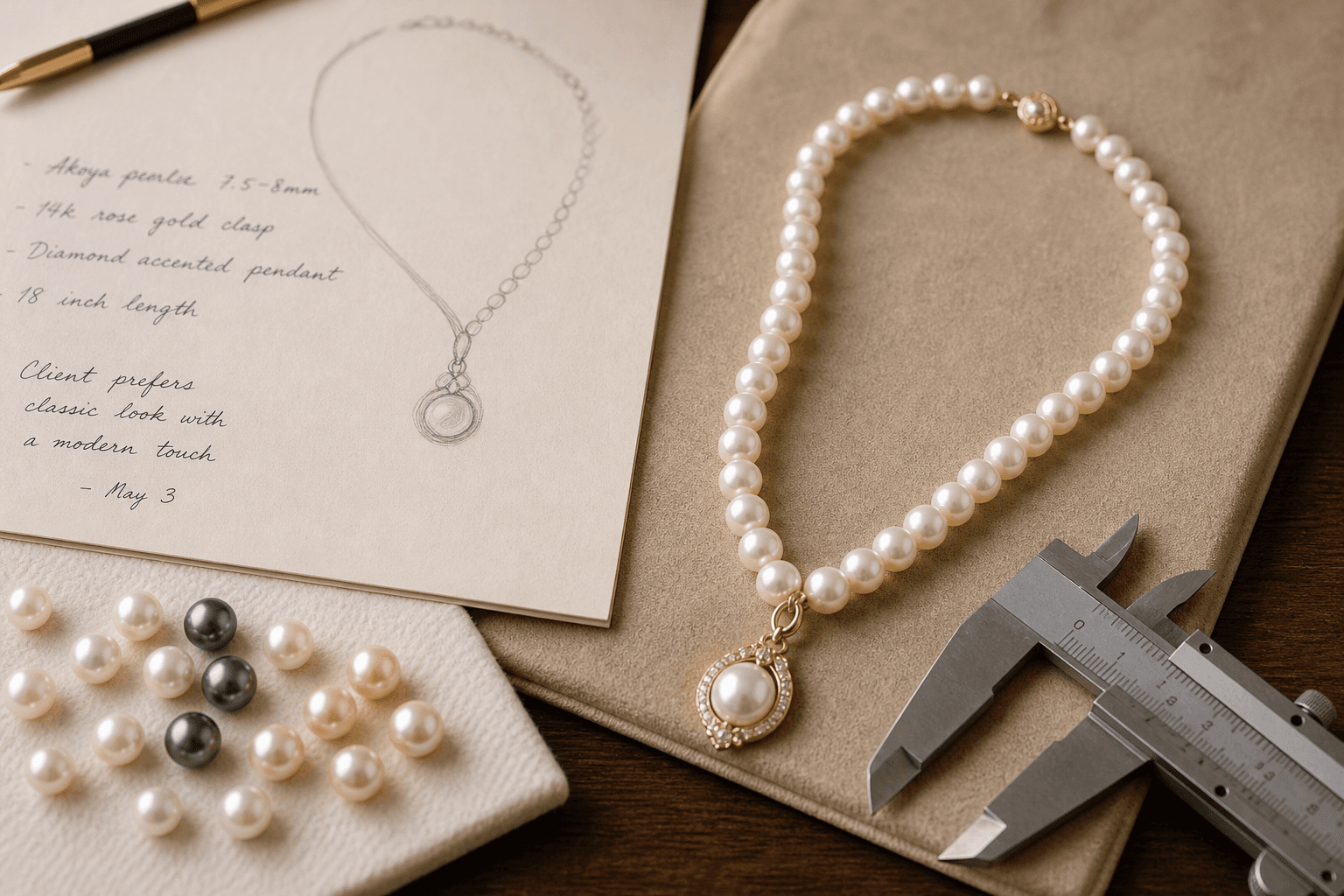
For a refresher on checking purity wording, construction, and pearl details, see this guide to 18K gold pearl necklaces. Those checks do not establish trade-in value, but they help you describe the item accurately.
A Hypothetical Trade-In Calculation
The following invented example shows the calculation only. It is not a typical allowance or a percentage any jeweller must offer.
| Item | Hypothetical amount |
|---|---|
| Replacement jewelry price | $2,400 |
| Stated trade-in allowance | -$700 |
| Separate disclosed service fee | +$50 |
| Subtotal before applicable tax | $1,750 |
| Applicable tax | Added according to the written quote |
The formula is: replacement-piece price plus disclosed costs, minus the trade-in allowance, equals the amount due before applicable tax. A second supplier offering a $900 allowance could still be the worse deal if its comparable replacement costs $3,100 and carries a different service charge.
Special Cases: Inherited, Vintage, Damaged, or Customized Jewelry
Jewelry can be evaluated differently when its history, condition, or construction is unusual. Prepare relevant records and ask direct questions instead of assuming that a special history guarantees acceptance or a higher offer.
Inherited jewelry without paperwork
Photograph the piece, record marks, and write down what you know about its source and age. Ask whether proof of ownership, estate documents, certificates, or only the item are required.
Vintage or signed jewelry
Look for maker’s marks, dated receipts, original packaging, certificates, and provenance. Avoid removing old components or polishing aggressively before evaluation.
Damaged, incomplete, resized, or repaired pieces
Describe missing stones, broken chains, bent settings, worn plating, resizing, soldering, and prior repairs honestly. Ask whether the item is assessed as repairable jewelry, resale stock, or material for refining.
Customized jewelry and lab-grown diamonds
Custom construction can make a piece difficult to resell if its size, engraving, setting, or design is highly personal. Lab-grown diamonds need accurate identification because their documentation and market treatment differ from natural diamonds.
Sentimental pieces
If emotional value is central, compare a trade-in with resetting a stone, remodelling the metal, preserving an engraving, or incorporating a meaningful element into a new design. A bespoke jewelry design process can help you think through materials, approvals, and intended use.
Ontario Terms to Verify Before You Accept an Offer
Ontario does not require every store to offer refunds or exchanges, and it does not require a store to offer a jewelry trade-in program. The supplier’s policy matters, and the details should be clear before you transfer your piece or commit to a replacement.
For an online agreement containing a trade-in arrangement, Ontario guidance says the business must provide a description of the arrangement, the trade-in allowance, the currency when relevant, and applicable restrictions, limitations, and conditions. Review the Ontario online shopping guidance for trade-in disclosures alongside the actual agreement.
| Term to verify | Question to ask |
|---|---|
| Eligible item | Are your material, stone, vintage, plated, or custom details accepted? |
| Original seller | Must the jewelry have been purchased from this business? |
| Allowance | Is it cash, store credit, or restricted credit? |
| Minimum upgrade | Must the replacement meet a minimum price? |
| Credit application | Does it apply to custom work, labour, or only selected inventory? |
| Fees and taxes | Which testing, repair, shipping, service, or other fees are separate? |
| Ownership | When does the supplier become the owner? |
| Replacement changes | What happens if the replacement is delayed, resized, or unavailable? |
| Cancellation and returns | Can either side cancel, and are custom replacements excluded? |
| Timing | When is the credit applied and the replacement delivered? |
Review the supplier’s written return and cancellation policy before payment. Use Ontario’s consumer protection shopping information for general guidance.
Prepare for an Evaluation Without Overstating Your Jewelry’s Value
Preparation helps identify the item and compare offers. It does not guarantee acceptance or increase the allowance.
- Take photographs of the front, back, clasp, setting, hallmarks, engraving, and damage.
- Record dimensions, ring size, necklace length, stone measurements, and visible marks.
- Gather receipts, certificates, grading reports, appraisals, repair invoices, insurance records, and provenance documents.
- Write down what has been resized, replaced, repaired, plated, or altered.
- Ask whether the evaluation includes testing, weighing, stone identification, or a separate appraisal.
- Define your priority: cash, an upgrade, better fit, a gift, or sentimental preservation.
- Do not polish, dismantle, resize, or repair the item solely to influence an offer.
For plated or gold-filled pieces, avoid aggressive cleaning before assessment. Gentle care principles are covered in this guide to 14K gold-filled jewelry care.
When Custom Redesign May Be the Better Route
Custom redesign may suit you better than a trade-in when the stone, metal, engraving, or family connection matters more than receiving credit toward a standard replacement. Compare keeping the original intact, resetting one element, remodelling the structure, combining selected materials with new materials, or starting with an entirely new design.
Advikosh offers custom jewelry, and its FAQ says customers can discuss a design based on their own sketch, photo, or idea and approve the custom design before production begins. This is the verified custom-design offering described by Advikosh.
Questions to Ask Before Signing or Paying
- What exactly am I transferring, and when does ownership change?
- How was the allowance calculated?
- Is the allowance cash, unrestricted store credit, or restricted credit?
- Does the piece need to have been bought from you?
- Is there a minimum replacement price?
- Which fees, taxes, testing, shipping, or repair deductions are separate?
- Does credit apply to custom work, labour, resizing, or only finished inventory?
- What happens if the replacement is unavailable, delayed, altered, returned, or cancelled?
- Can I receive the allowance, restrictions, and final balance in writing?
Frequently Asked Questions
Can I trade in jewelry I bought from another jeweller?
Maybe, but there is no universal rule. Some programs accept outside jewelry, while others require the original purchase from the same jeweller or limit eligibility by brand, material, stone, or product type.
Is trade-in value based on the original purchase price?
Not automatically. The receipt can help identify the item, but the allowance may also reflect eligible metal, stone identity, weight, condition, documentation, demand, restrictions, and the replacement purchase.
Can damaged, inherited, resized, or customized jewelry qualify?
It depends on the supplier’s policy and the item’s condition. These pieces may require inspection, documentation, repair deductions, or a different route such as outright sale, preservation, or redesign.
Are jewelry trade-in programs the same as selling jewelry through an app?
No. An app or marketplace connects you with potential buyers, while a trade-in applies a supplier’s allowance toward another purchase. A marketplace may offer more control over price but requires more effort and does not guarantee a sale.
Does a trade-in arrangement have to disclose the allowance and restrictions in Ontario?
For an online agreement containing a trade-in arrangement, Ontario guidance says the business must provide the arrangement’s description, allowance, relevant currency, and restrictions, limitations, and conditions. Review Consumer Protection Ontario information for general guidance.
Does a retailer buyback service work the same way as a jewelry trade-in program?
No. A buyback service may purchase your item for cash or credit without requiring a replacement, while a trade-in normally connects the allowance to a new purchase.
Make the Next Decision With the Terms in Front of You
Before transferring jewelry, compare the written allowance and final balance with your actual goal. If you want cash, compare an outright sale and marketplace route. If you want a new look while preserving a meaningful idea or material, ask about redesign.
For readers who prefer to explore a new piece around a personal concept, Advikosh’s custom jewelry service offers a separate path for discussing a design, materials, and approval before production.