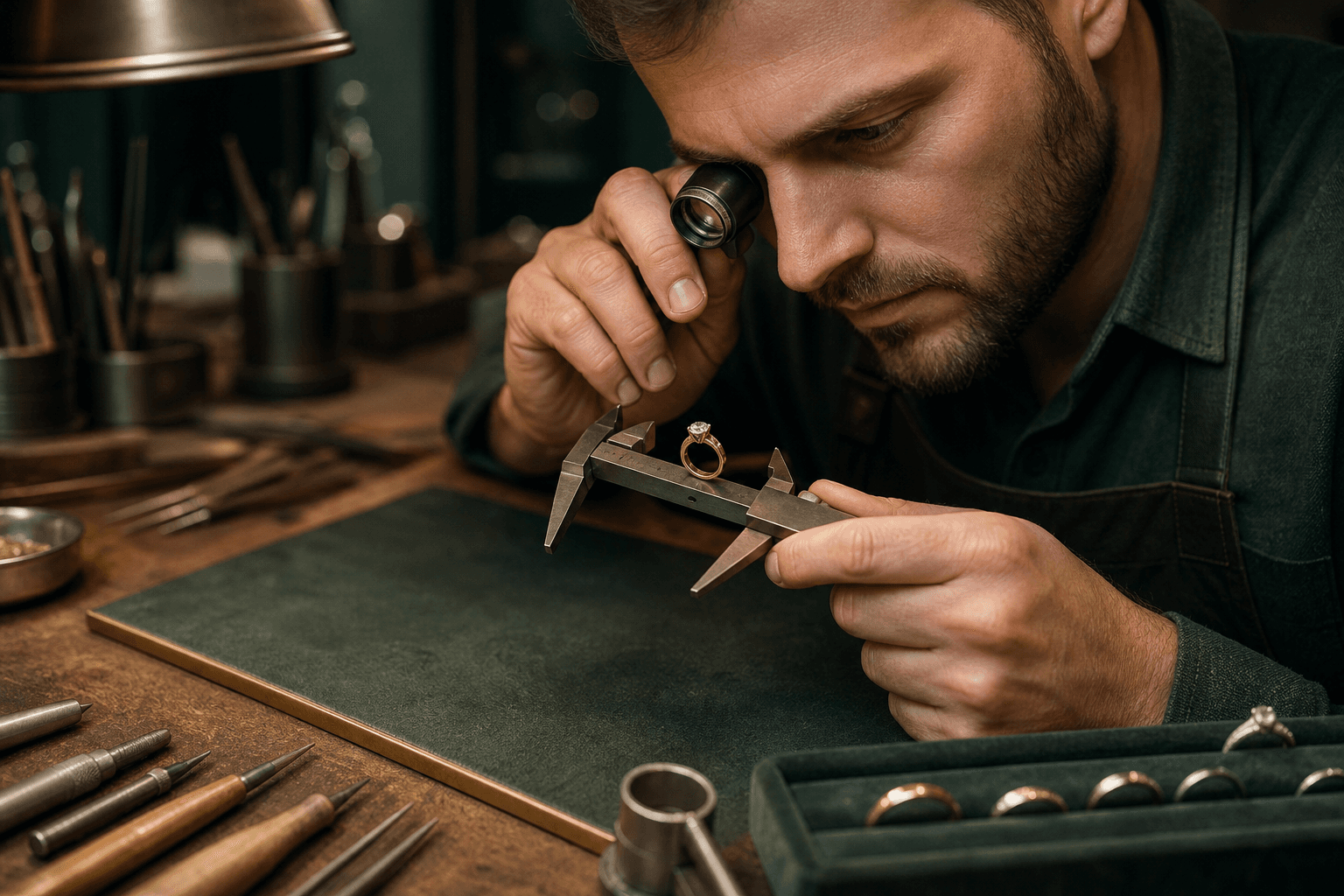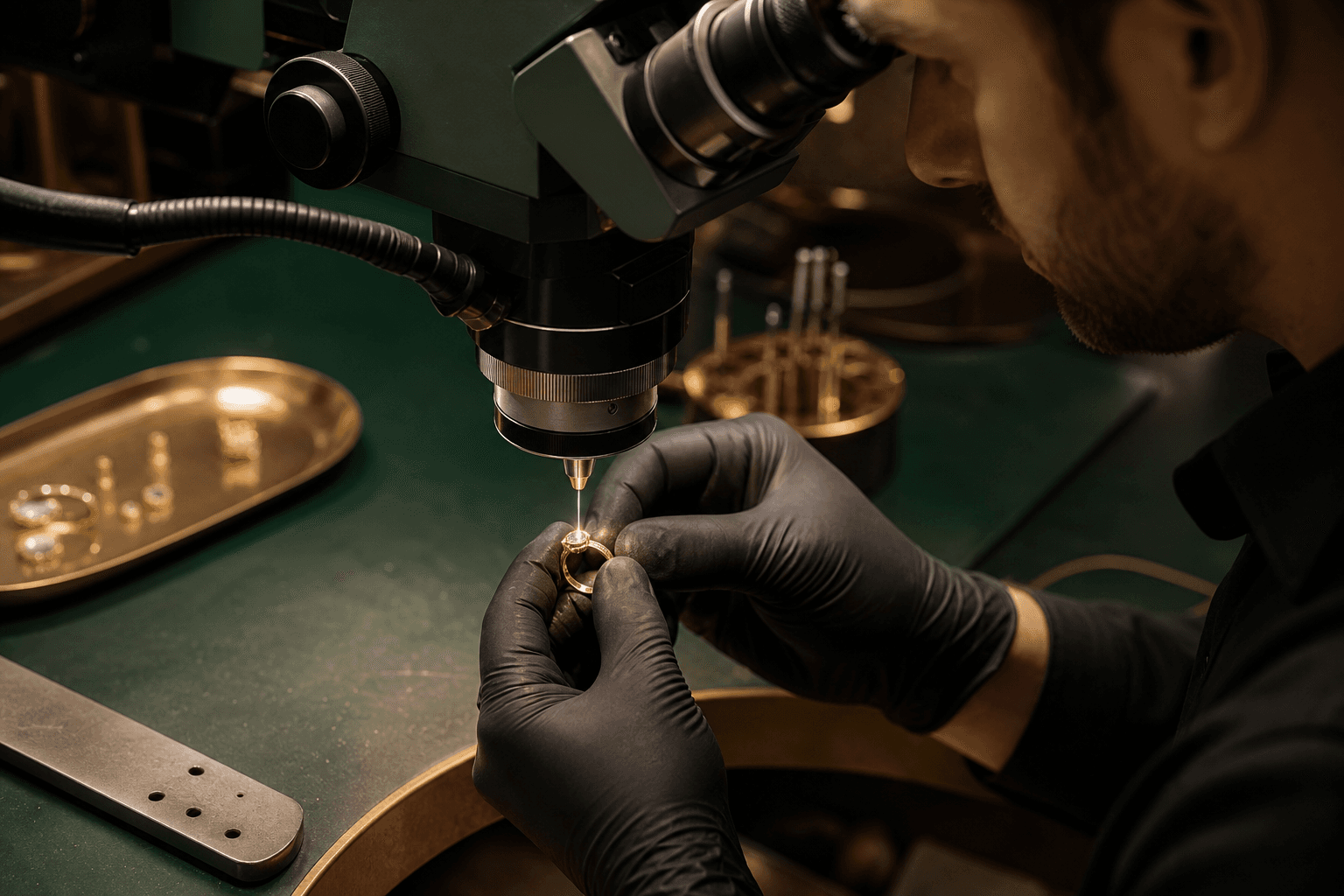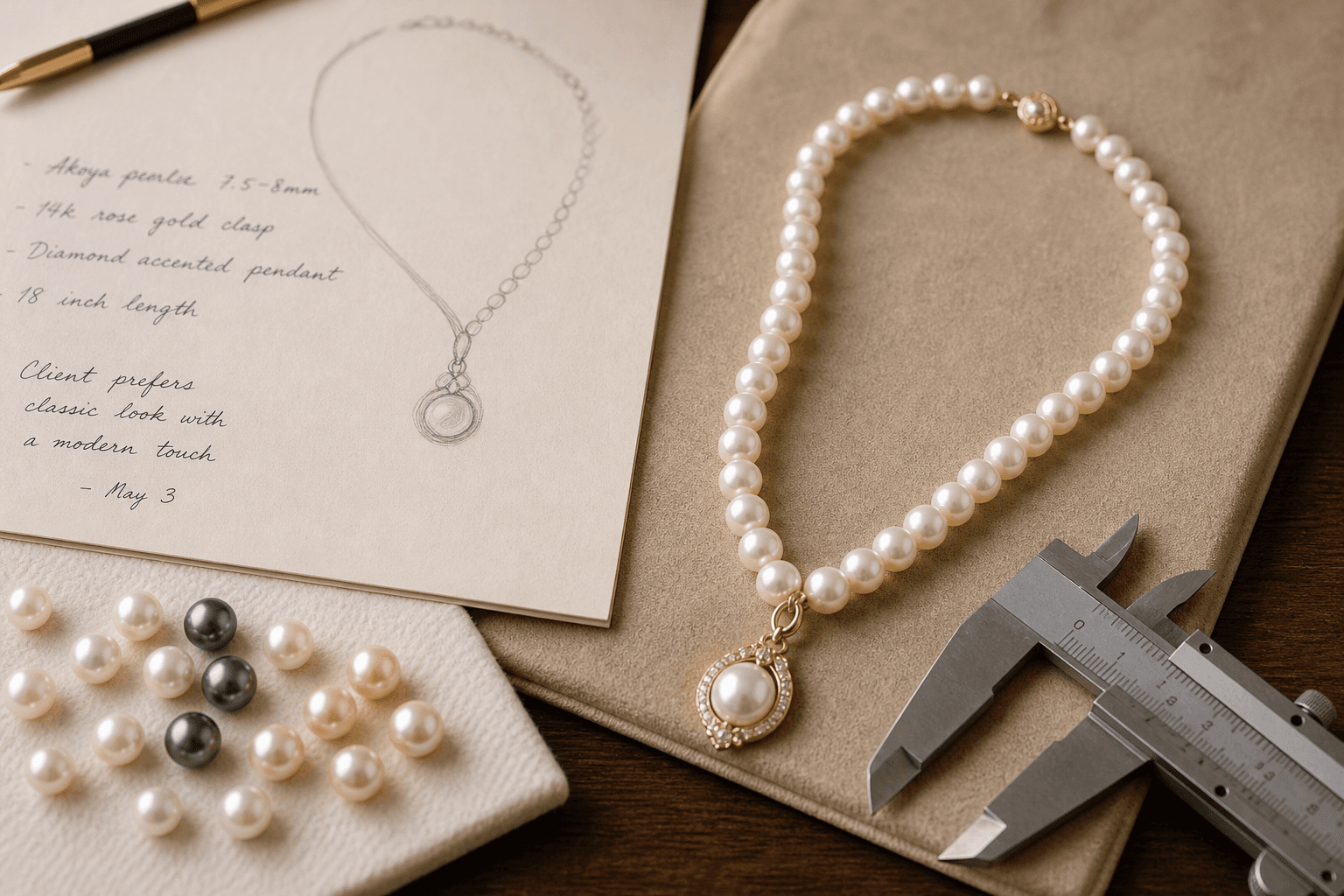



An online custom jewelry consultation should do more than introduce a jeweller. It should help turn your idea, sketch, or reference photo into a clear request, then give you enough information to decide whether the design, materials, price, and terms are right for you.
Before production begins, confirm what will be made, which metals and stones will be used, how sizing will be handled, what the quote includes, how design approval works, and what happens after purchase. This makes an online consultation a practical decision checkpoint rather than a casual conversation.
Should You Choose Custom Jewelry or a Ready-to-Shop Piece?
The first decision is whether you need personalization. A ready-to-shop piece is usually simpler when you already know the style you want, need a straightforward gift, or prefer to compare a finished item and visible price before buying.
Custom design is more suitable when the piece needs to reflect a personal idea, fit a particular wearer, mark a special occasion, or combine details that are not available in a standard collection. Advikosh offers custom jewelry design and fabrication under the positioning “Your design, our craftsmanship”, alongside collections that include pearl, sterling silver, moissanite, and gold jewelry.
| Consideration | Ready-to-shop jewelry | Custom jewelry |
|---|---|---|
| Personalization | Choose from an existing design | Discuss the design and requested details |
| Decision effort | Compare finished pieces | Choose materials, size, form, and scope |
| Pricing clarity | Usually visible for the listed item | Confirm what the quote includes |
| Best suited to | Immediate selection or uncomplicated gifts | Personal milestones or distinctive ideas |
| Approval | Review the product listing and photos | Confirm the proposed design before work begins |
What to Prepare Before an Online Custom Jewelry Consultation

You do not need a finished technical drawing to start. However, a few details can make the conversation more focused and help the jeweller understand what you mean by “custom.”
- Jewellery type: Decide whether you are considering a ring, necklace, pendant, earrings, bracelet, or another piece.
- Purpose: Note whether it is for everyday wear, a wedding, anniversary, birthday, cultural occasion, or another milestone.
- Inspiration: Save reference images, a sketch, or a photo of an existing piece. Mark the details you like, such as shape, texture, colour, or scale.
- Materials: Consider gold, sterling silver, platinum, brass, pearls, moissanite, or another stone or metal. If unsure, prepare questions.
- Size and fit: Bring the wearer’s ring size, necklace length, wrist measurement, or relevant fit information if available.
- Budget range: A realistic range helps separate essential details from optional upgrades.
- Non-negotiables: List details that must remain, such as a particular stone, engraving idea, metal colour, or symbolic element.
These are useful preparation prompts, not stated requirements for an Advikosh consultation. Its FAQ specifically addresses creating jewelry from a customer’s own design, sketch, or photo, so those materials can be a sensible starting point.
Questions to Ask During the Consultation
Organize your questions into categories. The goal is to leave with a defined request, not just general reassurance that an idea is possible.
Design and scope
- Which parts of my reference image or sketch can be incorporated?
- What would you change to make the piece practical to wear?
- What exactly is included in the proposed piece?
- Are engraving, matching pieces, stone changes, or special finishes included or priced separately?
Materials and construction
- Which metal, alloy, pearl, or stone is being proposed?
- What alternatives would change the appearance, durability, or price?
- Are the stone dimensions, pearl type, metal karat, and finish stated in the quote?
- Are there care considerations for the selected materials?
Fit and wearability
- How will the size or length be confirmed?
- Is the design intended for occasional wear or regular use?
- Could the proportions, setting, clasp, or earring style affect comfort or security?
- What should happen if the finished item does not fit as expected?
If the consultation includes service guidance as well as design work, clarify how you will communicate, what information you will receive, and when you are expected to decide. Advikosh says its luxury jewelry consultants guide customers through customization or ordering, with WhatsApp and email support available.
Design, Materials, Stones, and Sizing
A reference image communicates style, but it may not communicate scale, construction, or material quality. Ask which features are being matched and which are being interpreted. A similar silhouette can look very different when the stone size, pearl shape, metal colour, or chain thickness changes.
For pearls, ask about the pearl category and shape, especially if your inspiration shows a smooth round pearl or an irregular baroque form. For moissanite or other stones, ask about the proposed size, colour, cut, setting, and how those choices affect the overall design. Do not assume that a reference photo establishes the exact materials.
Fit deserves the same attention as appearance. A ring size, necklace length, bracelet measurement, or earring proportion should be recorded clearly. If you are ordering a gift and cannot verify measurements, ask what information is needed and what options exist if the fit is not right.
Quote Details and Design Approval Before Production
Before approving a custom order, ask for a written or otherwise retainable summary of the agreed details. It should identify the jewellery type, materials, stones, dimensions or size, finish, included services, total price, taxes or shipping treatment, payment terms, and known exclusions.
Also ask when production starts and what happens if you request a change after approval. Clarify whether revisions are included, whether a revised price will be issued, and which design version is final. Advikosh’s FAQ asks whether customers approve a custom design before production begins, making approval an important point to confirm directly rather than assume.
Ontario’s consumer guidance says online purchases over $50 must be supported by a contract that can be retained and includes transaction details such as payment and delivery terms. The provincial government also says an estimate generally cannot be exceeded by more than 10 per cent unless the customer agrees to additional charges. How a rule applies depends on the circumstances and contract. Read Ontario’s advice on online and phone shopping and its consumer protection guidance before relying on it for a particular order.
Online Buyer Checklist for Canadian Jewelry Orders
Before paying, verify the business as carefully as the design. The federal Office of Consumer Affairs recommends checking a seller’s physical location, contact information, terms of sale, shipping, complaints, return and exchange policies, item condition, total price, and applicable quality certificates. Its online shopping guidance provides the full checklist.
- Confirm the business name, Canadian location, contact method, and support process.
- Check the complete price, including taxes, shipping, customization charges, and optional additions.
- Read delivery terms and ask whether the stated timing is an estimate or commitment.
- Review returns and exchanges, including whether custom orders have different eligibility rules.
- Save the product description, quote, approved design, payment record, and messages about changes.
- Confirm how complaints, defects, sizing problems, or differences from the approved design will be handled.
Delivery, Returns, and After-Sales Questions
Custom work can involve different terms from ready-to-shop jewelry, so ask before payment. Confirm the expected delivery arrangement, whether shipping is included, how tracking is provided, and whether the recipient must be available.
Ask whether the finished piece can be returned or exchanged, and whether that policy changes because the item was personalized. If the business offers repair, replating, or care support, ask what is covered, what is excluded, and whether shipping or service fees apply. Do not treat a general policy as proof that every custom piece has the same coverage.
For buyers comparing service experiences, the importance of agreeing on specifications, fittings, and final details also appears in this educational overview of a custom mens tailoring service. The industries differ, but the underlying lesson is useful: confirm the details that determine the finished result before work begins.
How to Take the Next Step With Advikosh
Gather your reference material and write down your preferred jewellery type, occasion, fit information, materials, budget range, and must-have details. Then use Advikosh’s custom jewelry information and FAQ to begin the conversation, share an idea, sketch, or photo, and ask how design approval, quoting, production, delivery, and after-sales support will work for your request.
Do not assume that an online consultation includes a particular booking method, video call, design rendering, timeline, deposit arrangement, or custom-order return policy unless the business confirms it. Treat each detail as a question to resolve before approval.
Frequently Asked Questions
Can I start an online custom jewelry consultation with a sketch or photo?
Yes. A sketch, photo, or inspiration image can help communicate the shape and details you want. Advikosh’s FAQ says customers can ask about creating jewelry from their own design, sketch, or photo. Explain which features matter most, since a reference may not show exact materials, dimensions, or construction.
What should I confirm before approving a custom jewelry design?
Confirm the jewellery type, metal, stones or pearls, dimensions, size, finish, included features, total price, payment terms, shipping, revision process, and return or exchange conditions. Make sure the approved version is recorded in a format you can retain.
Is an online consultation suitable if I am unsure which metal or stone to choose?
Yes. Uncertainty is a useful reason to ask for a consultation. Ask how each choice affects appearance, wearability, care, and price, then make sure the selected material is written into the quote.
What should a custom jewelry quote include before production begins?
A useful quote should identify the design scope, materials, stones, size or dimensions, finish, total price, taxes or shipping treatment, payment terms, delivery arrangements, and exclusions or revision charges. Ask whether any undecided detail can change the price.
How can I check an online jewelry seller’s terms before ordering in Ontario?
Review the seller’s identity, physical location, contact information, total price, shipping, returns, exchanges, item condition, and terms of sale. Save the quote and transaction records. For purchases over $50, Ontario says the contract must be provided in a form you can retain.
Make the Consultation Your Decision Checkpoint
Custom jewelry is worthwhile when the personal design matters enough to justify extra decisions. The strongest online consultation turns inspiration into an agreed specification, explains material and fit choices, and makes the price, approval stage, delivery terms, and after-sales policy understandable before production starts.
If you are ready to discuss a personalized piece, review the custom jewelry information and FAQ, prepare your reference material, and confirm the details that matter to you. You can begin with Advikosh, whose verified online information describes custom design and fabrication, consultant guidance, and support for customers exploring their own jewelry ideas.