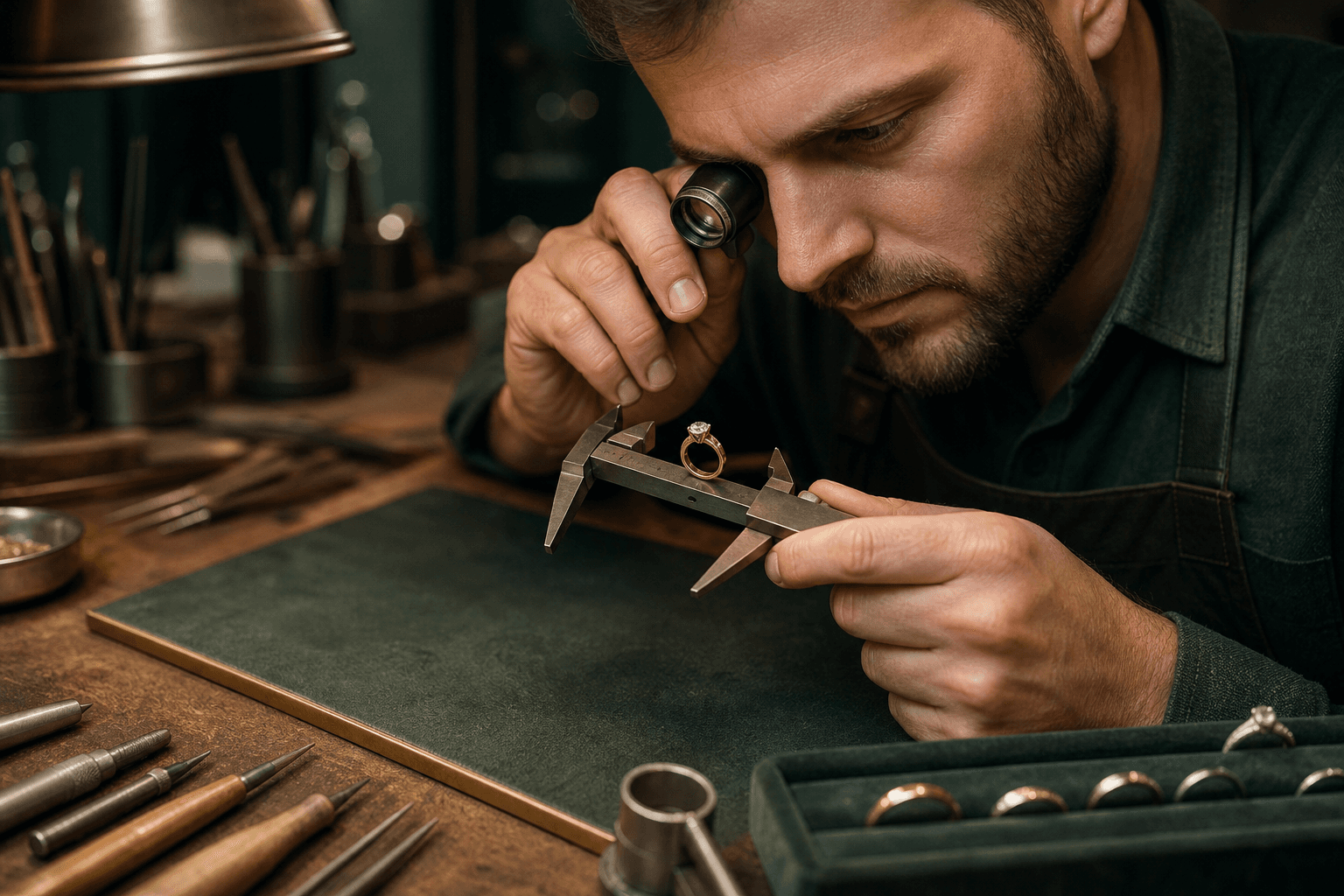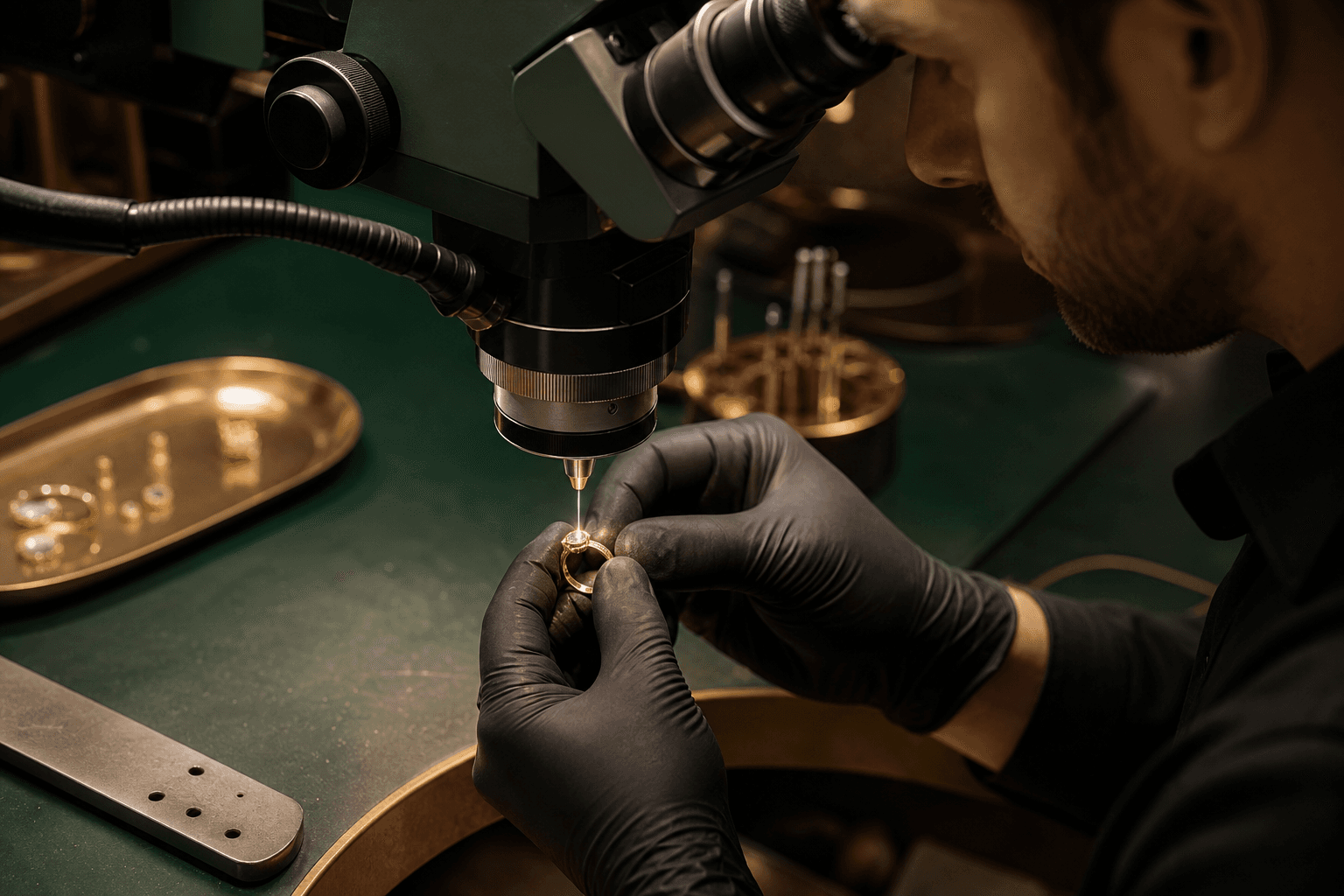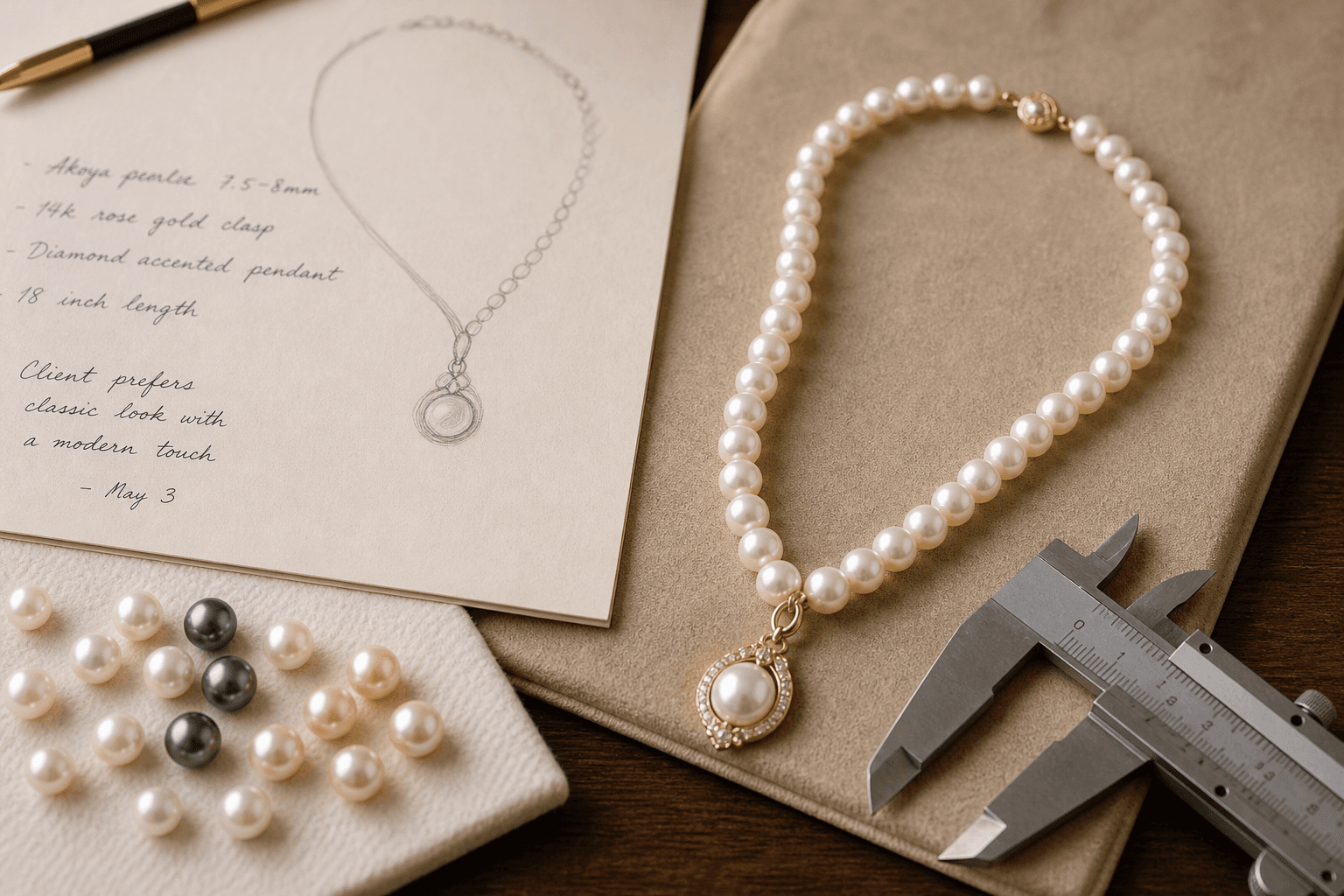



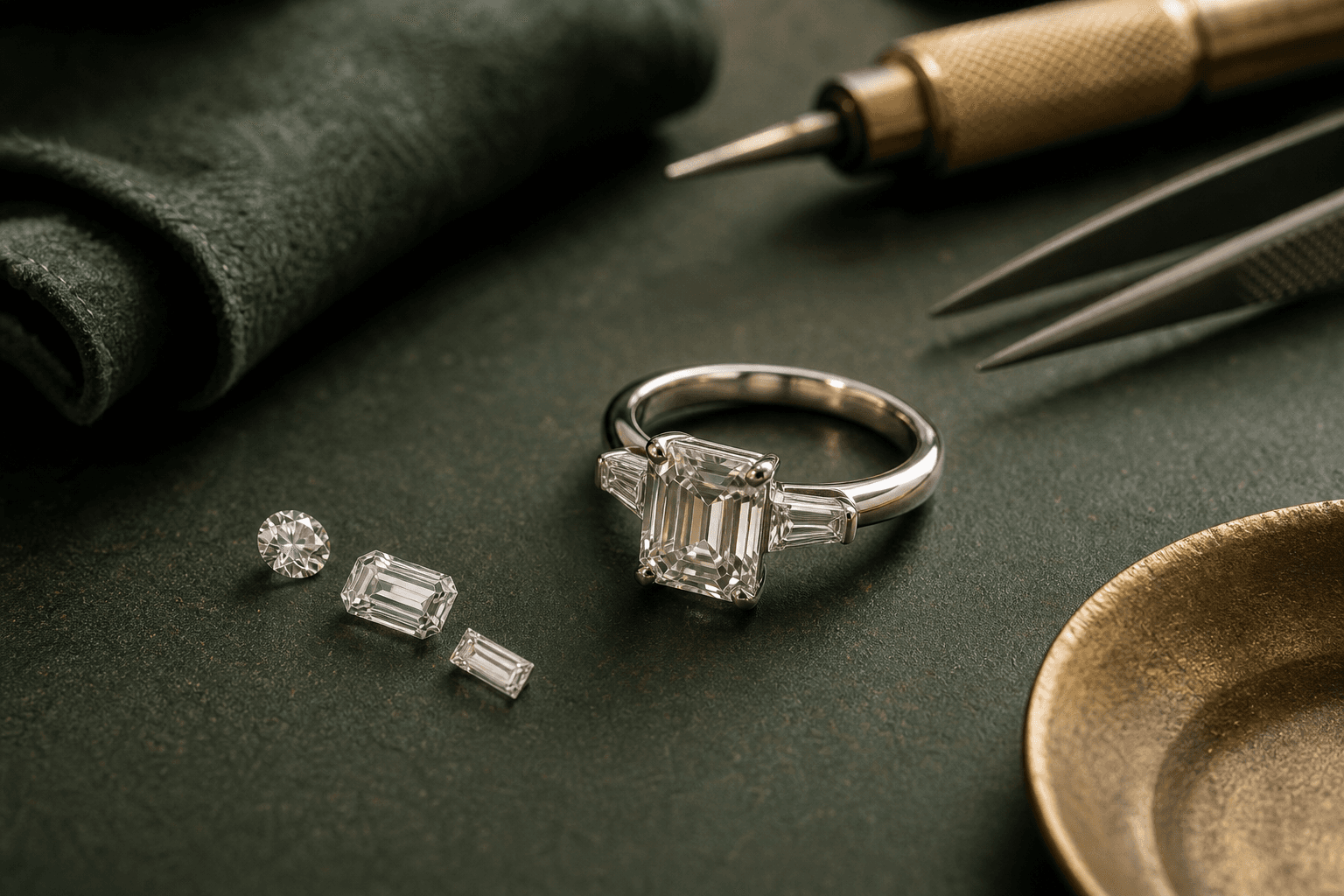
Platinum can be an excellent choice for fine jewelry and bridal pieces when you want a naturally white metal, high purity, and a dense feel. It is not automatically better than gold: platinum often costs more, weighs more, scratches, develops a patina, and is serviced differently. The right choice depends on your design, wearing habits, finish preference, and budget.
What Is Platinum Fine Jewelry?
Platinum fine jewelry is made from a platinum-based alloy rather than a white coating over another metal. Its appeal comes from its naturally white appearance, high potential purity, density, and suitability for engagement rings, wedding bands, heirloom redesigns, and other custom jewelry.
Do not confuse solid platinum with white gold or a plated finish. White gold is a gold alloy whose colour and finish may be changed with rhodium plating. A piece described as platinum should have clear metal-composition information, not simply a reference to a silver-white appearance.
Purity is only one part of the decision. The alloy, design, stone setting, surface finish, dimensions, and intended use all affect how the finished piece looks and performs.
Does Platinum Suit Your Ring or Other Fine-Jewelry Piece?
Platinum can make good jewelry when you value a naturally white colour, substantial feel, and high-purity metal. It is especially worth considering for an engagement ring, wedding band, daily-worn ring, heirloom redesign, or custom piece where the metal itself is central to the design.
Platinum may suit you if you want a white metal without relying on a surface coating for its basic colour, a dense feel, high purity subject to the stated alloy, and a material that can develop a soft patina instead of visibly tarnishing like silver.
It may be less suitable if you prefer a lighter piece, a warmer yellow or rose colour, a lower initial spend, or a bright mirror finish that you do not want to change with wear. Platinum can also bring different repair, resizing, finishing, and servicing considerations.
Platinum vs Gold: Choose by Wear, Colour, and Priorities

Platinum is not universally better than gold. Platinum favours buyers who prioritize a high-purity white metal and substantial feel, while 14K and 18K gold offer more colour choices and different ways to balance purity, weight, design, and cost.
| Consideration | Platinum | 14K gold | 18K gold |
|---|---|---|---|
| Typical purity | Often 95% platinum or higher for a Canadian platinum quality mark, subject to eligible alloy rules. | 58.5% gold. | 75% gold. |
| Colour | Naturally white to grey-white. | Yellow, white, or rose, depending on the alloy. | Often chosen for a richer yellow tone, with white and rose options. |
| Feel | Dense and weighty. | Generally lighter than an equivalent platinum design. | Usually lighter than platinum. |
| Surface wear | Can scratch and develop patina. | Can scratch and may show wear in the finish or plating. | Can scratch and may show wear in the finish or plating. |
| Best fit | High-purity white-metal priorities and buyers comfortable with patina. | Colour flexibility and broader budget control. | Higher gold content and a richer gold tone. |
Choose platinum if your first priority is a high-purity white metal with a dense feel and you accept surface change over time. Choose 14K gold if you want more colour and budget flexibility. Choose 18K gold if a richer gold tone and higher gold content matter more than a white-metal look.
How Platinum Changes With Wear
Platinum can scratch and develop a patina, but it does not tarnish in the same way as silver. Its appearance may gradually become softer and less mirror-bright with regular wear.
When platinum is marked, some metal is displaced across the surface rather than simply flaking away as a coating. That does not make it impossible to damage. A hard impact can still affect a thin section, setting, clasp, prong, or stone.
- Mirror-polished: Bright and reflective when new, but surface marks can be easier to notice.
- Brushed, satin, or patinated: Softer and less reflective, with everyday marks often blending into the intended look.
Polishing can restore a brighter appearance, while refinishing can recreate a brushed or satin surface. If you like the idea of a personal patina, platinum’s aging pattern may be part of the appeal. You can also review platinum’s material characteristics before choosing a finish.
How to Verify Platinum Quality in Canada
In Canada, quality marks such as “platinum,” “plat.”, or “platine” can identify platinum or an eligible platinum alloy. The relevant composition is generally at least 95% platinum, including qualifying platinum-iridium or platinum-ruthenium alloys. The Competition Bureau explains the requirements for Canadian platinum quality marks.
A quality mark is not mandatory on every precious-metal article. If one is used, it must be truthful. Its presence does not answer questions about the stone, workmanship, weight, or seller’s policies. Review the guidance on truthful precious-metal marking before treating a stamp as a complete quality assessment.
- What is the platinum percentage?
- Which alloying metals are present?
- Does the composition apply to the entire piece or only a component?
- What quality mark, if any, will appear?
- Is the metal description recorded on the quote?
- Does the finished piece match the approved specification?
The Canadian regulations recognize “platinum,” “plat.”, and “platine” as quality marks subject to composition requirements. Review the Precious Metals Marking Regulations when a description or stamp is unclear.
What Does Platinum Fine Jewelry Cost?
There is no responsible single price for custom platinum fine jewelry. A quote depends on purity and weight, design volume and complexity, stone selection, setting work, labour, finish, sizing, revisions, taxes, shipping, and future servicing terms.
Consider this hypothetical example. Two custom rings use centre stones of the same size. One has a slim plain band and simple setting. The other has a wider band, engraved shoulders, accent stones, an intricate setting, and contrasting finishes. The second ring requires more metal, design work, setting labour, and finishing, so the quotes can differ substantially. This is an illustration, not a price estimate.
Compare quotes by checking platinum purity and weight, stone details and documentation, dimensions and setting, design and revision charges, finish, engraving, sizing, taxes, shipping, return terms, and future inspection or repair services.
“Lifetime plated custom jewelry” is a different category from solid platinum jewelry. Plated jewelry has a surface layer over a base material, so a plating policy should not be treated as proof of platinum composition.
Prepare a Custom Platinum Design Before You Request a Quote

The best custom conversation starts with a clear use case. Decide whether you are planning an engagement ring, wedding band, heirloom redesign, symbolic gift, pendant, earrings, or another piece, then describe how it will be worn.
- Define the purpose: Note the occasion, wearer, daily-wear expectations, and relationship to existing jewelry.
- Collect references: Save examples of silhouettes, settings, widths, stones, engraving, and finishes.
- Choose the visual direction: Decide between bright, polished, brushed, satin, or patinated surfaces.
- Set stone priorities: Identify type, size, shape, colour, symbolism, and documentation.
- Record sizing needs: Note ring size, preferred width, clearance, and desired height.
- Set a budget boundary: Include stones, design work, taxes, shipping, and possible changes.
- List approval questions: Ask about previews, revisions, production approval, and fixed details.
For another way to organize your questions before a custom conversation, see this discussion of the bespoke jewelry design process. Ask for composition, dimensions, sizing, finish, total price, taxes, shipping, delivery expectations, return eligibility, care guidance, and future servicing terms in writing.
Care, Cleaning, and Servicing for Platinum Jewelry
Platinum benefits from gentle cleaning, separate storage, and periodic inspection. Remove it for activities involving impact, heavy abrasion, chemicals, or thick buildup.
- For jewelry suitable for home cleaning, use lukewarm water, mild soap, and a soft brush.
- Rinse carefully and dry with a soft lint-free cloth.
- Store each piece separately.
- Inspect prongs, settings, clasps, and connections periodically.
- Seek assessment for a loose stone, bent section, deep gouge, damaged clasp, or change in how a ring sits.
Ordinary scratches are a finish issue. A loose stone, distorted setting, or structural break is a repair concern and should not be addressed with home polishing. Cleaning, polishing, refinishing, resizing, and repair are separate services.
Questions to Ask Before Approving a Platinum Piece
- What exact platinum composition and alloy will be used?
- What quality mark, if any, will be applied?
- What are the final dimensions, profile, and estimated metal weight?
- What stone and documentation are included?
- Is the ring size correct and comfortable beside other jewelry?
- Will the finish be polished, brushed, satin, or patinated?
- How secure are the setting and high-wear components?
- How many revisions are included?
- What is included in the total CAD price?
- What taxes, shipping charges, and delivery expectations apply?
- What return or exchange conditions apply to custom work?
- Which cleaning, polishing, resizing, repair, and servicing options are available?
- Which alloying metals are present if skin sensitivity is a concern?
Frequently Asked Questions About Platinum Fine Jewelry
Does platinum tarnish like silver?
No. Platinum does not tarnish like silver, but its surface can scratch and develop a softer patina.
What does a platinum quality mark mean in Canada?
“Platinum,” “plat.”, or “platine” identifies a platinum quality claim subject to Canadian composition requirements, generally involving at least 95% platinum or an eligible platinum-iridium or platinum-ruthenium alloy.
Is platinum suitable for sensitive skin?
It may suit many people, but it is not automatically safe for everyone. Ask which alloying metals are present and have the composition recorded before ordering.
What should be included in a custom platinum jewelry quote?
A useful quote identifies composition, dimensions, metal weight where available, stones, setting, finish, sizing, design charges, taxes, shipping, payment stages, delivery expectations, and custom-order terms.
Discuss a Custom Platinum Design With Advikosh
If platinum’s high-purity white-metal look, dense feel, and natural patina fit your priorities, prepare your references, stone preferences, sizing information, finish choice, and budget. Advikosh offers a Custom Jewelry service. Ask whether the service suits your intended piece and confirm its terms before proceeding.