


A royal jewelry collection is usually defined by a regal design language, not by proof that a piece belonged to a royal family or has historical provenance. Symmetry, ornate detail, polished finishes, pearls, gemstones, and a formal sense of scale can create the look.
For Canadian shoppers, the important decision is not simply whether a piece looks luxurious. You should also assess its stated materials, dimensions, craftsmanship details, production timing, shipping arrangements, and return or exchange conditions.
What does a royal jewelry collection mean?
“Royal jewelry collection” is best understood as a style description. It may refer to jewelry designed to feel ceremonial, opulent, elegant, or inspired by courtly fashion. The term can apply to coordinated necklaces, earrings, rings, bracelets, or sets that share an ornate visual character.
It does not automatically establish that a piece was worn by a royal person, came from a historic collection, or has documented provenance. Those are separate claims requiring evidence, such as ownership records, dated documentation, or a clearly stated history for the individual item.
This distinction prevents a common buying mistake: treating impressive appearance as proof of superior material quality. A dramatic design can be made in different metals and paired with different types of pearls or gemstones. Evaluate the style and the substance as two related, but separate, questions.
Design details that create a royal look

Royal-style jewelry often relies on visual presence. These signals can help identify the aesthetic without suggesting that every piece will use all of them:
- Symmetry and structure: Balanced arrangements and repeating motifs can make a piece feel formal and deliberate.
- Ornate detail: Engraving, textured surfaces, decorative settings, layered forms, and intricate edges add richness.
- Gemstone emphasis: A central stone, surrounding halo, or repeated stones can create a ceremonial focal point.
- Pearl arrangements: Graduated strands, clustered pearls, and sculptural settings can lend a traditional impression.
- Polished finishes: Reflective surfaces, plating, and contrasting finishes can increase the sense of occasion.
- Scale and proportion: Larger drops, statement pendants, broad bands, or layered pieces may look more formal than minimalist designs.
These are design signals, not quality certificates. Still ask how the piece is made, what materials are used, how large it is, and whether the finish is plated, filled, solid, or otherwise described.
Choosing materials for a royal-style piece
The best material depends on the intended look, how you expect to wear the piece, your budget, and the information supplied by the seller. Luxury appearance and material value should not be treated as interchangeable.
| Material | What to assess | Why it matters |
|---|---|---|
| Gold | Colour, karat, construction, plating or filling, and markings | The description affects composition and care requirements. |
| Sterling silver | Clear sterling identification, finish, and care instructions | Silver can support detailed designs but requires attention to tarnish and surface care. |
| Platinum | Purity or quality description, construction, weight, and documentation | Evaluate stated specifications rather than brightness alone. |
| Brass | Base-metal description, coating or plating, and maintenance guidance | The finish and care terms are important to understand. |
| Pearls | Type, size, shape, colour, surface, and matching consistency | Natural variation affects the finished appearance. |
| Moissanite or other gemstones | Stone identity, size, colour, setting, and documentation | Clear specifications make price comparisons more meaningful. |
For Canadian purchases involving gold, silver, platinum, or palladium, precious-metal marking rules can help consumers understand the described quality of an article. The Government of Canada explains the role of these markings under the Precious Metals Marking Act. Retain the listing and material description for your records.
How to evaluate pearls and gemstones
Start with the basic identity of the material. For pearls, check whether the listing identifies the pearl type and provides information about shape, size, colour, surface, and matching. For gemstones, look for the stone name, dimensions or carat information where supplied, colour description, setting details, and any documentation.
Photographs help you judge design and proportion, but they cannot guarantee exact colour, texture, brilliance, transparency, dimensions, weight, or finish. Natural gemstones, diamonds, pearls, and handcrafted jewelry can show minor variations.
Ask whether the image shows the actual item or a representative design. Check measurements rather than relying on the photograph. “Statement necklace” does not tell you how long it is, and an apparently large stone can look different depending on image scale.
Ready-made collection or custom jewelry?
Both options can produce a royal-style result, but they suit different priorities. Ready-made jewelry is usually simpler when you want to compare finished designs, materials, and prices directly. Custom jewelry is more suitable when you have a specific concept, need a particular metal or stone, or want a one-of-a-kind piece.
| Decision factor | Ready-made | Custom |
|---|---|---|
| Uniqueness | Choose an existing design | Develop a personalized or original design |
| Design control | Limited to available variations | May include stones, metal, finish, engraving, sizing, or set choices |
| Price visibility | Usually easier to compare before ordering | Depends on design, materials, labour, and requested changes |
| Timing | Depends on availability and fulfilment terms | Requires design and production time before shipping |
| Returns | Review the standard policy | Check whether personalized work has different conditions |
Do not assume that custom means unlimited changes or that every made-to-order piece can be returned. Confirm the applicable policy before payment.
What to confirm before ordering a custom royal-style piece
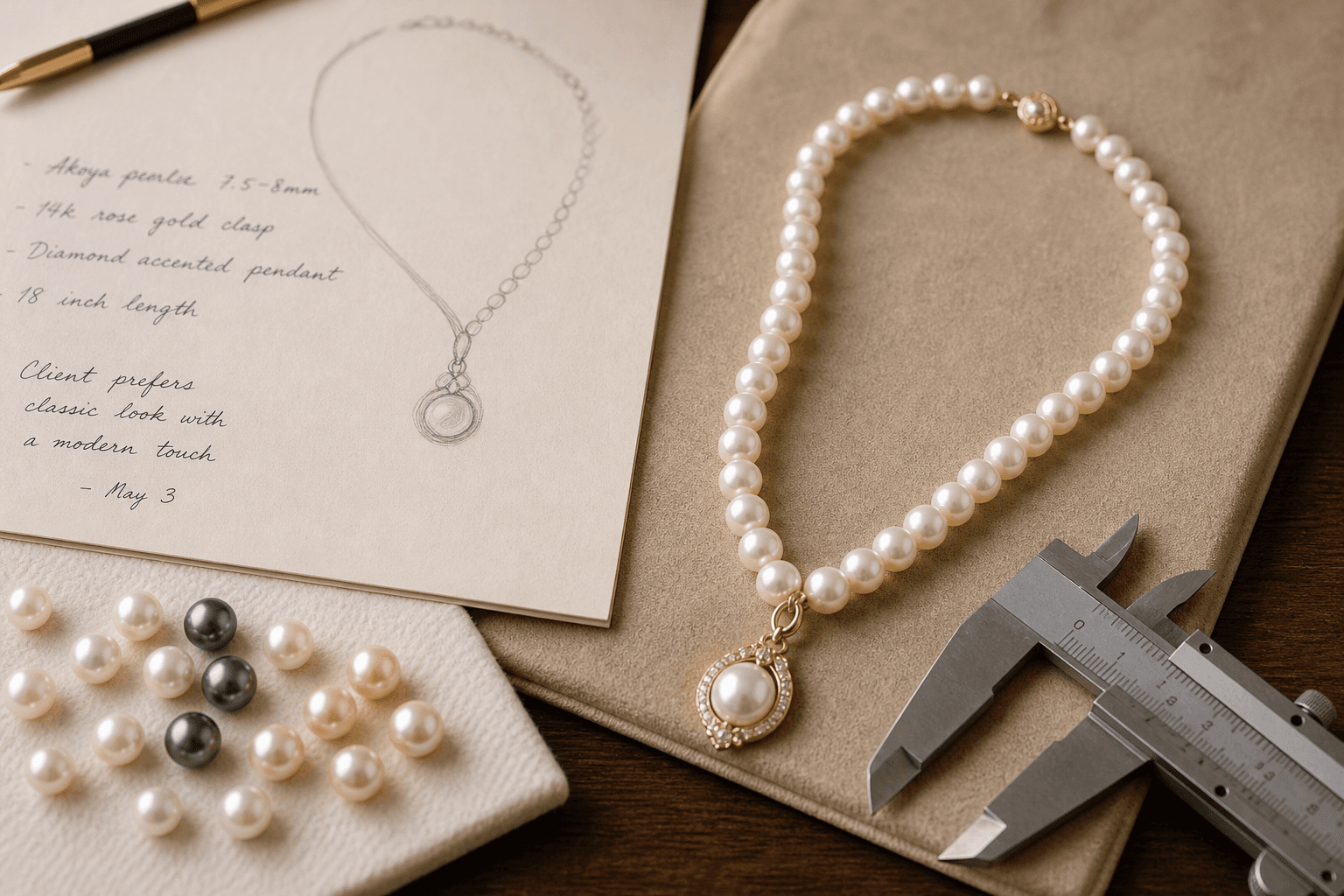
A sound custom process begins with a clear brief. You may provide an idea, sketch, image, or reference and explain the occasion, preferred metal, stones, dimensions, size, finish, and budget range. The maker can then discuss feasibility and pricing before production.
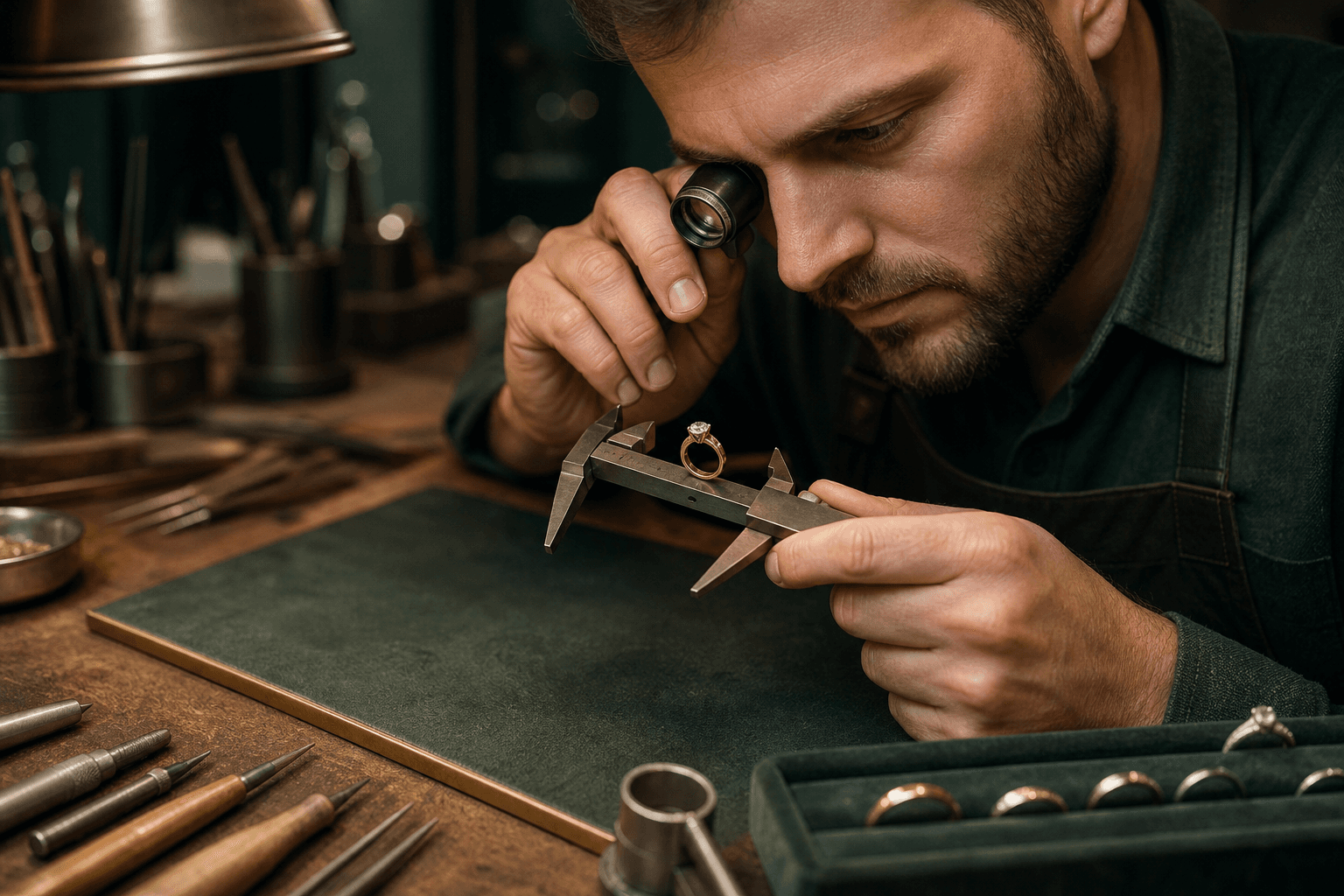
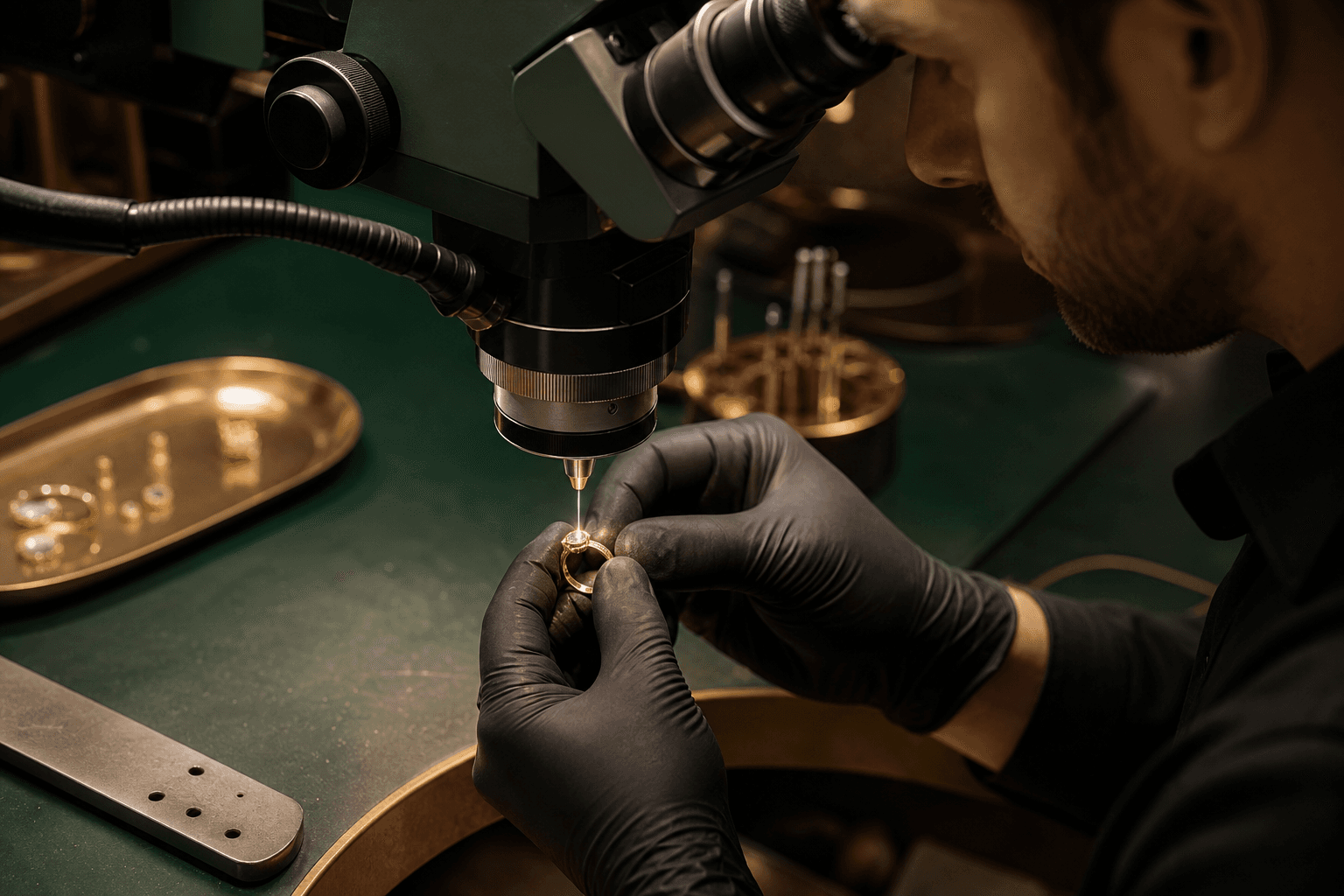
One verified custom workflow describes project review and pricing, design approval where applicable, production, final quality inspection, packaging, and shipping. Custom and made-to-order work generally requires 20 to 25 business days for design, manufacturing, stone setting, finishing, and inspection. This is a general timeframe, not a guaranteed delivery date.
Confirm whether full payment is required before production, what happens if a design is not feasible, and which changes can be made after approval. If your design is based on a reference image, ask which elements can be reproduced and which may be interpreted differently because of materials, scale, or construction.
Royal jewelry buying checklist
- Metal: Is the metal, karat, sterling, platinum, brass, plating, or filling clearly identified?
- Markings: If precious metal is claimed, are relevant quality markings or supporting details explained?
- Stone or pearl: Are type, size, colour, shape, setting, and documentation stated?
- Measurements: Check necklace length, earring drop, ring dimensions, stone size, chain width, and approximate weight where available.
- Finish: Confirm whether the surface is polished, textured, plated, or designed to change with wear.
- Custom terms: Ask about approval, payment, revisions, sizing, engraving, and design changes.
- Timeline: Separate design and manufacturing time from dispatch and delivery time.
- Inspection: Confirm whether the piece receives a final quality inspection before shipping.
- Shipping: Review method, destination coverage, tracking, and possible duties or taxes.
- Returns: Read conditions, including exclusions for personalized or made-to-order jewelry.
- Care: Follow instructions for pearls, gemstones, metals, plated surfaces, and storage.
Keep copies of the product page, quote, messages, payment record, and policies. These details make comparisons easier and document what was agreed.
Canadian considerations when buying precious-metal jewelry
Canadian shoppers should distinguish between marketing language and a material claim. Government guidance states that precious-metal marking requirements provide uniform descriptions and quality markings for articles made with gold, silver, platinum, or palladium. Review the marking and description together rather than assuming that a colour name such as “gold tone” identifies the metal itself.
For online orders, confirm where the seller is located, how shipping and returns work, whether the item is made to order, and whether extra charges may apply. If a listing is unclear, ask for the composition and measurements in writing before ordering.
How to make the final choice
Begin with the occasion and the degree of visual drama you want. A smaller pearl or gemstone piece may provide a refined royal impression for regular wear, while a larger, layered, or highly detailed design may suit a wedding, formal event, or statement look.
Select a ready-made piece when you want a defined design and straightforward comparison. Consider custom jewelry when your priorities include a specific stone, metal, engraving, matching set, redesign, or personal concept, and you are comfortable allowing time for design and production.
The strongest choice is not necessarily the most ornate one. It is the piece whose design, material description, measurements, workmanship terms, timeline, shipping arrangements, and return conditions match what you need.
Consistent presentation can also help shoppers compare how a jewelry collection communicates its identity online. Related guidance on business branding visuals offers useful context for evaluating collection imagery.
Frequently asked questions
Does a royal jewelry collection contain genuine royal or historical pieces?
Not necessarily. “Royal” usually describes a regal-inspired aesthetic, such as ornate detail, formal scale, symmetry, pearls, or gemstone emphasis. Genuine royal ownership or historical provenance requires documentation for the individual piece.
Which materials work best for a royal-style design?
There is no single best material. Gold, sterling silver, platinum, brass, pearls, moissanite, and other gemstones can support a royal look when the design, finish, setting, and proportions work together. Compare composition, care requirements, dimensions, and price.
How long does custom royal-style jewelry usually take?
Custom work may involve design development, material selection, manufacturing, stone setting, finishing, inspection, and shipping. A verified custom policy gives a general estimate of 20 to 25 business days for design and production stages, but confirm the current timeline and delivery arrangements before paying.
What should Canadian shoppers check on a precious-metal listing?
Check the metal type, karat or quality description, construction, relevant markings, measurements, finish, care instructions, and return terms. Canadian marking rules can help shoppers understand described quality for gold, silver, platinum, and palladium articles.
Choose the royal look by evidence, not just appearance
A royal jewelry collection is a design direction built around elegance, ornament, presence, and formal detail. An informed purchase combines that visual judgment with careful checks of the metal, pearls or gemstones, measurements, finish, craftsmanship process, timeline, shipping, and returns.
For shoppers comparing ready-made luxury jewelry, pearl jewelry, sterling silver jewelry, moissanite jewelry, or custom handcrafted designs in Canada, Advikosh presents these offerings alongside custom creations in gold, silver, platinum, and brass.