



Why use a checklist before you buy sterling silver jewelry

If you are ready to buy or compare sterling silver jewelry, a short, repeatable checklist keeps the purchase practical and lowers risk. The mark "925" or "Ag925" tells you the metal is sterling silver, meaning 92.5 percent silver alloyed with other metals for strength, but the hallmark is only a starting verification point (see source). Professional buyers run additional checks beyond the stamp to confirm finish, plating, and overall quality (see source). Use this Canada-focused seven-point checklist in store or online to verify authenticity, evaluate durability, and make informed seller choices.
The seven checks to run before saying yes

1. Confirm the hallmark and provenance before you buy
What to check: locate a clear stamp such as "925", "Sterling", or "Ag925" and any maker or assay mark. Why it matters: the 925 mark denotes 92.5 percent silver and is the standard identifier for sterling silver (see source). Limitations: a visible hallmark does not guarantee long-term quality or correct finishing. When a stamp is small, faint, or missing, ask the seller for close-up photos, an assay or test record, or a statement about origin. Practical step: request macro photos of the hallmark area before buying online, and confirm the seller accepts returns if a third-party test disproves the mark (see source).
2. Inspect craftsmanship, joints, and soldering quality
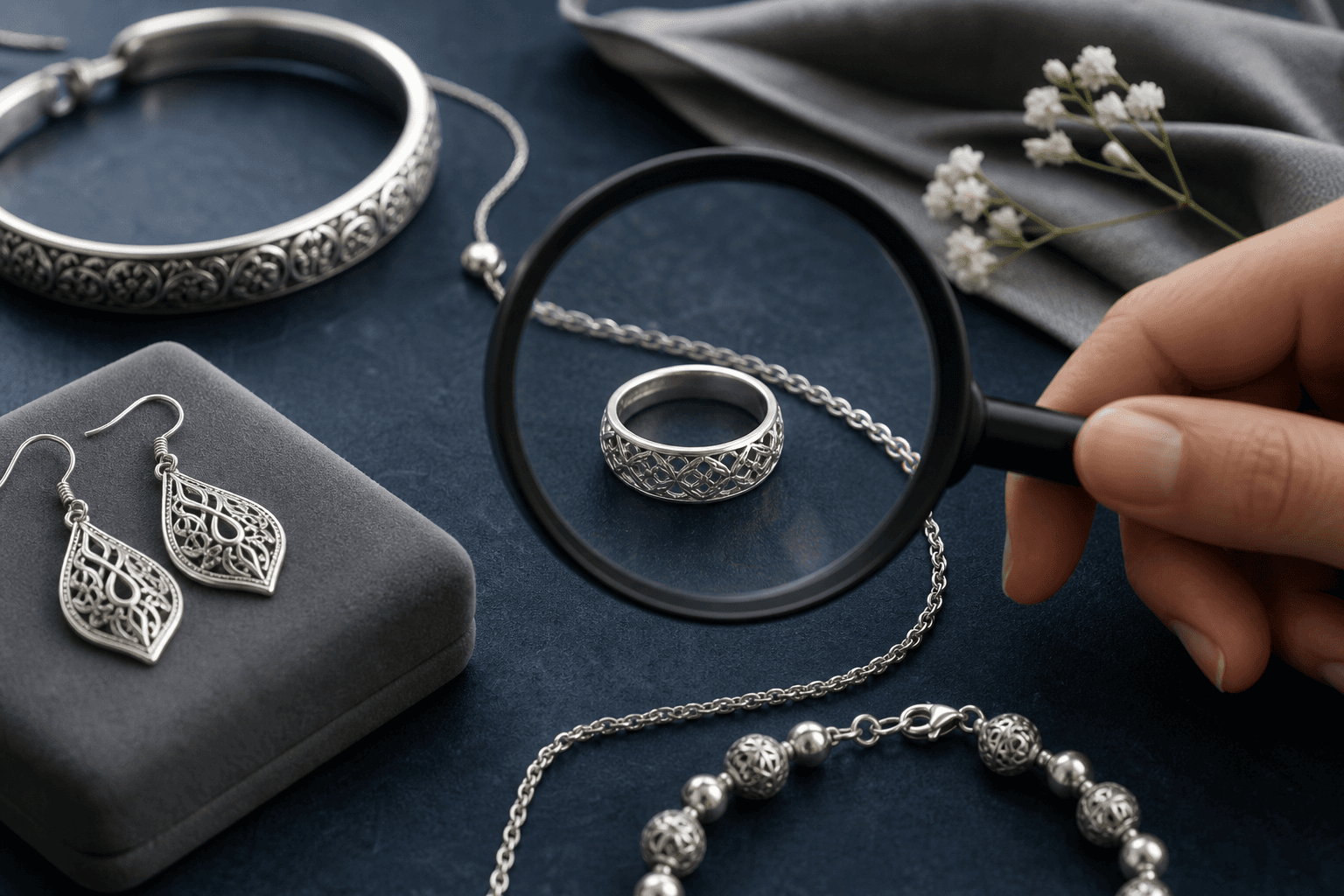
What to inspect: check solder lines, prongs that hold stones, chain links, clasp attachments, and the inside of rings or pendants. Why it matters: neat soldering and smooth joins predict durability, while rough edges, visible gaps, or excess adhesive concentrate stress and lead to early failure. How to test in person: press gently on links and prongs to see if anything moves, open and close the clasp a few times, and use a loupe or a strong phone photo for online listings. Example: a chain with a poorly soldered jump ring will separate at the soldered seam under normal wear. Decision rule: decline or ask for a refund on pieces with rough solder blobs, misaligned prongs, or visible glue residue. Budget items can look fine at first but fail at stress points, so insist on return rights for online purchases (see source).
3. Check plating, finish, and tarnish-resistance options
What to ask: determine whether the piece is solid sterling silver or silver plated, and ask if rhodium plating or another finish has been applied for tarnish resistance. Why it matters: rhodium plating changes surface colour and slows visible tarnish, but it does not make the piece maintenance free (see source). For plated items, ask whether re-plating is offered, what the expected visible life is, and the seller’s recommended cleaning practices. Practical step: where the seller can, request documentation about the finish or a statement that re-plating services are available. Decision rule: prefer solid sterling for pieces you plan to wear daily, or verify a clear re-plating or repair policy if you choose plated items.
4. Verify metal content and hypoallergenic claims
What to request: a material disclosure that lists alloy content and any nickel-free or hypoallergenic claim. Why it matters: sterling silver is an alloy that includes other metals for strength, and those metals can include nickel or copper which bother sensitive skin (see source). There is no universal allergy guarantee, so if you have a known sensitivity ask the seller for a formal material statement, test results, or an alternative such as rhodium plating or a different alloy. Practical example: if a seller cannot confirm nickel content, request an option to re-plate or to exchange for a confirmed nickel-free piece before finalising the purchase. Decision rule: accept hypoallergenic claims only when the seller provides a clear material statement or agrees to an accommodation for documented allergies (see source).
5. Run these simple at-home verification tests
Quick tests you can do at home: the magnet test, a weight and feel comparison, an odor check, and an edge inspection for plating wear. How to do them:
- Magnet test: hold a small magnet near the piece. Authentic 925 sterling silver is non-magnetic and should not be attracted.
- Weight check: compare the piece to a similar known item. Very light or hollow-feeling pieces sometimes signal lower quality or plated construction.
- Odour check: a sharp chemical smell can indicate low-grade alloys or residues from plating processes.
- Edge inspection: look at contact areas such as ring shanks and the underside of pendants for worn plating or exposed base metal.
Decision rule: a non-magnetic, properly weighted piece with a clean finish increases confidence. If a piece fails any of these checks, photograph the issue, keep original packaging, and confirm the seller will accept returns before you test further (see source) (see source).
6. Use seller policies and trust signals to decide who to buy from
Seller-side criteria to prioritise: transparent CAD pricing, clear shipping information including duties if applicable, a defined return window, repair and re-plating policies, accessible customer support, and recent verified reviews. Why it matters: these policies reduce friction if a third-party assay or at-home test reveals a problem. Ask these direct questions: will you accept a return if an independent assay shows the piece is not sterling, do you offer re-plating or minor repairs, what is your turnaround on custom orders, and do you provide a Canadian returns address to simplify refunds and duties. Example: Canadian brands that publish free shipping, 24/7 online support, and a free return or exchange window make disputes and repairs easier for domestic buyers. Use those trust signals when choosing a seller (see example). Decision rule: prefer sellers who commit to fair return and repair policies and who display clear contact channels and verified buyer feedback.
7. Consider care, expected lifespan, and a printable take-away checklist
What to expect with everyday wear: sterling silver will tarnish over time; rhodium plating slows tarnish but will wear in high contact areas. How to protect your pieces: store jewelry in anti-tarnish pouches or airtight containers, avoid contact with chlorine and household cleaners, remove pieces before bathing or exercising, and wipe metal with a soft cloth after wearing. Check whether the seller offers routine re-plating, minor repairs, or a lifetime finishing policy, which improves long-term value. Decision rule: choose sellers who provide clear care instructions and a repair or re-plating option as part of post-sale support (see source) (see source). Below is a compact checklist you can print or save when shopping.
- Carry checklist: verify visible 925 stamp, inspect solder and joins, confirm plating or solid status, ask about nickel content, perform the magnet test, confirm returns and re-plating policy, and note care instructions and support contacts.
Frequently asked questions
What does the 925 hallmark mean and is it proof the piece is real sterling silver?
925 indicates the alloy contains 92.5 percent silver and 7.5 percent other metals. It is the standard hallmark for sterling silver, but it is a starting verification only. Informed shoppers use visual checks, at-home tests, and seller policies to confirm authenticity and to protect themselves if a third-party assay contradicts the mark (see source) (see source).
How do I perform a magnet test and what result should I expect for sterling silver?
Use a small magnet and bring it close to the jewelry. Real sterling silver is non-magnetic and should not be attracted. If the magnet sticks or the piece shows a strong pull, that is a warning sign. Combine this with a weight comparison and a visual inspection for a practical assessment (see source).
Does rhodium plating stop sterling silver from tarnishing forever?
No. Rhodium plating reduces visible tarnish and can extend the time between cleanings, but it will wear away in high contact areas. Sellers who offer re-plating or finishing services provide a better long-term solution than an unserviceable plated item (see source).
What seller policies should Canadian buyers prioritise when buying sterling silver online?
Prioritise clear CAD pricing, a stated return window with a Canadian returns address when possible, repair or re-plating options, and accessible customer support. These policies simplify refunds and follow-up if verification tests reveal an issue. Brands that list free shipping, 24/7 support, and a free return or exchange period are easier to work with in case of disputes (see example).
Can sterling silver cause skin allergies and how should I check seller claims?
Sterling silver is an alloy and can contain nickel or other metals that trigger allergies in sensitive people. Ask the seller for a material disclosure and whether pieces are nickel-free or certified hypoallergenic. If you have a known allergy, request plating alternatives or a specific alloy option before buying (see source).
Key takeaway: use the seven checks above to verify the hallmark, finish, metal content, craftsmanship, seller policies, and care instructions so you can buy sterling silver jewelry confidently, whether you shop online or in person.
For Canadian shoppers who want transparent policies, custom design help, and reliable post-sale care, contact Advikosh to learn about collections, bespoke services, and re-plating options at Advikosh.