



Buying stud earrings online is convenient, but small unchecked details can lead to long term regret. This stud earrings guide gives practical decision checks you can use immediately: precise questions to ask sellers, construction points to inspect in photos and descriptions, and red flags that should make you pause. Use the checklist to pick studs that fit, suit sensitive skin, and arrive with reasonable return and care support when you order in Canada.
What is a stud earring and why its construction matters
A stud sits directly on the earlobe with no drop or dangle. The basic parts are the decorative front, the post that passes through the piercing, and the backing that secures the post. Those three parts determine comfort, security and long term wear. Post thickness affects strength and how a backing will grip, the setting type controls how well a stone is held, and the backing design determines loss risk.
When product pages lack close ups of the post and the backing, that omission is itself a decision check. Industry styling guides explain these components clearly and show which details to verify before you buy, for example VRAI's basic stud styling guide and general primer pages on stud construction.
Which stud styles change how you wear them: solitaire, bezel, cluster and pearls
Style choices affect visibility, security and how often you will reach for the pair. Solitaire studs, with a single centre stone, are versatile and often worn every day. Bezel-set styles wrap the stone in metal, giving a low profile and extra protection for active wear. Cluster studs group small stones for sparkle without one large centre, and pearl studs offer a classic look that can be dressy or quiet depending on size and setting.
Each style comes with its own checks. For bezel settings, confirm the metal covers the stone edge evenly. For prong settings, inspect prong thickness and closeness to the stone to avoid open prongs that can snag. Styling resources such as the Classy Women Collection guide or VRAI help you visualise how appearance and protection trade off when choosing a style.
If you prefer pearls or moissanite, check whether the retailer highlights those materials in dedicated collections. Retailers that offer curated pearl and moissanite options and a clear custom service let you request particular sizes, settings and metals on a product or custom page.
Which materials reduce allergy risk and what to ask the seller
Metal choice is the main determinant for sensitive ears. Many people who react to cheaper alloys do better with solid gold, sterling silver, titanium or platinum. Avoid listings that only say gold tone or silver tone without stating karat or fineness. Ask directly whether posts are solid or plated and whether the post metal differs from the visible setting.
Direct questions to ask the seller about materials
- What is the exact metal composition of the posts and settings, stated in karat or fineness?
- If plating is used, what metal is plated, and how thick is the plating?
- Are the posts solid or hollow, and are they made from a hypoallergenic metal?
- Do you offer alternative post metals such as titanium or implant grade steel for sensitive ears?
Retailers that display clear material information reduce risk. When shopping in Canada, confirm prices are in CAD and that shipping and return policies are explicit. For example, some Canadian sellers list free shipping, around the clock online support, and a short free return window to help you exchange sizes or return pairs that irritate your skin.
Which earring backings are most secure and what to verify

Backings affect daily comfort and the risk of losing a stud. The common types are push-back or butterfly backs, screw-back posts, locking backs with a mechanism, and small hoop or huggie styles that sit close to the lobe. Screw-back and locking backs are most secure for valuable studs. Push-back styles are convenient but can loosen, especially with heavier fronts.
Construction details to verify
- Does the product specify threaded posts for screw-backs or simple straight posts for push-backs?
- Are locking or friction-fit backs supplied for heavier or larger studs?
- How thick is the post? Very thin posts can bend and shorten the effective life of the backing.
- Do photos show the backing up close so you can judge stiffness and fit?
Guides on earring types note that screw-back studs and huggie designs are comfortable and secure after your piercing is healed, while push-backs require periodic checks. If a listing omits backing type or post diameter, treat that as a question to resolve with the seller before purchase. A retailer refusal to clarify is a practical reason to walk away.
What size should you choose and how to visualise proportion
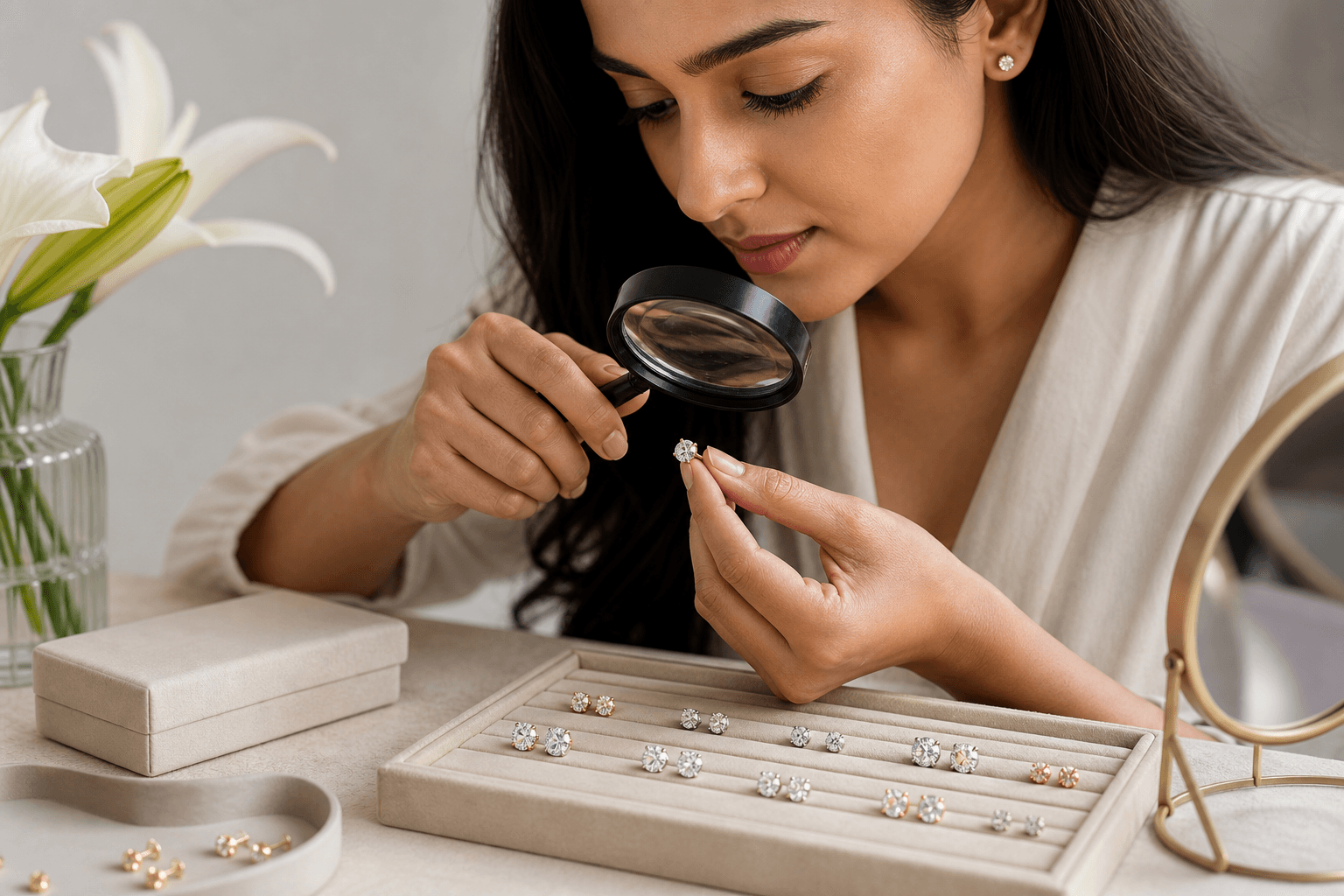
Size is one of the hardest things to judge online because a few millimetres change presence on the face. Many first-time buyers find 4 mm to 5 mm comfortable because that size is visible without dominating the face. Tiny studs, 2 mm to 3 mm, are subtle and work well across multiple piercings. Larger stones, 6 mm and up, make a statement.
How to visualise proportion before purchase
- Compare the stated millimetres against model photos, close ups or mm overlays when available. Some retailers supply scale images.
- Decide the role of the stud: discreet everyday wear, accent in a curated stack of piercings, or an occasional statement piece.
- When planning multiple sets across piercings, choose sizes that work together rather than random sizes that clash.
Six checks to run before you hit Buy
- Material and allergy check: confirm post metal, plating, and ask for titanium if you have known sensitivity.
- Setting and photograph check: require at least two close-ups, one of the front and one of the post and back.
- Backing check: confirm the exact back type, whether the post is threaded, and the post thickness.
- Size and proportion check: compare the mm size to reference photos or model images before you decide.
- Returns and shipping check: verify currency in CAD, shipping cost or policy, and the return window so you can exchange or return if there is an issue.
- Care and repair policy check: ask about plating, recommended cleaning, and whether minor repairs or plating services are available.
Quality red flags to avoid when buying studs online

Specific warning signs are more useful than vague doubts. Treat the following as decision rules rather than mere preferences. Walk away when several apply.
- Poor or no close-up photos of the post and the back. Lack of detail often hides construction issues.
- Thin, open or uneven prongs on prong-set studs. Open prongs increase the chance stones will snag or fall out.
- No hallmarks, no karat or fineness notes, or only vague phrasing such as gold plated without details.
- Vague or missing return and repair policies. If a seller will not state how returns or minor repairs are handled, you increase your post-purchase risk.
- Suspiciously low price on a branded or high-quality material item. If the price seems inconsistent with the claimed metal and stone, verify composition before you buy.
Industry guides emphasise setting security and clear product photography for confident online purchases. When multiple red flags appear together, the safest choice is to pause, ask questions, and compare other sellers.
How to care for studs and what product descriptions should tell you
Good product pages include cleaning recommendations, plating disclaimers, and repair or warranty details. Cleaning varies by material. Pearls need a gentle approach and should not be soaked. Moissanite and solid gold tolerate mild soap and a soft brush. If a retailer offers lifetime plating or minor repair services, that should be stated clearly on the page so you can factor maintenance into long term cost.
Simple care rules
- Store studs separately, ideally in soft pouches, to avoid scratching.
- Wipe pearls with a soft cloth after wear and avoid immersing them in cleaning solutions.
- Remove studs for sleep, swimming and vigorous activity to reduce wear on backs and settings.
Retailers that list care instructions and aftercare services make it easier to compare long term value. When descriptions are silent on care, ask directly and keep that answer as part of your purchase record.
If you want bespoke studs: exact questions to ask a jeweller
Custom studs are sensible when you want a particular metal, a precise size of pearl or moissanite, or specialised backs for security. Use a short brief that covers the following in CAD so there is no confusion about budget and scope.
- Desired metal and fineness for posts and settings, named as karat or fineness rather than broad terms.
- Preferred stone type and exact size, for example 4.5 mm moissanite or a 6 mm freshwater pearl.
- Backing type you prefer: screw-back, locking back, or push-back with reinforced collars.
- Timeline for completion and whether polishing, plating or repair services are included.
- Return, alteration and warranty terms for bespoke pieces, and any additional costs.
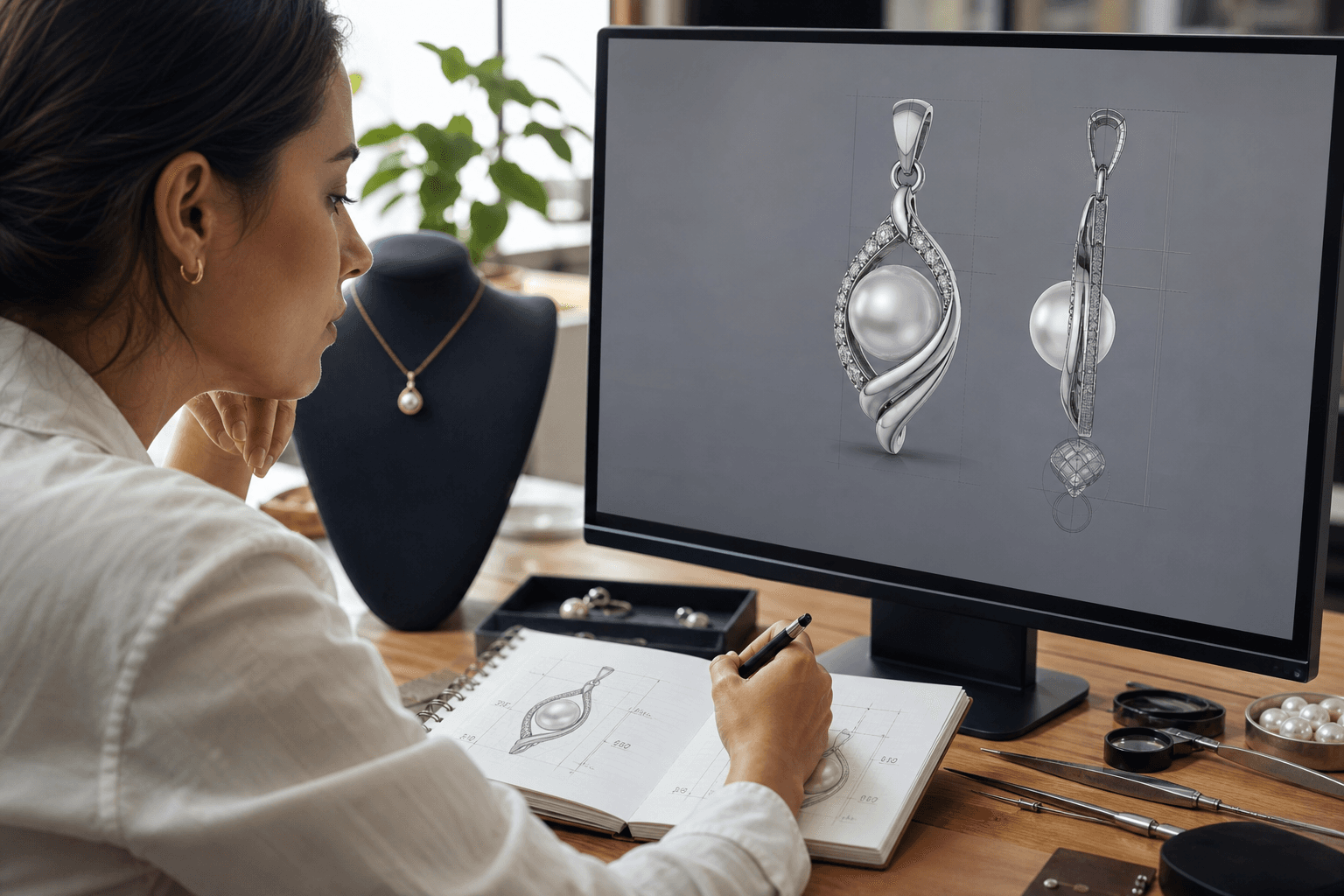
Many Canadian jewellers frame custom work as a conversation. If you are commissioning a pair, request sketches, metal stamps and a written estimate. That reduces misunderstandings and gives you documented recourse if finished work differs from the brief. Some online jewellers also present a custom page where you can start the discussion and choose materials.
FAQ
Are stud earrings good for sensitive ears?
Yes, studs can be excellent for sensitive ears when the posts are solid hypoallergenic metal. Ask for karat or fineness details and consider titanium or platinum posts if you have known reactions. Trusted advice recommends solid gold, sterling silver, titanium or platinum as lower risk options for sensitive skin.
What size studs should I buy if I cannot try them on?
Many first-time buyers choose 4 mm to 5 mm studs because they are visible without dominating the face. Use model photos, mm overlays or product scale images when available. Prefer a retailer that states millimetres clearly and offers multiple views for scale.
Which earring backs are least likely to come loose?
Screw-back and locking backs are the most secure choices. Push-back or butterfly backs are convenient but can loosen, especially on heavier studs. Confirm threaded posts for screw-backs and inspect close-up photos when you can.
Can I customize stud earrings with pearls or moissanite?
Yes. You can commission a bespoke pair by briefing the jeweller on metal type, stone selection and size, backing preference and your budget in CAD. Many custom services let you choose metals such as gold or silver and stones such as pearls or moissanite when you want a handcrafted pair made to your brief.
What shipping and return checks should Canadian buyers make before purchasing?
Confirm that prices are shown in CAD, check whether the seller offers free shipping, and note the return window and any restocking or return fees. A clear free-shipping and free-return policy reduces the risk of a disappointing purchase. Ask whether customs or duties apply for shipped items and whether the seller covers return postage for exchanges or refunds.
Ready to design your perfect studs with a Canadian jeweller? Visit Advikosh?